
Flexibility yoga stretches can feel like the missing link when your hips, hamstrings, or shoulders always seem tight, even if you work out regularly. The good news is you don’t need extreme poses or a 90-minute class to make progress, you need the right stretch choices, steady breathing, and enough consistency to let tissue adapt.
If you’ve ever stretched daily for a week and still felt “stuck,” you’re not alone. A lot of flexibility gains come from improving tolerance to stretch sensation, refining alignment, and learning when to hold steady versus when to back off. Done well, yoga can also build strength at your end range, which often makes flexibility feel more usable in real life.
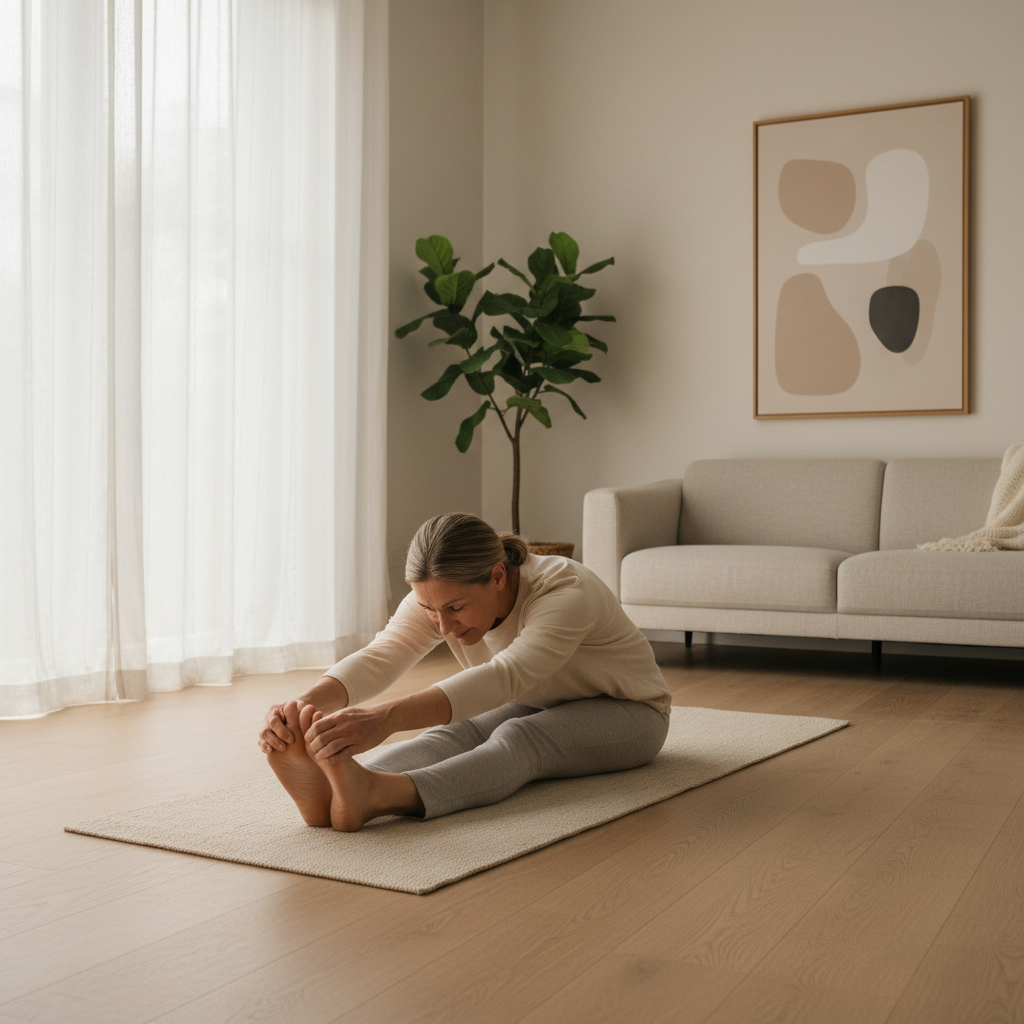
This guide keeps things practical: what blocks flexibility most often, a quick self-check, a table of go-to poses by body area, and two routines you can repeat. I’ll also flag common form mistakes that make stretches feel intense but not effective.
Why flexibility feels hard (and what yoga actually changes)
Flexibility isn’t just “long muscles.” In many cases it’s a mix of muscle tone, nervous system response, joint structure, and daily habits. That’s why two people can do the same pose and get totally different results.
- Sitting patterns: Hip flexors and calves often stay shortened, glutes and core lose engagement, then forward folds feel like a brick wall.
- Protective tension: Your body may tighten up when it senses instability, especially around hamstrings, hips, and shoulders.
- Breath holding: Shallow breathing tends to increase perceived stretch intensity, you back off early without realizing it.
- Going too deep too fast: “Hard stretch” can irritate tendons or low backs, then you stop stretching altogether.
- Strength gap at end range: If you can’t control the last few degrees, your system often refuses to give them to you.
According to the American Council on Exercise (ACE), flexibility training is typically most effective when performed regularly and held long enough to let tissues and the nervous system accommodate, rather than bouncing through ranges.
Quick self-check: what kind of tightness do you have?
Before you pick poses, figure out what you’re feeling. This avoids the classic trap of doing more hamstring stretches when the real issue is your low back or hip hinge.
In 2 minutes, notice these signs
- Pinching at the front of the hip in lunges or deep folds: often hip flexor compression or limited hip joint space, modify depth.
- Stretch sensation behind the knee in forward folds: often nerve sensitivity, back off and keep a micro-bend.
- Low back “pulling” more than hamstrings: hinge may be collapsing, use blocks and lengthen spine.
- Shoulders tight + rib flare overhead: you may be borrowing range from the low back, work on ribs-down control.
- One side always tighter: common and not automatically “bad,” but worth training both sides evenly.
If you feel sharp pain, numbness, tingling, or joint catching, it’s smart to stop and consider talking with a qualified clinician or physical therapist, especially if symptoms persist.
Best flexibility yoga stretches by body area (use this table)
Use the table as your menu. Pick 1–2 areas per session, hold each pose with calm breathing, and keep the intensity around a 6–7 out of 10, strong but not panicky.
| Area | Yoga stretch | What it targets | Beginner-friendly modification |
|---|---|---|---|
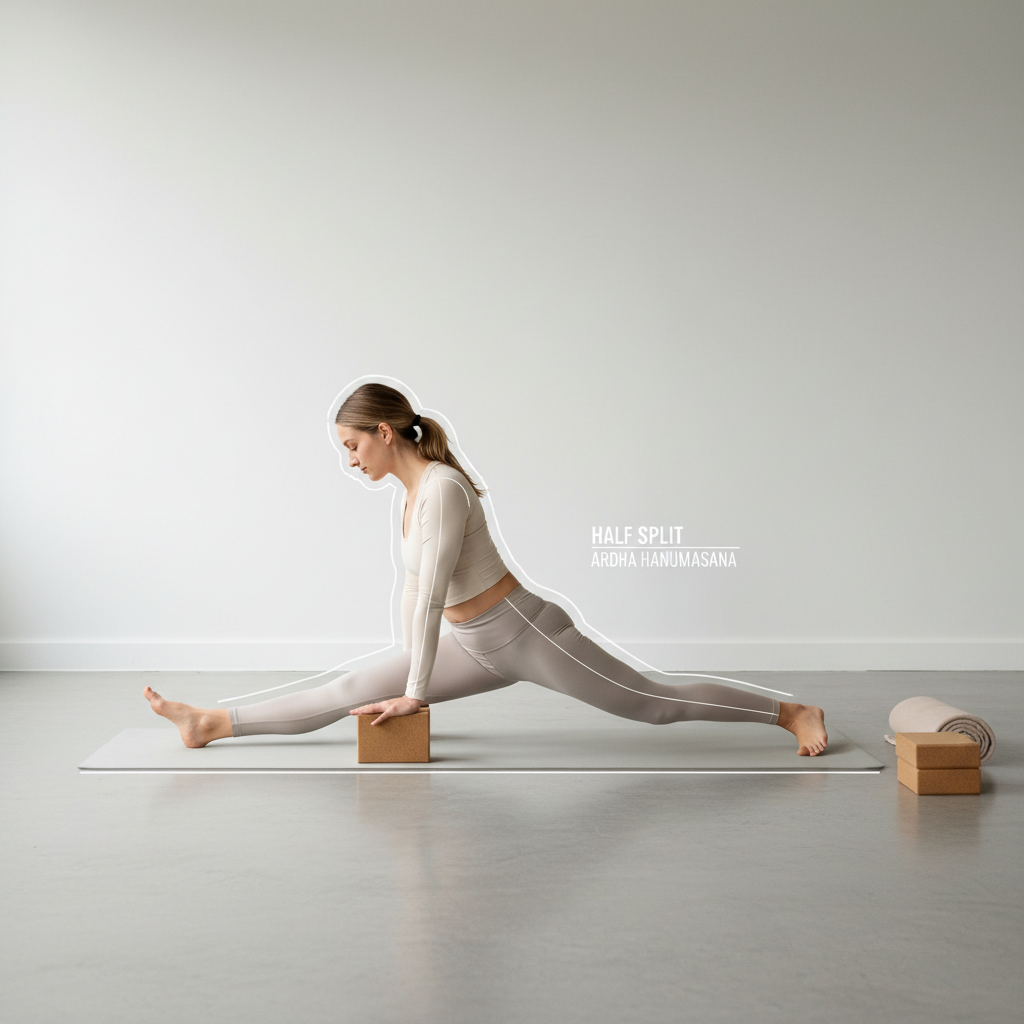
| Hamstrings | Half Split (Ardha Hanumanasana) | Hamstrings + calf, hip hinge control | Hands on blocks, micro-bend front knee |
| Hips | Low Lunge (Anjaneyasana) | Hip flexors, quads | Back knee down, shorten stance |
| Glutes | Figure-4 / Reclined Pigeon | Glutes, deep hip rotators | Keep foot on floor if needed |
| Inner thighs | Butterfly (Baddha Konasana) | Adductors, hips | Sit on folded blanket, support knees |
| Spine | Cat-Cow | Spinal mobility + breath coordination | Smaller range, slower tempo |
| Shoulders | Puppy Pose (Uttana Shishosana) | Lats, upper back, shoulders | Forehead on block, knees wider |
| Chest | Supported Fish (Matsyasana variation) | Pecs, front body opening | Bolster or rolled towels under upper back |
One note that surprises people: if a pose feels like you’re “cranking” on joints, it’s usually the wrong angle or too much depth for today. Flexibility improves faster when the body trusts you.
How to do the key stretches (form cues that actually matter)
Below are a few flexibility-focused yoga stretches with cues that prevent the usual compensation patterns.
1) Half Split (hamstrings)
- Start in a low lunge, then shift hips back, straighten the front leg as much as you can without locking.
- Keep a long spine, think “chest forward” rather than “head to knee.”
- Micro-bend is not cheating, it often turns a nerve tug into a true hamstring stretch.
2) Low Lunge (hip flexors)
- Back knee down, front knee stacked roughly over ankle.
- Tuck pelvis slightly (gentle posterior tilt) so the stretch moves to the front of the hip, not the low back.
- Reach arms only if ribs can stay down and breath stays steady.
3) Reclined Figure-4 (glutes)
- Cross ankle over opposite thigh, flex the foot to protect the knee.
- Pull the legs in until you feel a deep glute stretch, no knee pain.
- Breathe slow, many people get more range by relaxing jaw and shoulders.
4) Puppy Pose (shoulders/lats)
- Hips over knees, walk hands forward, keep arms active.
- If shoulders pinch, widen hands and place forehead on a block.
- Aim stretch into side ribs and armpits, not into the low back.
Two simple routines: 10 minutes or 20 minutes
Consistency beats intensity here. If you only do one thing, repeat the same short sequence 3–5 days per week, track how it feels, and adjust slowly.
10-minute “daily reset” (full body)
- Cat-Cow: 6 slow cycles
- Down Dog with bent knees: 5 breaths
- Low Lunge: 5–8 breaths each side
- Half Split: 5–8 breaths each side
- Reclined Figure-4: 8–10 breaths each side
- Supported Fish: 1–2 minutes
20-minute “focused flexibility” (hips + hamstrings)
- Breathing warm-up on back: 1 minute, slow nasal breaths
- 90/90 hip switches (gentle mobility drill): 1–2 minutes
- Low Lunge: 60–90 seconds each side
- Half Split: 60–90 seconds each side
- Butterfly: 2 minutes, supported
- Reclined Figure-4: 90 seconds each side
- Legs up the wall: 2–4 minutes
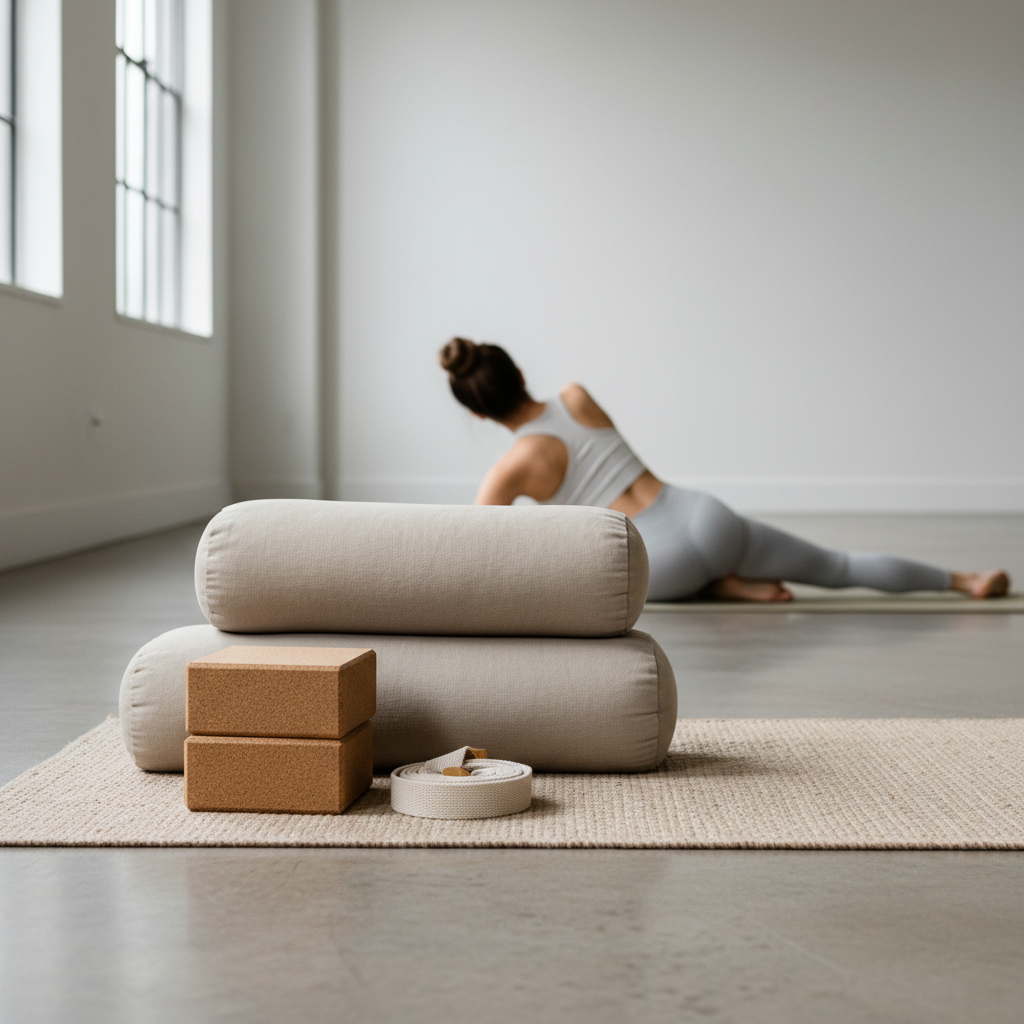
These routines use flexibility yoga stretches that tend to deliver quickly because they address common tight zones from sitting. If you lift weights or run, do them after training or later in the day when tissues feel warmer.
Practical tips that make stretching work (without overdoing it)
- Breathe like you mean it: inhale to create space, exhale to soften. If breath gets choppy, reduce depth.
- Hold long enough: many people need 30–90 seconds per position for noticeable change, depending on the stretch and comfort.
- Use props early: blocks, straps, and blankets keep alignment honest and reduce “fake range.”
- Add gentle strength: in a hamstring stretch, lightly press heel down; in lunge, lightly hug legs toward midline. This often improves control.
- Train the range you want: if your goal is easier squats, prioritize ankles and hips; if it’s overhead comfort, prioritize lats and thoracic spine.
According to the National Center for Complementary and Integrative Health (NCCIH), yoga can support flexibility and mobility for many people, but individual results vary and modifications matter, especially with injuries or health conditions.
Common mistakes (and what to do instead)
- Chasing max depth → Aim for steady breathing and clean alignment, depth comes later.
- Rounding the low back in folds → Elevate hands on blocks, bend knees slightly, hinge from hips.
- Pushing through nerve-like sensations (tingling, burning, zaps) → Back off, try a gentler angle, keep more bend.
- Skipping warm-up every time → Do 1–2 minutes of easy movement first (Cat-Cow, hip circles, short walk).
- Stretching an angry tendon → Reduce intensity and duration, consider professional guidance if pain lingers.
Key takeaways + a safe next step
If flexibility has been frustrating, it often helps to treat it like training, not like punishment. Pick a small set of flexibility yoga stretches, use props to keep form clean, and repeat often enough that your body stops bracing.
- Start small: 10 minutes, 3–5 days per week beats a long session once.
- Stay in the “productive” zone: strong sensation, calm breath.
- Measure progress by function: easier stairs, better squat comfort, less shoulder tension, not just how close you get to the floor.
If you want an easy start, choose the 10-minute routine, do it for two weeks, and jot down one sentence after each session about what changed. That tiny feedback loop tends to keep people consistent.
FAQ
How often should I do flexibility yoga stretches to see progress?
Many people notice small changes within a couple of weeks with 3–5 sessions per week, but it varies. Consistency and comfortable holds usually matter more than doing intense stretches once in a while.
Is it better to stretch in the morning or at night?
Morning can feel stiffer and might need a longer warm-up, while evening often feels easier because tissues are warmer. Pick the time you can repeat reliably, then keep intensity moderate.
Should I stretch before lifting weights or running?
Before training, many people do better with gentle mobility and short holds. Longer static holds often fit better after workouts or later in the day, especially if you’re trying to increase range.
Why do my hamstrings feel tight even though I stretch them?
It’s common that the sensation comes from nerve sensitivity, pelvic position, or a hinge pattern that shifts work into the low back. Try Half Split with a micro-bend and focus on lengthening the spine.
What if a stretch causes pain in the knee or low back?
Pain is a sign to modify or stop. Use props, reduce range, and avoid forcing angles; if pain persists or feels sharp, consulting a qualified professional is a safer move.
Are yoga straps and blocks worth it for flexibility?
Usually yes, because they let you hold better alignment and relax into the target area rather than straining. A strap can replace grabbing your foot, blocks can replace rounding to reach the floor.
Can yoga improve flexibility if I’m “naturally stiff”?
Often, yes, though genetics and joint structure set boundaries. Many “stiff” people still gain meaningful range and comfort by training consistently and building strength near their end range.
If you’re trying to get more flexible but keep restarting because routines feel random, a simple plan helps: pick 6–8 flexibility yoga stretches, schedule them like workouts, and adjust only one variable at a time. If you’d rather not think about programming, following a structured class series or working with a qualified yoga teacher can be a more straightforward path.