
Muscle Strain Treatment and Recovery: What Actually Helps
Muscle Strain is one of those injuries that can feel minor at first, then suddenly makes stairs, sleep, or even sitting uncomfortable. The good news is most strains improve with the right mix of rest, smart movement, and patience, not “powering through.”
What tends to trip people up is timing, doing too much too soon, or doing nothing for too long. Both can stretch out recovery and raise the odds of re-injury, especially if you return to sports or lifting before the tissue can tolerate load again.
This guide walks through what a strain is, how to gauge severity, what to do in the first 48 hours, how to progress rehab, and when it’s worth getting checked out. You’ll also find a simple timeline table and a practical checklist you can use today.

What a Muscle Strain Is (and What It Isn’t)
A strain means muscle fibers or the tendon fibers that connect muscle to bone take on more load than they can handle, causing microscopic tearing, pain, and sometimes bruising. In plain terms, you asked the tissue for “too much” in a moment, or too much over time.
Strains often get confused with cramps, delayed-onset muscle soreness, and sprains. Soreness after a workout usually feels diffuse and improves with gentle movement. A sprain involves ligaments around a joint. A strain tends to feel more localized in the muscle belly or near the tendon, and certain movements feel sharply “limited.”
- Common locations: hamstring, calf, groin, lower back, shoulder, and neck.
- Typical triggers: sprinting, sudden direction changes, heavy eccentrics (lowering phase), slipping, overreaching, or jumping back into training after time off.
According to the American Academy of Orthopaedic Surgeons (AAOS), muscle strains are common sports-related injuries and are often managed with early protection, gradual return to activity, and rehabilitation as symptoms allow.
Quick Self-Check: How Bad Might It Be?
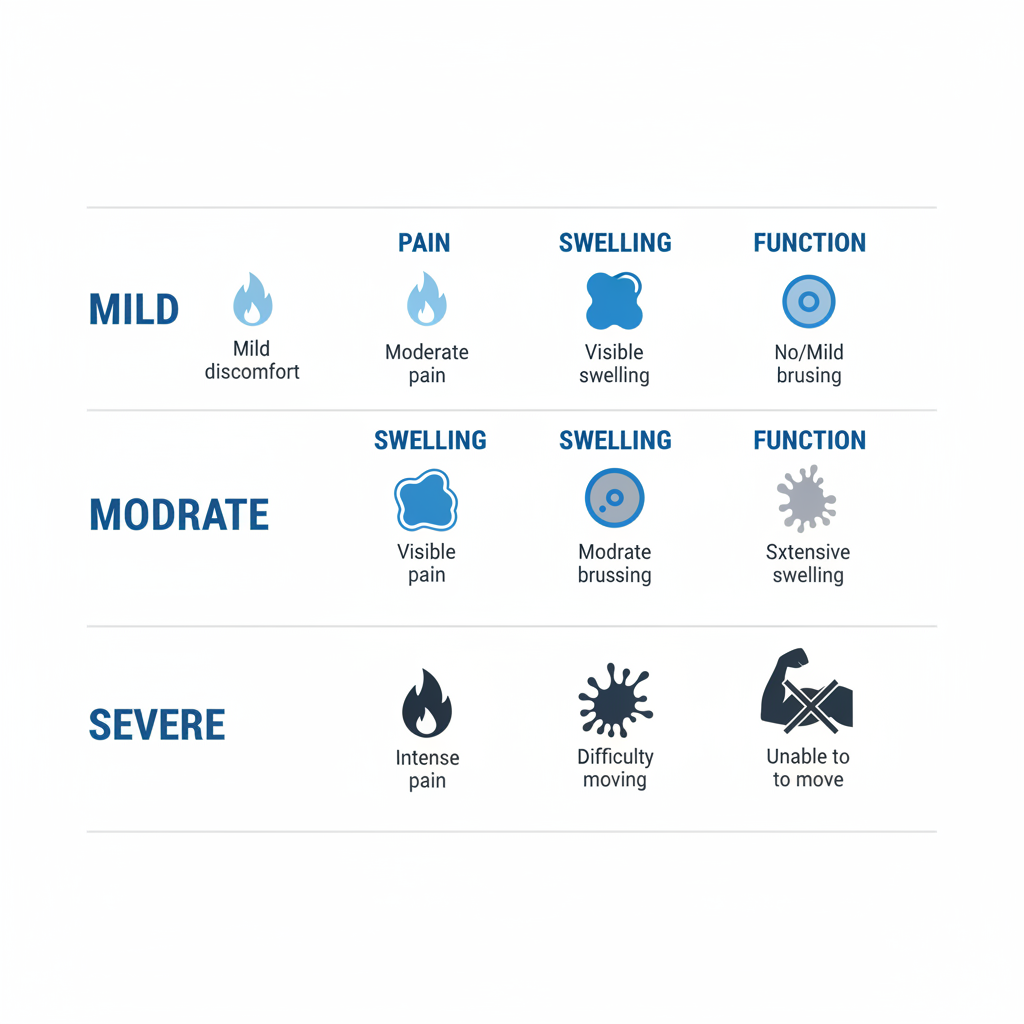
You can’t grade your injury perfectly at home, but you can often get close enough to choose sensible next steps. Many clinicians use a rough Grade 1–3 framework based on function, swelling, bruising, and strength.
Signs that often match a mild strain (often called Grade 1)
- Tightness or mild pain, but you can still move the area
- Minimal swelling
- Strength feels “off,” but not dramatically weaker
- Discomfort improves with gentle warm-up
Signs that often match a moderate strain (often called Grade 2)
- Clear pain with specific movements
- Swelling and tenderness you can point to
- Possible bruising within 24–72 hours
- Noticeable strength loss, limping, or difficulty using stairs
Red flags that can indicate severe injury (often called Grade 3) or something else
- A “pop” sensation plus immediate functional loss
- Visible deformity, significant bruising, or rapid swelling
- Inability to bear weight (for leg injuries) or lift the limb
- Numbness, severe weakness, or pain that escalates quickly
If any red flag fits, it’s safer to seek urgent evaluation. Severe strains sometimes involve a complete tear and may require imaging and a more structured plan.
First 48 Hours: What to Do (and What to Avoid)
In the early phase, the aim is to calm symptoms and protect the area without turning the muscle into a statue. Most people do best with “relative rest,” meaning you avoid the motions that spike pain, but keep easy, tolerable movement.
- Protect: Reduce activities that reproduce sharp pain. For a leg strain, that may mean shorter steps and avoiding hills for a couple days.
- Ice or heat? Many people prefer ice early for comfort. Heat can feel good later when stiffness becomes the main issue. Choose the one that helps you move more comfortably.
- Compression: An elastic wrap can reduce swelling and give a sense of support, but avoid wrapping so tight that you get tingling or color changes.
- Elevation: For calf/hamstring strains, elevating can help if swelling shows up.
According to the American College of Sports Medicine (ACSM), early management for soft-tissue injury often emphasizes protecting the area while returning to pain-limited activity, then progressively reloading as tolerated.
Avoid aggressive stretching into sharp pain, deep tissue “digging” in the first day or two, and the classic mistake of “testing it” with sprints, max lifts, or explosive reps just to see if it’s better.
Recovery Timeline: What Most People Can Expect
Recovery depends on location, severity, and your baseline conditioning. A desk worker with a mild calf strain usually rebounds faster than a competitive runner with a moderate hamstring strain. Still, timelines help you set expectations and stop the spiral of “Why is this still here?”
| Strain level (typical) | What you can often do | Typical recovery window |
|---|---|---|
| Mild | Walk and do daily tasks with manageable discomfort | ~1–3 weeks (varies) |
| Moderate | Needs activity modification, gradual strengthening | ~3–8+ weeks (varies) |
| Severe/complete tear | May require imaging, bracing, or surgical consult | Months, individualized |
One practical marker: pain should trend down week to week, and what you can do without a flare should trend up. If neither changes after 10–14 days, it’s a sign your plan may need adjustment.
Step-by-Step Rehab: From “I Can Barely Move” to Return to Sport
Effective rehab usually follows a simple logic: regain comfortable range of motion, rebuild strength, then reintroduce speed and power. The details change by muscle group, but the progression feels similar.
Phase 1: Keep it moving, gently
- Short, frequent walks or easy cycling if tolerated
- Pain-limited range-of-motion work, stop before sharp pain
- Isometrics: light contractions without moving the joint, often a good bridge when motion hurts
Phase 2: Rebuild capacity with strength work
- Start with controlled tempo, moderate effort, low soreness cost
- Progress load gradually, especially eccentrics (slow lowering) since they matter for resilience
- Train the surrounding areas too, hips for hamstrings, core for low back, scapular control for shoulder
Phase 3: Reintroduce speed, jumping, cutting
- Add short accelerations, then longer strides, then full-speed efforts across days
- Return to change-of-direction drills only when straight-line work feels stable
- Keep “next-day feedback” in mind, a small ache is common, a big spike is a message
If you lift, a useful rule is to return to full range and higher loads only after you can do submax sets without compensating, holding your breath, or “protecting” the area.
At-Home Treatment Options: What’s Worth Trying
Most at-home choices fall into “symptom relief” and “tissue capacity building.” Symptom relief helps you move; capacity building reduces re-injury risk. You often need both.
- Over-the-counter pain relief: Many people use NSAIDs or acetaminophen, but they’re not right for everyone. If you have kidney disease, GI bleeding risk, take blood thinners, or have other medical concerns, ask a clinician or pharmacist.
- Gentle self-massage: Light pressure around the area can help comfort, but deep aggressive work early can backfire.
- Heat later in recovery: Can make movement easier when stiffness dominates.
- Mobility with intent: Choose movements that restore normal motion without chasing a painful stretch.
- Progressive strengthening: The “treatment” that tends to matter most after the first few days.
According to the National Institutes of Health (NIH), many musculoskeletal conditions improve with a mix of activity modification and graded exercise, and persistent or worsening symptoms should prompt medical evaluation.
Common Mistakes That Slow Recovery
A lot of slow recoveries come from reasonable instincts that just aren’t helpful for muscle tissue.
- Resting until you feel 100% before moving again: stiffness rises, confidence drops, and return becomes harder.
- Stretching hard to “break up” tightness: tight often means protective, not short. Push too far and symptoms flare.
- Skipping the strength phase: pain may fade, but the muscle still lacks capacity for sprinting, jumping, or heavy lifting.
- Only treating the pain spot: poor hip control, ankle stiffness, or weak scapular stabilizers can keep the strain recurring.
- Comparing your timeline to someone else: location and severity change everything.
When to See a Professional (and What to Ask For)
If your Muscle Strain keeps you from normal walking, sleep, or basic tasks for more than a few days, or you see bruising and significant weakness, a clinician visit is reasonable. This is also true if you need a safe return-to-sport plan on a deadline.
- Get evaluated urgently if you can’t bear weight, you notice deformity, you have numbness, or pain escalates fast.
- Consider sports medicine or physical therapy if pain plateaus after 10–14 days, you keep re-injuring the same area, or you’re unsure how to progress training.
- Helpful questions: “What movements should I avoid this week?”, “What can I do safely for cardio?”, “What strength milestones should I hit before sprinting/lifting heavy again?”
Sometimes imaging (like ultrasound or MRI) comes up, but many strains improve without it. A professional can help decide if imaging changes your plan, which is the real point.
Key Takeaways (Keep This Simple)
- Muscle Strain recovery usually improves with relative rest early, then progressive strengthening.
- Pain-free is not the only goal, you also want strength and control back.
- Big bruising, a pop, major weakness, or inability to bear weight deserve prompt evaluation.
- If progress stalls around the 2-week mark, adjust the plan or get guidance.
Conclusion: A Realistic Plan You Can Start Today
A strain rarely needs heroic measures, it needs steady, boring consistency. Calm it down in the first couple days, keep the area moving within tolerance, then rebuild strength before you chase speed and intensity again.
If you want one action today, pick two pain-limited movements you can do comfortably and repeat them daily, then add light strength work as soon as motion stops feeling “fragile.” If symptoms feel unusual, severe, or stuck, consider checking in with a licensed clinician for a tailored progression.
FAQ
- How do I know if it’s a Muscle Strain or just soreness?
Workout soreness usually feels spread out and eases after a warm-up. A strain tends to feel localized, sharper with specific movements, and may come with weakness or bruising. - Should I stretch a strained muscle?
Light stretching can be fine later, but forcing range early often irritates tissue. If stretching creates sharp pain or a rebound flare later that day, it’s probably too much. - Is heat or ice better for a Muscle Strain?
Ice often helps comfort early, while heat may feel better when stiffness is the main complaint. Neither is mandatory; pick what lets you move more normally. - Can I work out with a strain?
Often yes, with modifications. Train pain-free areas, choose low-impact cardio if tolerated, and avoid the exact motion that triggers sharp pain until strength returns. - Why does my strain feel better, then worse the next day?
That pattern often means you exceeded current capacity. Use next-day soreness as feedback, reduce volume or intensity, then progress more gradually. - When can I return to running or sports?
Many clinicians look for near-normal range of motion, minimal pain during and after activity, and strength that’s close to your uninjured side. If your sport involves sprinting or cutting, reintroduce speed in stages. - Do I need an MRI for a Muscle Strain?
Not always. Imaging can help if severe injury is suspected, function is significantly limited, or progress stalls, but a clinician can guide whether results would change treatment.
If you’re dealing with a strain and you’d rather not guess your way through rehab, a physical therapist or sports medicine clinician can help you map a week-by-week plan, choose the right strength progressions, and set clear return-to-activity checkpoints without rushing the process.