
Home fitness gear can work in a small home without turning your living room into a permanent gym, but it only works if you buy with storage, noise, and your actual routine in mind.
A lot of people shop by “what’s popular,” then end up with bulky equipment they avoid using, or pieces that feel flimsy once the honeymoon phase ends. In apartments and small houses, every square foot has a job, so the wrong purchase costs more than money, it costs daily friction.
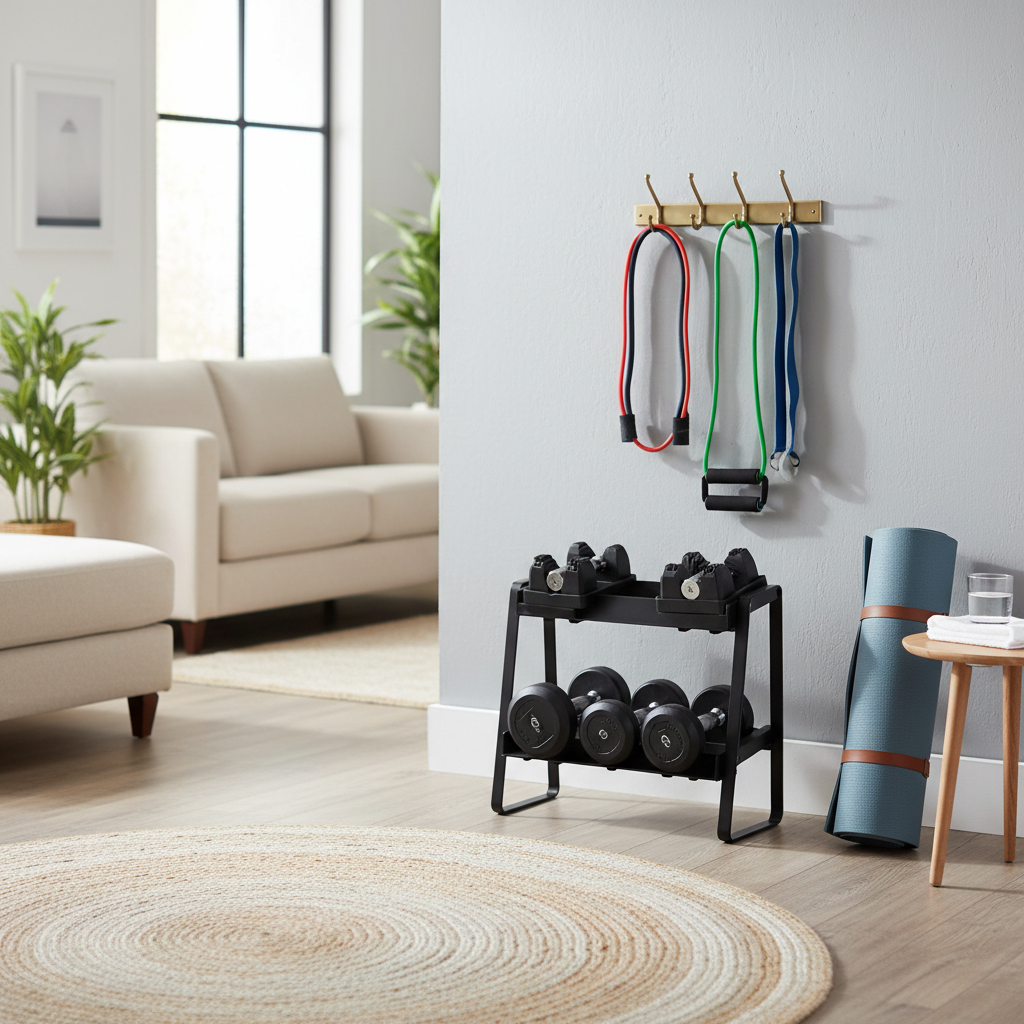
This guide helps you pick compact options that store quickly, feel good to use, and match common goals like fat loss, basic strength, mobility, and low-impact cardio. You’ll also get a quick checklist, a comparison table, and a few “buy once, cry less” tips that matter in tight spaces.
Start with the constraints: space, noise, floors, and your routine
The best compact setup usually comes from constraints, not from browsing. Small homes have predictable pain points, and your choices should respond to them.
- Storage footprint: measure where gear lives when not in use, not where it sits during a workout.
- Noise tolerance: jumping rope at 6 a.m. might be “free,” but neighbors may disagree, and you’ll stop using it.
- Flooring and load: hard floors scratch, carpet shifts, and some older buildings transmit vibration easily.
- Your workout style: if you hate complex setups, anything that takes 10 minutes to assemble becomes a dust collector.
According to the U.S. Department of Health and Human Services, adults generally benefit from a mix of aerobic activity and muscle-strengthening activity each week. You don’t need a huge gym to do that, but you do need gear that supports both categories without drama.
A quick self-check: what kind of small-space exerciser are you?
If you only answer one section in this article, answer this. It prevents “random gear syndrome.”
Pick the best match
- “I need the easiest habit possible”: choose fast setup, low storage friction, minimal decisions.
- “I want strength results”: prioritize progressive overload tools, not fancy accessories.
- “My knees or back complain”: favor low-impact cardio and controlled resistance.
- “I get bored”: pick modular items that support variety without extra bulk.
Five questions that save you money
- Where will this live on a normal Tuesday, and can I put it away in under 60 seconds?
- Will I still use it if I can’t jump, drop, or slam anything?
- Can it scale with me for 6–12 months, or will it cap out fast?
- Do I need a mat, door anchor, or floor protection to use it safely?
- Is there one “anchor piece” I can buy now, then add smaller pieces later?
Compact home fitness gear that earns its space (with a comparison table)
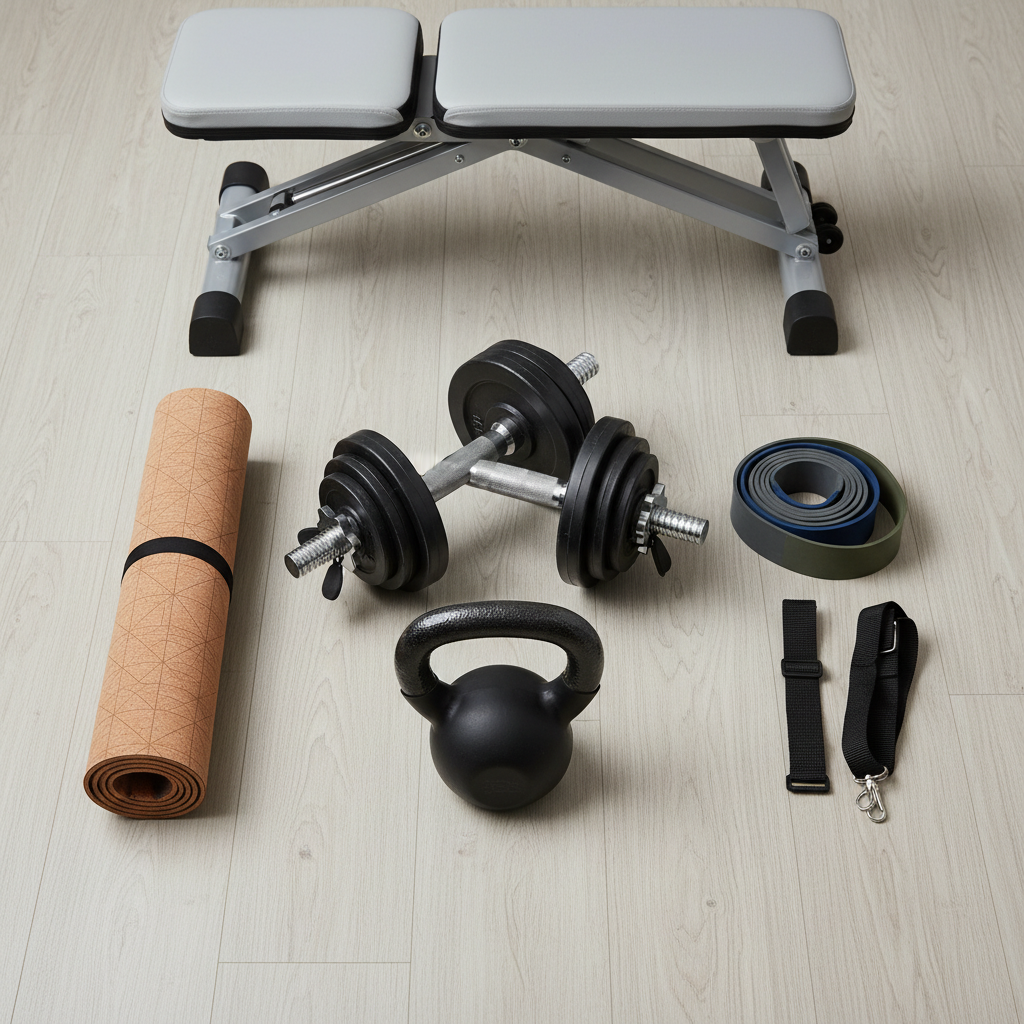
For most small homes, the sweet spot is a few pieces that cover strength, conditioning, and mobility. The goal is not minimalism for its own sake, it’s fewer items that do more.
| Gear | Best for | Space/Storage | Noise level | Watch-outs |
|---|---|---|---|---|
| Adjustable dumbbells | Full-body strength, progressive overload | Very compact vs. a rack | Low to medium | Some models feel bulky in hand, avoid dropping |
| Resistance bands + door anchor | Upper body, rehab-style work, travel workouts | Drawer-friendly | Low | Check anchor security, inspect bands for wear |
| Kettlebell (one or two) | Strength + conditioning, hips and legs | Small footprint | Medium | Technique matters, protect floors |
| Foldable bench | Pressing, rows, step-ups | Leans in a closet | Low | Stability and weight rating vary a lot |
| Suspension trainer (strap system) | Full-body, core, small-space variety | Hangs on a hook | Low | Needs a safe anchor point, door frame fit matters |
| Under-desk or compact walking pad | Low-impact cardio, daily steps | Moderate, slides under furniture | Low to medium | Check belt alignment, consider downstairs neighbors |
Smart “anchor setups” for small homes (pick one and build around it)
If you want a setup that feels complete without buying everything at once, choose an anchor, then add one supporting piece at a time. This keeps your home from filling up with almost-useful gadgets.
Setup A: strength-first, minimal storage
- Anchor: adjustable dumbbells
- Add-on: foldable bench or a sturdy step for split squats
- Small add: mini bands for glutes and shoulders
Who this fits: you want visible strength progress and you’ll repeat simple workouts consistently.
Setup B: quiet apartment-friendly, joint-considerate
- Anchor: resistance bands set with a reliable door anchor
- Add-on: thick exercise mat for grip and floor protection
- Optional: a compact walking pad for low-impact cardio
Who this fits: you share walls, you dislike impact, or you’re coming back after a break and want control.
Setup C: “I get bored” variety without extra bulk
- Anchor: suspension trainer
- Add-on: one kettlebell for hinge patterns and conditioning
- Optional: jump rope only if your floors and neighbors can handle it
Who this fits: you want dozens of movement options, but still want everything to store in a bag.
How to make compact gear feel like a real gym (practical setup tips)
Small-space training often fails for boring reasons: the mat is buried, the dumbbells live behind winter coats, or your “workout zone” becomes laundry storage. A few practical tweaks fix more than a new purchase ever will.
- Create a 2-minute reset: after each session, everything returns to one shelf, one bin, or one corner.
- Protect floors early: a quality mat or rubber tiles reduce slipping and noise, and keep you relaxed during lifts.
- Use vertical storage: wall hooks for bands, a slim rack, or over-door organizers keep gear visible.
- Pre-plan 3 workouts: one full-body strength, one conditioning, one mobility. Less choice, more action.
Key point: the best home fitness gear is the gear you can start using even when motivation is low.
Common mistakes that waste space (and how to avoid them)
Most “small home gym regrets” look predictable. If you catch these early, you’ll keep your setup tight and usable.
- Buying a big machine before you own the habit: many people do better proving consistency with bands and dumbbells first.
- Chasing ultra-light gear: tiny weights can be fine for rehab or high reps, but strength progress may stall fast.
- Ignoring ergonomics: adjustable handles, grip diameter, and bench stability matter more than cool features.
- Skipping safety checks: door anchors, band wear, and flooring grip are boring until something slips.
- Overestimating HIIT in an apartment: if you can’t jump or run in place, plan low-impact intervals instead.
According to the American Council on Exercise (ACE), proper technique and appropriate progression help reduce injury risk. If a movement feels “sketchy” at home, it usually is, and it’s worth scaling down.
Simple, repeatable workouts that match small-space gear
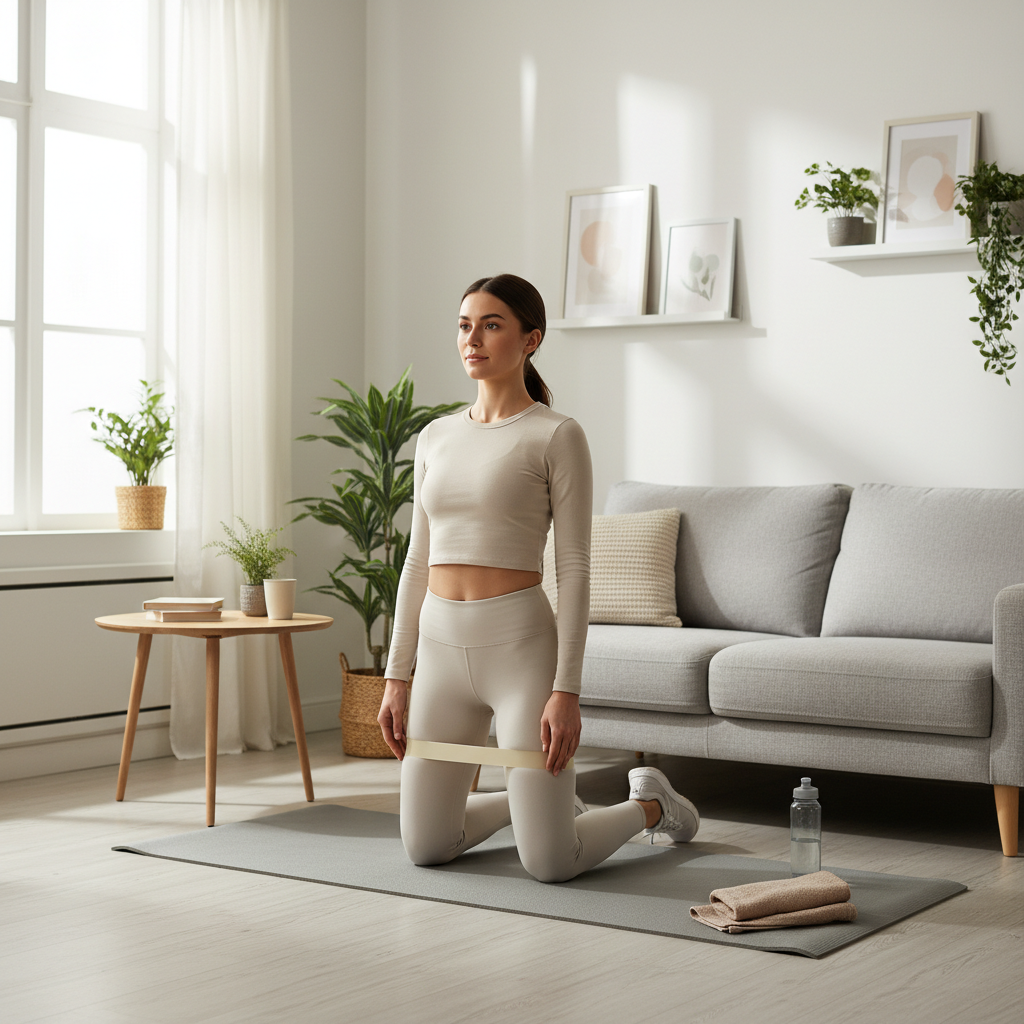
You can do a lot with a small kit. Below are three templates you can rotate through, and they work with most compact options. If you have medical concerns or pain that persists, it’s smart to consult a qualified healthcare professional or certified trainer.
Full-body strength (30–40 minutes)
- Squat pattern: goblet squat or banded squat
- Hinge pattern: Romanian deadlift with dumbbells or kettlebell
- Push: floor press, incline push-up, or band chest press
- Pull: one-arm row or band row
- Carry/core: suitcase carry or plank variations
Low-impact conditioning (15–25 minutes)
- Walking pad intervals or fast step-ups
- Kettlebell deadlift to high pull, light and controlled
- Band shadow boxing or marching band rows
Mobility and recovery (10–20 minutes)
- Hip flexor stretch and glute bridges
- Thoracic rotations and band pull-aparts
- Calf and ankle mobility, especially if you sit a lot
Conclusion: buy less, choose better, and make it easy to repeat
Compact home fitness gear works when it fits your home and your personality, not when it looks impressive in a cart. Pick one anchor piece, solve storage and floor protection early, then build slowly based on what you actually use for 4–6 weeks.
If you want a clean next step, choose one setup from the anchor section, place your gear where you can see it, and schedule three sessions for the coming week, even if they’re short. Consistency beats complexity in small spaces.
FAQ
What is the best home fitness gear for a small apartment?
For many people, adjustable dumbbells or a resistance band set wins because it stores easily and supports real progression. The “best” choice depends on noise limits and how much setup effort you tolerate.
Is a walking pad worth it for small homes?
It can be, especially if you struggle to get steps in and want low-impact cardio. Just check storage height under a bed or couch, and consider vibration for downstairs neighbors.
Can resistance bands replace weights?
Bands can build strength and muscle, particularly for higher-rep training and controlled tempo. Many lifters still prefer weights for simpler loading and long-term progression, so a hybrid approach often feels more satisfying.
How do I keep workouts quiet in an apartment?
Choose low-impact movements, use a thick mat, and avoid jumping or dropping weights. Bands, controlled dumbbell work, and walking-based cardio usually keep noise manageable.
How much space do I need for a home workout?
Often a yoga-mat-sized area is enough if your gear is compact and stored vertically. The bigger issue is clearance for arms overhead and safe footing, not total square footage.
What should I buy first if I’m on a budget?
A band set with a door anchor and a decent mat tends to be the most flexible start. If strength is your main goal and you can afford it, adjustable dumbbells may deliver more long-term value.
When should I talk to a trainer or physical therapist?
If you have persistent pain, numbness, or a history of injury, getting individualized guidance can prevent small problems from becoming long layoffs. It’s also helpful if you’re unsure about form for kettlebell or heavier dumbbell work.
If you’re trying to build a small-space routine and you’d rather not guess, a simple approach is to pick one anchor piece of home fitness gear, add only one support item, and commit to a short plan you can repeat, that’s usually where momentum starts.