
Home dumbbell set shoppers usually want the same thing: solid training options without turning a spare room into a crowded gym or wasting money on weights they never touch.
If you have ever bought a “starter” set and outgrew it in a month, or bought adjustable dumbbells and found them annoying to change mid-workout, you already know the pain points. The right pick is less about hype and more about fit: your strength level, how fast you progress, how much space you can spare, and how much friction you tolerate when swapping weights.
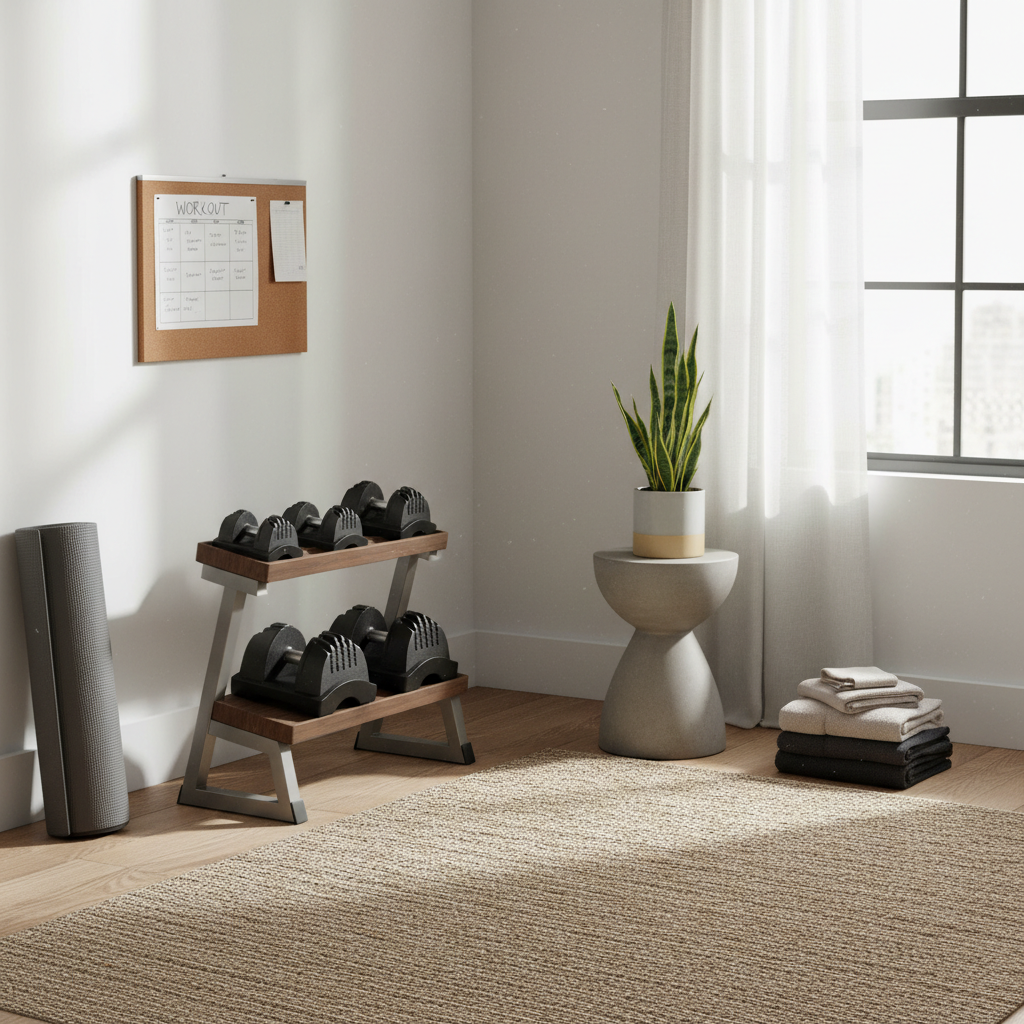
This guide breaks down what “best dumbbell sets for home use” actually means in practice, then gives clear recommendations by scenario: budget setups, small-space setups, heavier strength work, and family-friendly shared use. You will also get a quick self-check, a comparison table, and a few safety notes that people tend to ignore until a wrist or back starts complaining.
What makes a dumbbell set “best” for home use
The best set is the one you will use consistently, and in home gyms, consistency often comes down to convenience. A home dumbbell set that takes 30 seconds to change weights might sound fine, until you try supersets, drop sets, or quick transitions between rows and presses.
- Weight range and progression: Many people stall because they do not have a small enough jump. Going from 15 to 25 lb per hand is a big leap for shoulders, lateral raises, and rehab-style work.
- Change speed: Selectorized adjustable systems change fastest, spin-lock handles are slower but cheaper, and fixed pairs are fastest but take space.
- Grip comfort: Knurling (the textured pattern) helps grip, but aggressive knurling can irritate hands. Rubber or urethane coatings feel nicer for many home users and reduce noise.
- Footprint and storage: A rack matters more than people expect. If weights live on the floor, they become clutter, and clutter kills workouts.
- Durability and floor impact: If you train upstairs or on hardwood, coating quality and safe set-down behavior matter. A mat helps, but build quality still matters.
According to the American Council on Exercise (ACE), resistance training can support muscular fitness and overall health, but the program needs progressive overload, which is a fancy way of saying you need a practical way to increase challenge over time.
Quick self-check: which type of set fits you
If you want to stop overthinking, answer these quickly and pick the category that matches your reality.
- Your primary goal: fat loss circuits, muscle gain, general strength, or rehab-friendly training
- Strongest lift at home: what you can press, row, or goblet squat for 6–10 reps
- How many users: just you, a couple, or a whole family rotating
- Your tolerance for fiddly adjustments: love tinkering, or want “grab and go”
- Floor and noise constraints: apartment living vs garage/basement
Most people land in one of these buckets: (1) small-space adjustable, (2) mid-range adjustable plus a few fixed pairs, or (3) fixed set with a rack for speed and simplicity. A home dumbbell set can be a hybrid too, and hybrids often feel best once you know your favorite weights.
Best dumbbell set styles (and who they work for)
1) Adjustable selectorized dumbbells
These are the “dial and lift” systems. They are usually the best match for small spaces and for anyone who wants a wide range without a full rack.
- Good for: apartments, people who do full-body workouts, limited storage
- Watch for: max weight per hand, handle thickness, and whether the stand is included
- Reality check: some models dislike being dropped, so controlled set-down is part of the deal
2) Adjustable spin-lock dumbbells
Budget-friendly and durable, but changing plates takes time. If your workouts are slower-paced strength sets, they can be totally fine.
- Good for: tight budgets, garage gyms, people who do straight sets
- Watch for: collar tightness and plate rattle, especially as you sweat and rush
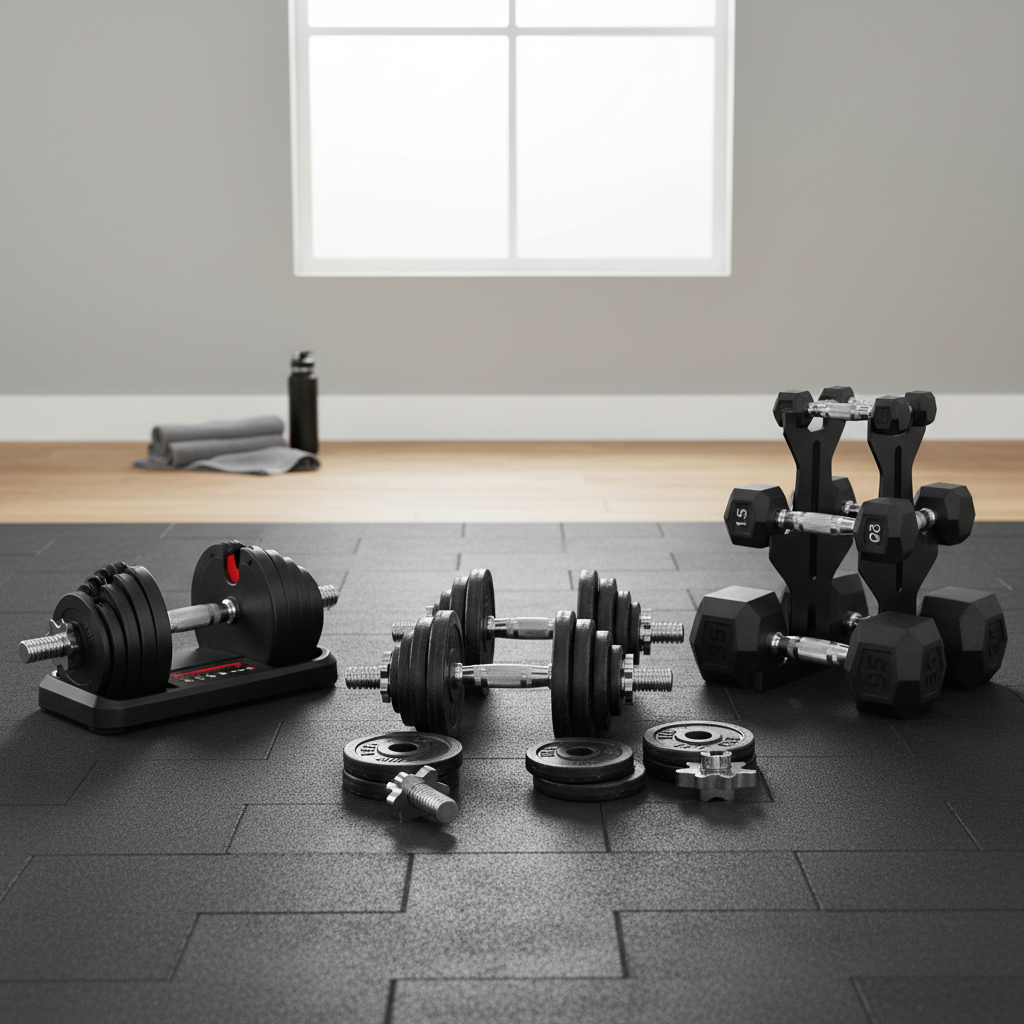
3) Fixed rubber hex dumbbell set with a rack
This is the “home gym classic.” It costs more and takes more space, but nothing beats speed. If you do supersets, circuits, or shared workouts, fixed pairs feel effortless.
- Good for: couples, families, HIIT/conditioning, frequent training
- Watch for: how many pairs you actually need, and rack stability
4) Urethane or premium fixed dumbbells
More expensive, typically lower odor, more durable finish, and often nicer knurling. Not mandatory, but if you train a lot, the “feel” matters.
- Good for: high-frequency lifters, long-term home gym builds
- Watch for: price creep, because you pay for finish and longevity
Recommended weight ranges for most home lifters
People often buy too light because it feels safer, then end up doing endless reps for legs and back. On the other hand, buying too heavy can push sloppy form. The sweet spot depends on your lifts, but these ranges tend to work as a starting point for many adults.
- General fitness: 5–30 lb per hand (with smaller jumps early)
- Muscle-building focus: 10–50 lb per hand, with room to expand
- Stronger trainees: consider 10–70/90 lb adjustable, or a fixed set extending beyond 50 lb
If you are rehabbing a shoulder, dealing with elbow pain, or returning after a long break, lighter increments matter more than big top-end numbers. If health conditions apply, it may be worth checking with a qualified fitness professional or clinician before pushing intensity.
Comparison table: common home dumbbell set options
Use this as a practical shortcut. The “best” choice is usually the one that matches your constraints, not the one with the most dramatic marketing.
| Type | Best for | Pros | Cons | Typical footprint |
|---|---|---|---|---|
| Selectorized adjustable | Small spaces, variety | Fast changes, wide range | Cost, drop sensitivity on some models | Low (often 2 cradles + optional stand) |
| Spin-lock adjustable | Budget strength training | Affordable, durable, expandable plates | Slow changes, can rattle | Low to medium (plates need storage) |
| Fixed rubber hex + rack | Supersets, family use | Grab-and-go, stable feel, quieter | Takes space, higher total cost | Medium to high (rack width matters) |
| Premium urethane fixed | Long-term serious home gym | Finish durability, feel, less wear | Expensive | Medium to high |
How to choose your home dumbbell set in 10 minutes
This is the process that usually prevents regret purchases. Quick, a little boring, but it works.
Step 1: Decide your “top weight” based on legs and back
Upper body often feels like the limiter, but legs and back drive your need for heavier weights. If goblet squats and rows are already easy, you will want more top-end capacity sooner.
Step 2: Protect your training flow
If you love circuits, pick faster adjustments or fixed pairs. If you do slower strength sessions, a cheaper adjustable system can still be a great home dumbbell set.
Step 3: Don’t ignore the small jumps
Look for increments that make sense for shoulders and arms. This is where many “one-size” sets feel clumsy.
Step 4: Plan storage before you buy
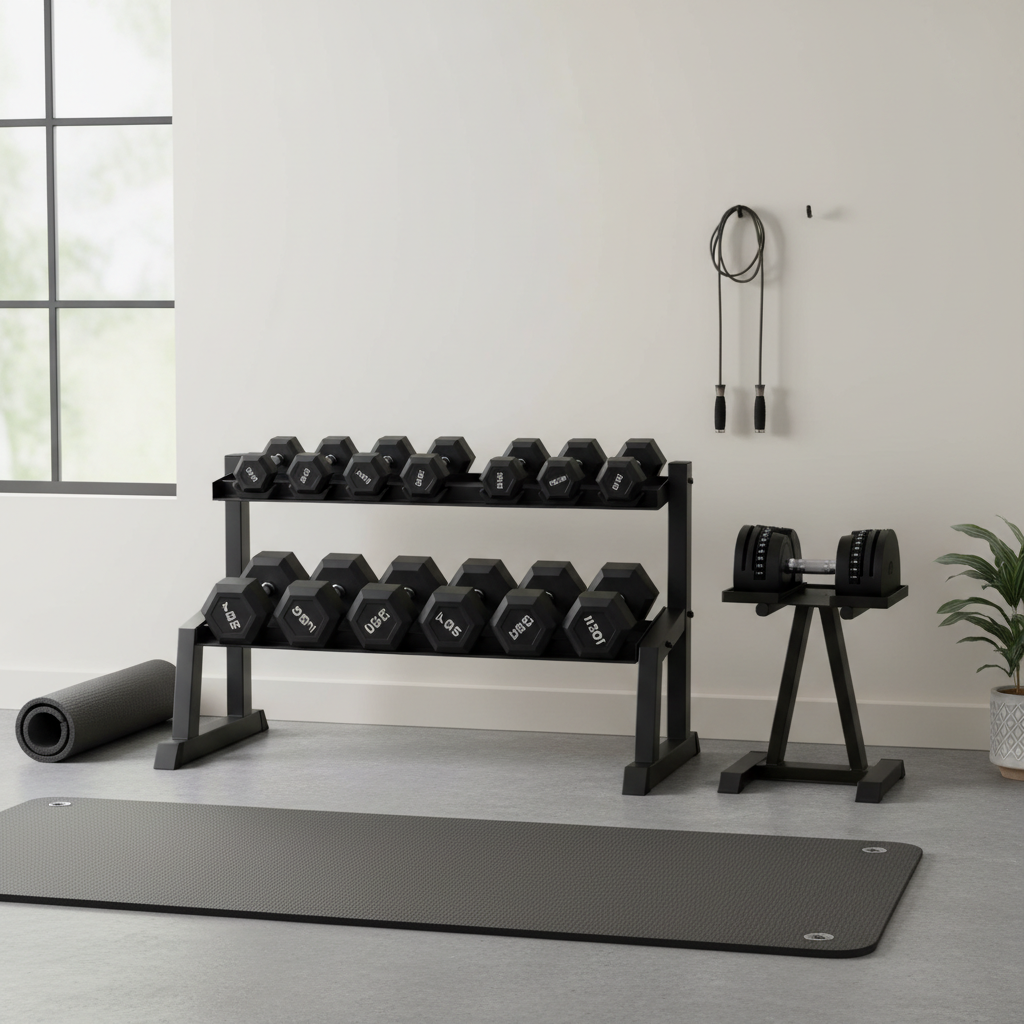
Measure the actual spot where the weights will live. A clean corner with a mat and simple rack beats a larger setup that ends up scattered around the house.
Practical training tips once you have the set
Buying weights is easy, using them for months is the real win. A few habits make a big difference.
- Pick 3–5 “anchor” movements: squat pattern, hinge pattern, press, row, loaded carry. Build workouts around these, then add accessories.
- Use double progression: keep the weight, add reps until you hit your target range, then increase load. This keeps progress steady without guessing.
- Keep a tiny log: notes app works. Without it, you tend to repeat comfortable weights.
- Warm up your grip and shoulders: a couple lighter sets can reduce strain, especially if you type all day.
According to the Centers for Disease Control and Prevention (CDC), muscle-strengthening activity is part of general health guidance for adults. The details vary by person, so if you have an injury history, consider checking form with a qualified coach or physical therapist.
Common mistakes (and how to avoid them)
- Buying only heavy weights: you end up skipping lateral raises, rear delt work, and rehab-friendly movements that keep shoulders happy.
- Buying only light weights: legs and back stop progressing, then workouts become long, grindy sessions with little payoff.
- Ignoring handle feel: a slippery or uncomfortable handle can limit training more than you expect.
- Skipping a mat: even a great home dumbbell set becomes stressful if you worry about floors or noise.
- Chasing “all-in-one” perfection: many people do better with one main system plus one or two extra fixed pairs in their most-used weights.
Key takeaways and my buying “short list” logic
If you are deciding today, here is the simplest way to narrow it down without spiraling into reviews.
- Small space and convenience matters: choose selectorized adjustable dumbbells with a stand if possible.
- Budget first, patience second: spin-lock adjustables work well for straightforward strength plans.
- Fast workouts, shared use, minimal fuss: fixed rubber hex dumbbells plus a rack win, even if the footprint is bigger.
- Long-term build: start with the range you use weekly, then add pairs as your training becomes more specific.
Your “best” option is the one that keeps training friction low. If you can keep the weights accessible, progress in sensible jumps, and avoid annoying setup time, you will get far more out of your home workouts.
If you want one clear action step, pick your target weight range, then choose the format that matches your space and workout style, not just your budget.
FAQ
What is a good starter home dumbbell set for beginners?
A common starting point is a range that includes light options for shoulders and heavier options for lower body work, often something like 5–25 or 5–30 lb. If you progress quickly, an adjustable set can save you from re-buying.
Are adjustable dumbbells safe?
In many cases, yes, if you use them as intended and set them down with control. If you plan to drop weights or do explosive movements, fixed dumbbells may be a safer match.
How heavy should my home dumbbell set be for building muscle?
For muscle gain, you usually want weights that let you work in moderate rep ranges with good form and gradually increase load. Many home lifters feel comfortable with a set that reaches at least 40–50 lb per hand, but it depends on your lifts and training history.
Is it better to buy a rack of dumbbells or adjustable ones?
A rack is hard to beat for speed and convenience, while adjustable models often win for small spaces and total cost. If you do circuits, a rack tends to feel better; if you train in a tight corner, adjustable is often the practical choice.
Do I need rubber or urethane dumbbells for home use?
Not strictly, but coatings can reduce noise and protect floors, and many people prefer the feel. In apartments, rubber-coated options plus a mat can be a calmer setup.
What weight increments should I look for?
Smaller jumps help for upper-body training and accessories. If the system forces big jumps, you may end up stalling or compensating with sloppy form.
Can one home dumbbell set work for two people?
It can, but convenience matters. Faster-adjusting systems or a few extra fixed pairs reduce waiting and keep workouts flowing, especially if strength levels differ.
How do I store dumbbells safely at home?
A rack or stand keeps walkways clear and reduces toe-stubbing accidents. If you have kids or pets, stable storage and a consistent “home base” spot is worth prioritizing.
If you are weighing a few models and want a more straightforward plan, list your space, your top-end weight needs, and the kind of workouts you actually do, then match that to the set style above. It is a small step, but it usually prevents buying a home setup you quietly avoid after week two.