
Leg glute exercises can absolutely build strong legs and a more stable, powerful lower body without a squat rack, but only if you pick movements that challenge you, use clean form, and progress them week to week.
If you’ve tried a few lunges and called it a day, you’ve probably felt the frustration: your quads burn, your knees feel cranky, and your glutes somehow still don’t “show up.” That’s common, and it’s usually a programming and technique issue, not a motivation issue.
This guide breaks down what actually works for legs and glutes using only bodyweight, how to tell which moves match your level, and how to build a simple plan you can repeat. You’ll also see where people waste effort, like doing endless reps with no progression.
Why bodyweight leg & glute training works (and when it feels like it doesn’t)
Bodyweight training works when the exercise creates enough tension for your muscles, and you repeat that tension consistently. It feels like it “doesn’t work” when the movement stops being challenging, or when the work shifts away from the target muscles.
- Glutes need range + intent: many people stay too upright in lunges and never load the hip, so quads take over.
- Progression still matters: if you always do the same reps with the same variation, your body adapts and results slow.
- Tempo is a hidden lever: slower lowering phases and pauses increase difficulty without adding weight.
- Single-leg work is your friend: it doubles the relative load, improves balance, and exposes side-to-side weaknesses.
According to the American Council on Exercise (ACE), good technique and appropriate progression are key pillars of effective strength training, which is especially relevant when you’re relying on bodyweight rather than external load.
Quick self-check: what you should train for your goal
Before you collect a dozen moves, get honest about what you need most. This takes two minutes and saves weeks of random workouts.
Pick the bucket you’re in
- Beginner / returning: you feel knee or low-back compensation quickly, balance feels shaky, soreness hits hard.
- Intermediate: basic squats/lunges feel easy past 15–20 reps, you need harder variations and better control.
- Glute activation problem: hamstrings cramp during bridges, you feel lunges mostly in front thigh.
- Knee sensitivity: deep knee bend patterns flare you up, but hip hinges feel fine.
Mini test (no equipment)
- 30-second single-leg sit-to-stand from a chair: if you collapse inward at the knee, prioritize hip stability (glute med work).
- Glute bridge hold for 20–30 seconds: if hamstrings cramp fast, adjust foot position and add pauses.
- Split squat 8 reps each side: if front knee pain appears, shorten range and focus on hip-back mechanics.
If pain feels sharp, radiating, or persistent, it’s smart to modify and consider a clinician’s input. Training should be challenging, not sketchy.
The best bodyweight leg glute exercises (with form cues that actually help)
Below are go-to moves that cover squats, hinges, lunges, and lateral stability. You don’t need all of them in one day, but you do want coverage across the week.
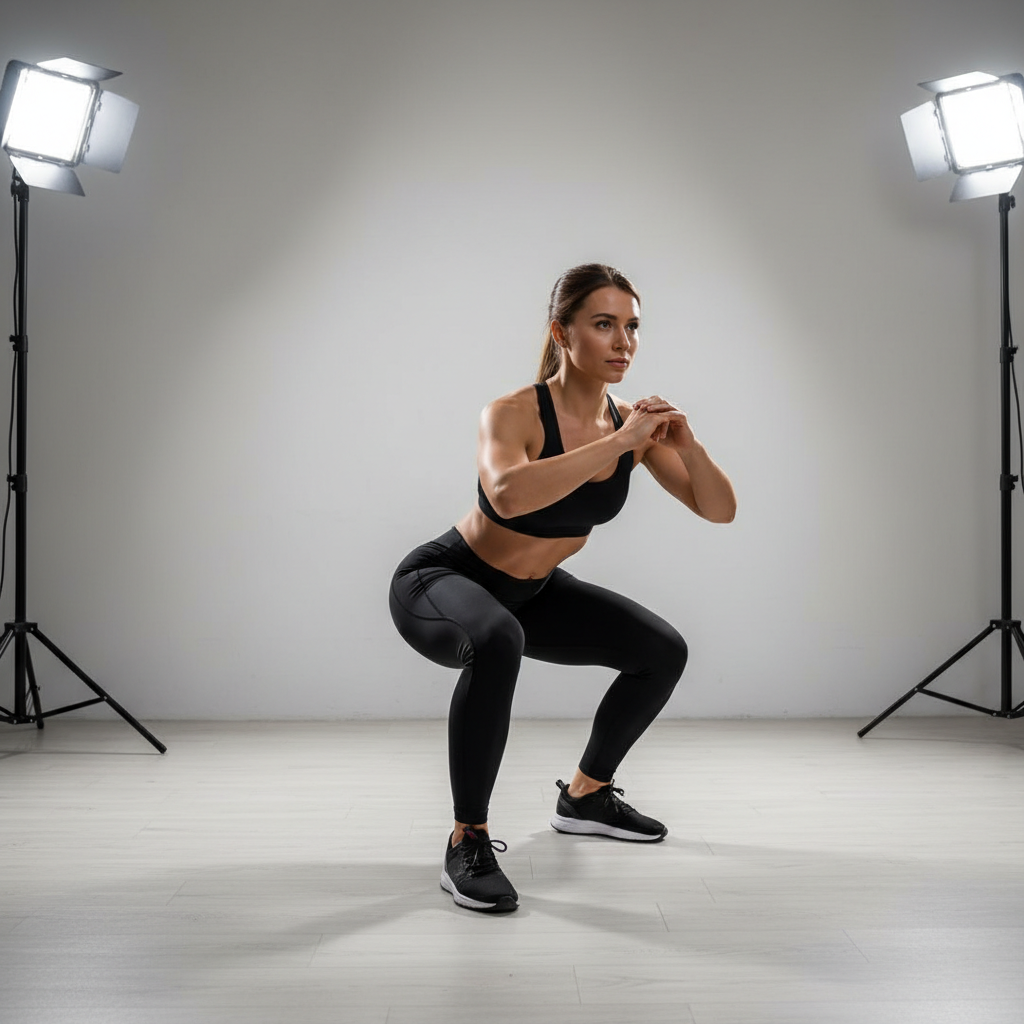
1) Split squat (glute-biased)
- How it should feel: glute and quad of the front leg, with control.
- Cue: slight forward torso lean, keep ribs stacked, push the floor away through the whole foot.
- Common miss: staying too upright, turning it into a knee-only movement.
2) Reverse lunge (often friendlier on knees)
- How it should feel: front-leg glute and quad, less forward knee stress for many people.
- Cue: step back quietly, control the descent, stand by driving through front heel/midfoot.
3) Single-leg Romanian deadlift (bodyweight hinge)
- How it should feel: glute and hamstring of the standing leg, plus balance.
- Cue: hips square to the floor, reach back with the free leg, keep back long.
- Scale: touch a wall/chair lightly for balance so the hinge stays honest.
4) Hip thrust/bridge (glute strength + control)
- How it should feel: glutes doing the work, not low back.
- Cue: tuck pelvis slightly, pause at top 1–2 seconds, ribs down.
- If hamstrings cramp: bring feet a bit closer, reduce range, emphasize the pause.
5) Squat variations (for legs, plus glutes when done right)
- Options: tempo air squat, narrow-to-wide stance shifts, squat-to-box (chair) for consistency.
- Cue: knees track with toes, sit between your hips, keep full foot contact.
6) Lateral lunge or Cossack squat (side-to-side strength)
- Why it matters: glute medius and adductors help stabilize knees and pelvis.
- Cue: push hips back on the bending side, keep the other leg long.
7) Step-up (stairs or sturdy box/chair)
- How it should feel: glute and quad of the working leg.
- Cue: minimal push from the trailing foot, stand tall at the top without bouncing.
Make bodyweight feel heavy: simple progressions that drive results
Most people plateau because they only change reps. For leg and glute work, you can progress without equipment by manipulating leverage, tempo, range, and density.
- Go from two legs to one: squat → split squat → rear-foot-elevated split squat.
- Slow the lowering: 3–5 seconds down, normal up, especially on split squats and squats.
- Add pauses: hold the bottom 1 second, or hold the top of bridges 2 seconds.
- Increase range if comfortable: deficit reverse lunge (front foot elevated slightly), deeper hinge.
- Use mechanical drop sets: hard variation for 6–8 reps, then easier version immediately for 6–10.
A practical rule: finish most sets with 1–3 reps in reserve. If you always stop at 10 because the program says 10, you might be under-loading.
Two simple workouts + weekly schedule (no guesswork)
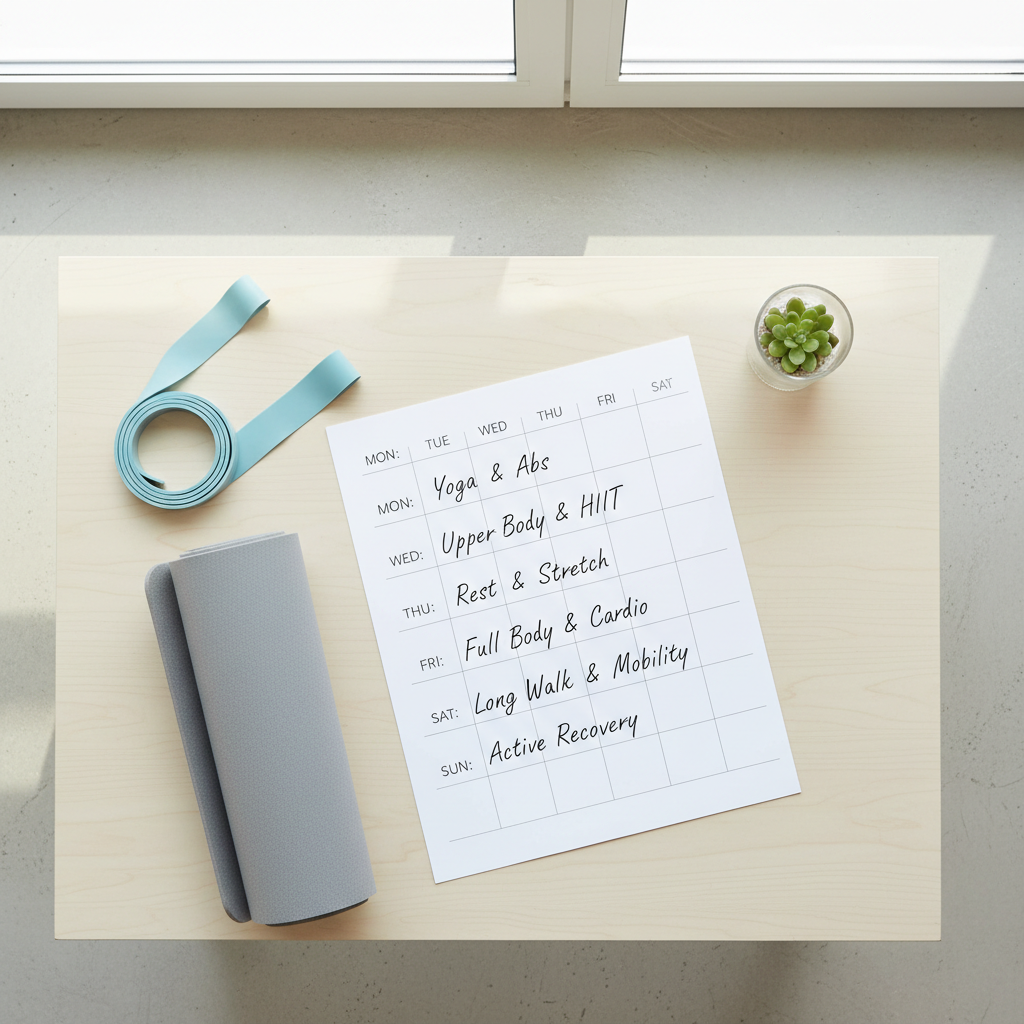
Pick two sessions and alternate them. You can train 2–4 days per week depending on recovery, time, and soreness. If you’re new, start with two days and earn your way up.
Workout A (squat + lunge emphasis)
- Tempo air squat: 3 sets x 8–12 (3 seconds down)
- Reverse lunge: 3 sets x 8–12 each side
- Step-up: 2–3 sets x 8–12 each side
- Side plank (for hip stability): 2 sets x 20–40 seconds each side
Workout B (hinge + glute emphasis)
- Single-leg RDL (supported if needed): 3 sets x 6–10 each side
- Hip bridge with 2-second top pause: 3 sets x 10–15
- Split squat (glute-biased): 3 sets x 6–10 each side
- Lateral lunge: 2 sets x 6–10 each side
Weekly options (choose what you can sustain)
- 2 days/week: A, B
- 3 days/week: A, B, A (next week start with B)
- 4 days/week: A, B, rest, A, B
Quick table: exercise selection by goal
| Goal | Prioritize | Progression idea |
|---|---|---|
| Glute growth feel | Split squat, hip bridge/thrust, single-leg RDL | Add pauses + longer lowering |
| Leg strength/endurance | Tempo squats, step-ups, reverse lunges | More sets, shorter rests |
| Knee-friendly training | Hip hinge patterns, reverse lunge, box squat | Reduce depth, control tempo |
| Athletic stability | Single-leg work, lateral lunges, side planks | Unassisted balance + slow reps |
Technique fixes and common mistakes (where progress usually dies)
This is the unglamorous part, but it’s where your results come from. A few small adjustments can turn “quad burn only” into the glute-dominant work you expected.
- Going too fast: speed hides weak ranges, slow down and own the bottom position.
- Knees collapsing inward: reduce range, widen stance slightly, add lateral work like Cossacks.
- Over-arching on bridges: keep ribs down, aim for hip extension not low-back extension.
- Not training close enough to hard: if you can chat through every set, change the variation or tempo.
- Doing only one pattern: squats alone miss hinge strength, hinges alone miss knee-dominant strength.
Key takeaway: if your form breaks before your muscles fatigue, the exercise is currently too hard or too sloppy, scale it and build back up.
When to scale back or ask a professional
Bodyweight training is generally safe, but your joints and history matter. If you feel swelling, sharp pain, numbness, or symptoms that linger beyond normal soreness, it’s reasonable to pause and get individualized guidance.
- Check in with a physical therapist if knee/hip/back pain keeps returning even after form changes.
- Work with a qualified trainer if you’re unsure about technique, especially on single-leg hinges and deep lunge patterns.
- Consult a healthcare professional if you’re post-op, pregnant, or managing a medical condition that affects exercise tolerance.
According to the CDC, adults benefit from muscle-strengthening activity that works major muscle groups on two or more days per week, but the exact approach should fit your body and limitations.
Conclusion: a practical way to stick with it
Strong legs and glutes come from a handful of smart movements done consistently, not an endless list of variations. Choose 4–6 exercises, hit them 2–4 times weekly, and make one small progression every 1–2 weeks, a slower tempo, a tougher variation, a bit more range.
If you want an easy starting point, run Workout A and B for three weeks, track reps and rest times, then upgrade just one move at a time. That approach keeps your leg glute exercises simple, measurable, and way more effective than bouncing between random routines.
FAQ
What are the best leg glute exercises if I only have 15 minutes?
Pick one squat pattern and one hinge pattern, then superset them. For example, tempo squats with hip bridges, 3 rounds, short rests. You get coverage without rushing form.
How many times per week should I train legs and glutes with bodyweight?
Most people do well with 2–4 sessions weekly. Two days works for consistency, four days works if volume per session stays reasonable and recovery feels good.
Why do I feel lunges in my quads more than my glutes?
Often the torso stays too upright and the front knee travels forward, so the movement becomes more knee-dominant. Try a slight forward lean, a longer stance, and a controlled descent.
Can bodyweight training actually grow glutes, or do I need weights?
Many people can build noticeable strength and some muscle using unilateral work, tempo, and pauses. Over time, some may want external load for continued growth, but it’s not a requirement on day one.
What if my knees hurt during squats or lunges?
Reduce depth, slow the lowering, and try reverse lunges or box squats. If discomfort persists or feels sharp, consider a professional assessment since knee pain has multiple possible causes.
How do I know when to progress to harder variations?
If you can hit the top of the rep range with solid control and still feel you had more in the tank, it’s probably time. Progress one variable at a time so you can tell what helps.
Do I need “glute activation” warm-ups?
Sometimes a short warm-up helps you feel the right muscles, especially if you sit a lot. Keep it brief, then earn activation through the main sets where the real training effect happens.
If you’re trying to build a consistent home routine but keep stalling, it may help to have someone map progressions to your current level, so each week nudges you forward without guessing or overdoing it.