
Volleyball Skills can feel like a lot on day one, because the ball moves fast and every touch seems to have its own “rules.” The good news is you don’t need fancy plays to get competent quickly, you need a clean platform, simple footwork, and a couple of repeatable habits.
If you’re a beginner, the fastest path is learning the fundamentals in the same order the game demands them: pass first, then set, then attack, and keep the ball in play with smart serving and controlled defense. That sequence also keeps practice less frustrating, because it matches what actually happens in a rally.
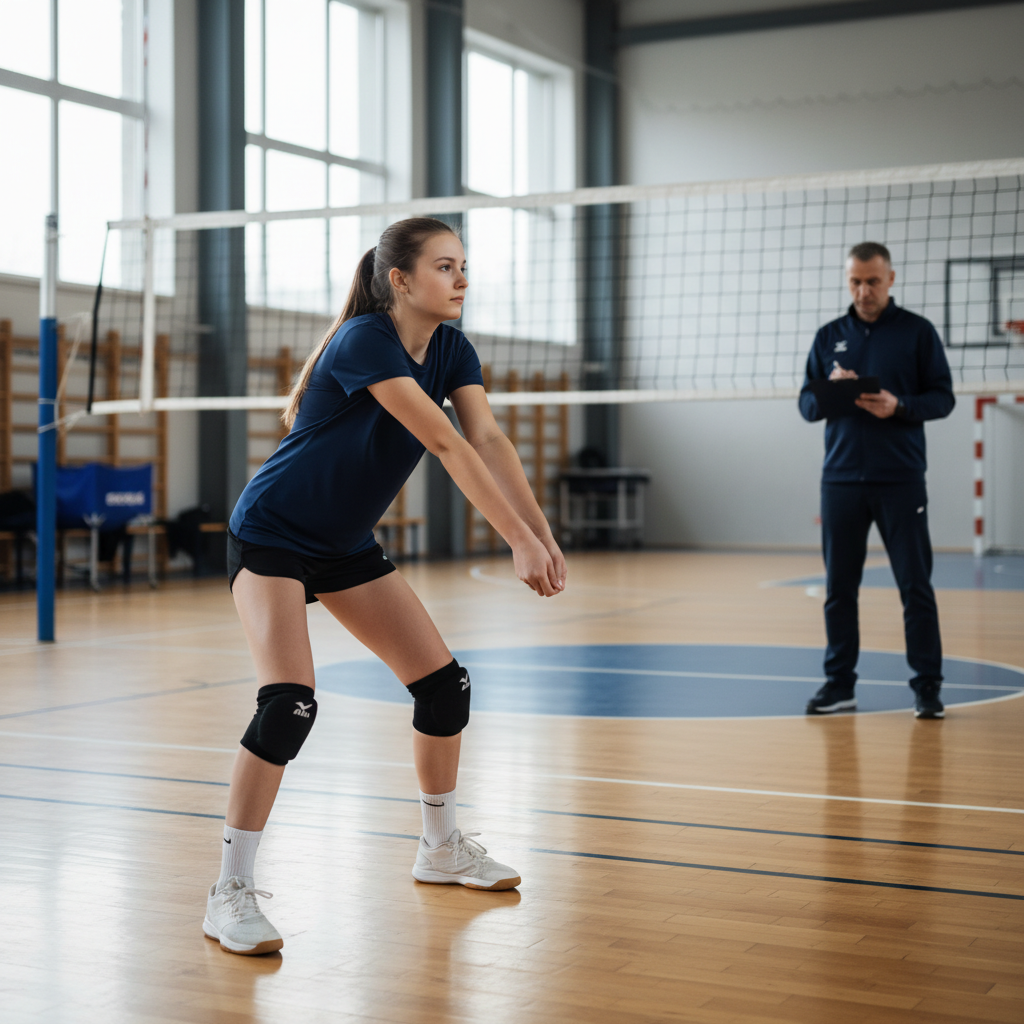
I also want to clear up a common misconception: beginners often think they need to jump higher or hit harder. In most gyms, what gets you on the court is consistency, communication, and being the person who makes the “easy” ball look easy.
What “basic” Volleyball Skills really include
For most beginner players, “basic” means the skills that show up every single rally, plus the habits that keep errors low. Here’s the practical bundle:
- Ball control: passing, setting, and free balls that go where you intend
- Serving: getting the ball in with a repeatable routine
- Footwork + posture: staying balanced so your arms and hands can do their job
- Reading: tracking the ball early, moving before it drops on you
- Communication: calling “mine,” “help,” “out,” and actually meaning it
According to USA Volleyball, fundamentals like posture, platform angles, and efficient movement patterns are the foundation for consistent ball control. In plain terms, your body position does more work than your hands do.
Why beginners struggle (and it’s usually not “talent”)
If you feel stuck, it’s often one of these reality-of-the-game problems:
- You’re late: you move after the ball reaches you, so you swing at it instead of guiding it.
- Your platform changes every rep: elbows bend, wrists separate, or shoulders twist, so the ball ricochets.
- You aim with force: you try to “push” the ball to the target rather than set an angle and let it rebound.
- You practice too many things at once: ten random drills feel productive, but none get enough reps to lock in.
Many new players also underestimate how much simple conditioning matters. Not extreme training, just being able to stay low, move twice, and still control the next contact.
Quick self-check: what should you fix first?
Use this as a 2-minute diagnosis before your next open gym. Pick the first “yes” you hit, and start there.
- Passing: Do your passes often fly behind you or off to the side? If yes, your platform angle and shoulders need work.
- Serving: Do you miss more than 2 out of 10 serves? If yes, simplify to an easier serve and build routine.
- Setting: Do your sets spin wildly or double-contact often? If yes, slow down and fix hand shape and timing.
- Movement: Do you feel “stuck in cement” when the ball changes direction? If yes, your ready position is too tall.
- Confidence: Do you hesitate and then collide with someone? If yes, communication and early calling come first.
One more honest check: if you can’t keep a short pepper rally going, you’ll benefit more from controlled reps than from jumping and hitting.
Passing (forearm pass): the skill that makes everything else easier
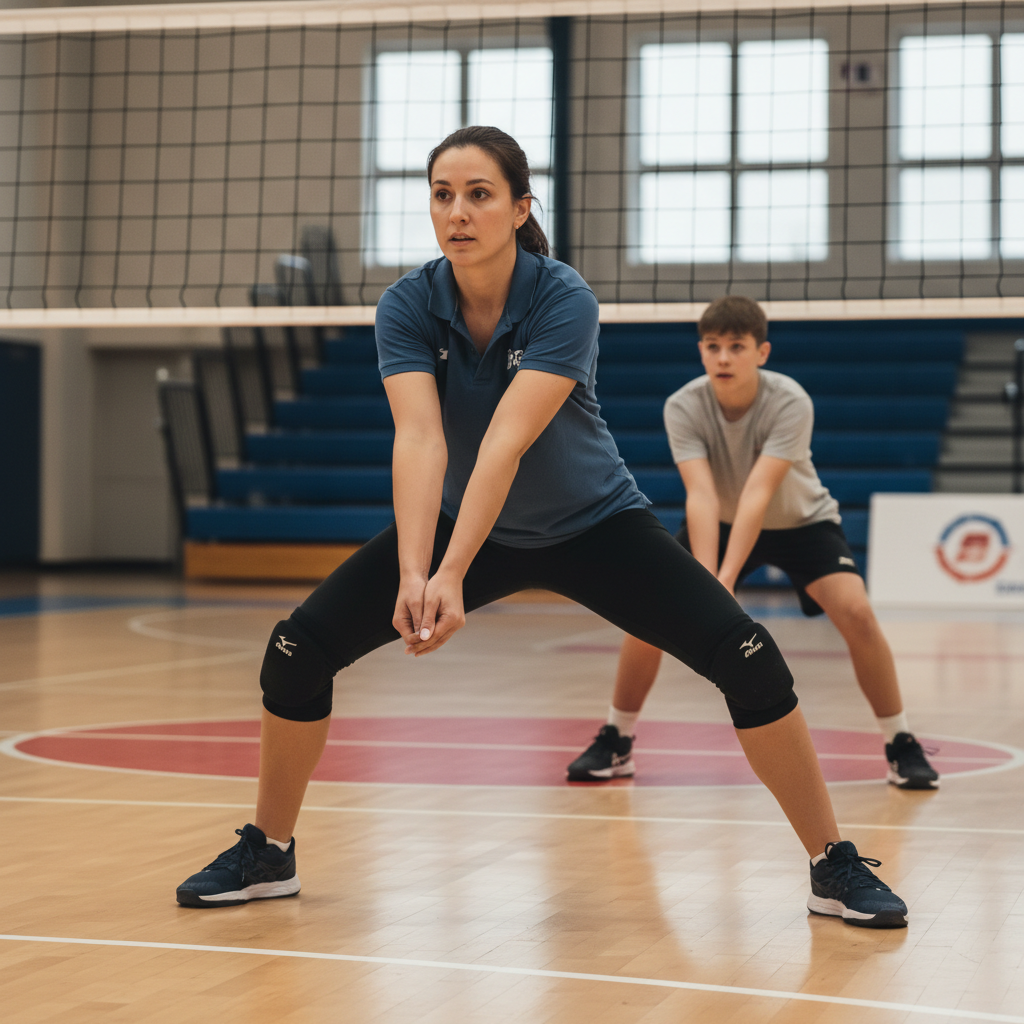
A good pass is less about “bumping” and more about presenting a stable surface. Aim for repeatability.
Key technique cues
- Ready position: knees bent, chest slightly forward, hands in front, weight on the balls of your feet.
- Build a platform: wrists together, thumbs parallel, elbows straight but not locked.
- Angle first: face your target with shoulders and hips when possible, then let the ball rebound.
- Quiet arms: small lift from legs beats a big arm swing in most beginner situations.
Beginner-friendly passing drills
- Wall rebounds: pass to a wall target (tape a square), catch if needed, reset, repeat for clean form.
- Partner toss to target: partner tosses easy balls, you pass to a cone or taped spot.
- 3-pass challenge: can you make 3 controlled passes in a row without chasing?
Quick fix: if the ball pops up and backward, your platform points up. If it dives into the net, platform points down. Adjust angle before you contact the ball, not during.
Serving: keep it simple, then build pressure
Serving wins points fast at lower levels, but only if the ball goes in. Start with a serve you can repeat under mild stress.
Two common beginner serves
- Standing float: controlled contact with a firm hand, minimal spin, easier to keep in.
- Underhand: totally acceptable while you build timing, especially if you’re learning mechanics.
Routine that reduces misses
- Pick a target zone (deep middle is a safe start).
- Use the same number of breaths and bounces every time.
- Toss the ball the same height, even if it feels “too low” at first.
- Finish your hand toward the target, then hold your balance for a beat.
If your shoulder hurts, or you feel sharp pain with serving, it’s smarter to stop and ask a coach or medical professional for guidance. Pushing through overhead pain can backfire.
Setting: make the ball hittable, not perfect
Setting is touchy for beginners because timing and hand position matter, and the rules can be strict in some gyms. Still, you can get useful fast.
What good beginner setting looks like
- Early feet: get under the ball, don’t reach from behind your head.
- Hands shaped like a window: thumbs and index fingers form a triangle, fingers spread.
- Soft contact: absorb slightly, then extend, think “catch-and-release” without actually catching.
- High and predictable: give hitters time, especially when your team is learning.
Rule note: double contacts and lifts are called differently by level and referee. If you’re unsure, ask what the gym plays, it saves arguments later.
Hitting and attacking: smart contact beats big swings
As a beginner, your job is often to put a controlled ball into the court, not to score like a college outside hitter. You can still be dangerous with good choices.
Simple approach and contact
- Approach rhythm: many right-handers use left-right-left, but keep it slow until it feels natural.
- See the set: wait, then go. Going early leads to reaching and tipping by accident.
- Contact in front: if you hit behind your head, you’ll spray balls out.
- Roll shot option: open hand, topspin to the deep corners, great when the set is off.
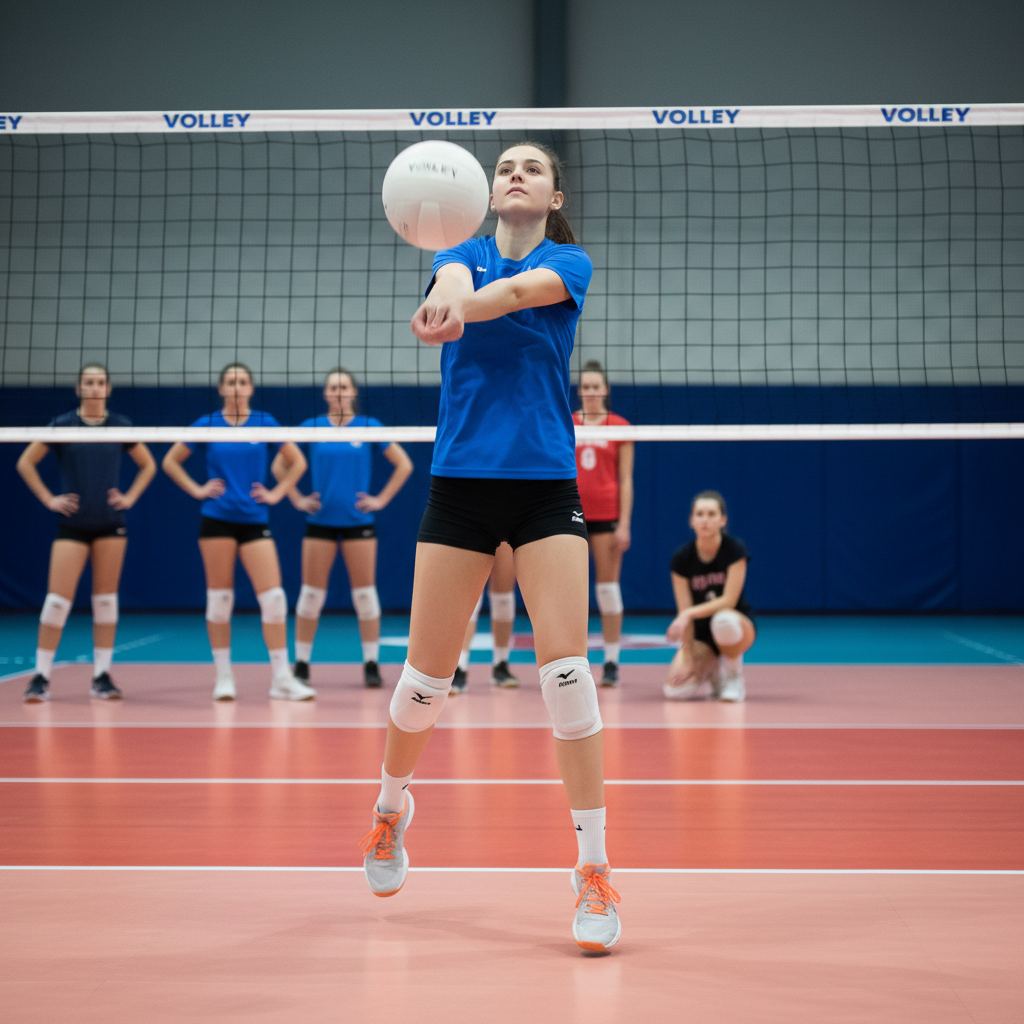
Reality check: if you’re missing more than you’re scoring, switch to a controlled roll shot or deep free ball for a while. Coaches love players who stop donating points.
Defense, positioning, and communication (the “invisible” fundamentals)
Defense is where beginner teams leak points, not always because they can’t dig, but because nobody knows who owns the space.
Easy habits that change rallies
- Call early: “Mine” before the ball crosses the net helps teammates commit.
- Stay low: if you stand up between contacts, you’ll always feel late.
- Middle of your body: move your feet so the ball meets your platform, avoid reaching with one arm.
- Cover hitters: stand ready for blocks and deflections, especially close to the net.
According to NCAA volleyball educational resources, effective team defense relies heavily on communication and reading the attacker’s options. That’s not advanced strategy, it’s simply calling the ball and recognizing where shots tend to go.
A simple 30–45 minute practice plan (and what to track)
If you only have one session a week, structure matters. Here’s a practical plan that keeps reps high.
Session outline
- 8 minutes: pepper progression (start with toss-catch if needed, then pass-set-hit light)
- 12 minutes: passing reps (partner toss, then easy serve-receive)
- 10 minutes: serving routine (10 balls, track makes, reset when tired)
- 10 minutes: setting reps (to a target, then to a hitter standing)
- 5 minutes: game-like points (short court, focus on 3 contacts)
Beginner progress table
| Skill | What to measure | Good beginner target |
|---|---|---|
| Serving | Serves in (out of 10) | 7–9 in, with the same routine |
| Passing | Passes to “setter zone” (out of 10) | 6–8 controllable balls |
| Setting | Set height + location consistency | Mostly same arc, hittable |
| Attacking | In-bounds controlled attacks (out of 10) | 6+ in with intent, not chaos |
Key point: track consistency, not highlights. If your “average rep” improves, your game improves.
Common mistakes that waste practice time
- Only practicing spikes: fun, yes, but rallies start with a pass and a serve.
- Ignoring footwork: most ball control issues are late feet, not “bad hands.”
- Practicing while exhausted: form collapses, and you train the collapse.
- Chasing perfect form: pick one cue for the week, stick with it, then add the next.
If you’re learning at open gyms, a small social tip helps too: ask where they want passes, what calls they use, and what level of rule strictness they expect. It prevents awkward moments.
When it’s worth getting coaching (or extra help)
Many people can build solid Volleyball Skills through self-practice, but some situations deserve a coach’s eyes:
- You’ve practiced regularly for a few weeks and the same error never changes.
- You feel shoulder, wrist, or knee pain that returns when you play.
- You want to play organized leagues and need cleaner technique for serve-receive and setting.
A single session with a qualified coach can be enough to fix one major habit, especially platform angles and setting contact. If pain is part of the picture, consider consulting a medical professional.
Conclusion: build the basics, then let the game speed up
Beginner Volleyball Skills improve fastest when you commit to a few fundamentals and repeat them until they hold up under pressure. Get your pass under control, choose a serve you trust, and keep your feet active so every touch feels less rushed.
Next time you play, pick one focus, like “quiet platform” or “serve routine,” and track it for 10 minutes. Small wins stack, and they stack faster than you think.
FAQ
- What Volleyball Skills should I learn first as a beginner?
Start with passing and serving. Passing keeps rallies alive, and serving stops you from giving away points before the rally even starts. - How can I stop shanking passes to the side?
Most shanks come from a twisted platform or uneven shoulders. Square up earlier, lock in wrists, and aim the platform before contact. - Is underhand serving “bad” in volleyball?
Not really. In many beginner settings it’s a practical way to put the ball in and learn routine, then you can transition to an overhand float. - Why do my sets spin and drift?
Often it’s inconsistent hand contact or taking the ball too low. Try getting under the ball sooner and releasing with even finger pressure. - Do I need to jump high to be a good hitter?
At beginner level, not usually. A controlled swing, good contact point, and smart placement produce more points than raw power. - How often should I practice volleyball as a beginner?
Many people improve with 1–3 sessions per week, as long as reps are focused. Ten minutes of quality serving and passing beats an hour of random play. - What should I say on the court to communicate better?
Keep it simple: “Mine,” “Help,” “Out,” and “Short.” The key is calling early and loudly enough that teammates can commit.
If you’re trying to level up quickly, it helps to film a few reps and compare them to a simple checklist, or ask a coach to watch one skill at a time. That small feedback loop often saves weeks of guessing.