
Yoga for flexibility works best when you stop chasing the deepest stretch and start chasing consistency, good alignment, and calm breathing. If you feel “tight everywhere,” you’re not alone, most people sit a lot, train hard without enough recovery, or rush stretches at the end of a workout.
Flexibility also isn’t just about touching your toes. It’s about how comfortably you can move through daily life, squat down, reach overhead, or recover after runs and lifting. The good news is that a small set of poses, done regularly, can make a noticeable difference for many bodies.
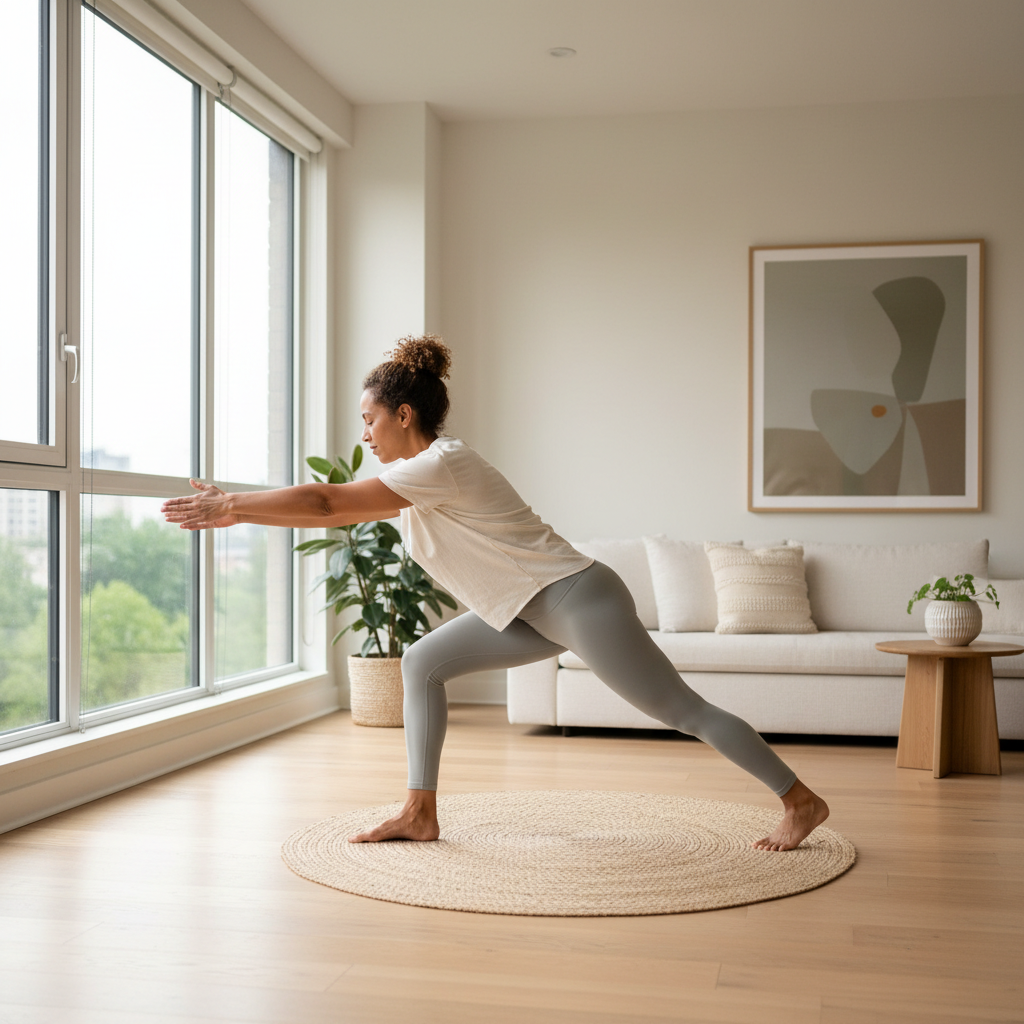
This guide focuses on the poses that tend to deliver the most “bang for your time,” plus simple form cues so you stretch the intended area instead of dumping into joints. You’ll also get a quick self-check, a weekly plan, and a few honest notes on what yoga can and can’t do.
What “tight” usually means (and why flexibility plateaus happen)
People often assume tightness equals “short muscles,” but in real life it’s often more mixed. Sometimes muscle tissue adapts short, sometimes your nervous system resists a range that feels unsafe, and sometimes you’re simply fatigued.
- Too much intensity: stretching to a 9/10 sensation can trigger guarding, you feel tighter tomorrow and blame your body.
- Not enough time under gentle tension: 15 seconds once in a while rarely changes much for adults.
- Weakness in the end range: you can “pull” into a position, but you can’t control it, your brain keeps the brakes on.
- Joint limitation: hips and ankles vary person to person, bone shape can limit depth even with great mobility.
According to the American Council on Exercise (ACE), flexibility work is most effective when it’s regular and when stretches are held long enough to allow tissues and tolerance to adapt. That’s a fancy way of saying, do less drama, do it more often.
Quick self-check: which areas need flexibility most?
You don’t need a full assessment to get value from yoga for flexibility, but a simple check helps you pick poses with intention. Try these quick screens and notice where you feel restriction or compensation.
- Hamstrings: can you hinge forward with a long spine, or does your back round immediately?
- Hip flexors: in a low lunge, do you feel the front of the back hip open, or does your low back pinch?
- Glutes/external hips: in figure-four, does the hip feel jammed rather than stretched?
- Shoulders/thoracic spine: can you reach arms overhead without ribs flaring or neck tightening?
- Ankles: can your knee track over your toes in a squat without heels lifting?
Key point: mild, spread-out sensation usually signals a productive stretch. Sharp pain, pinching, numbness, or tingling is your cue to back out and modify, and if it persists, consider checking with a qualified clinician.
Best yoga poses for flexibility (with cues and modifications)
Below are the poses that, in many classes and home practices, cover the most common tight zones. Keep effort around a 6–7/10, breathe slowly, and aim for steadiness rather than depth.
1) Downward-Facing Dog (hamstrings, calves, shoulders)
Think “long spine” more than “heels down.” Bend knees as much as needed to keep your back from rounding.
- Cue: hands press, hips lift up and back, ribs knit slightly so the low back stays long.
- Common fix: alternate bending one knee at a time to open calves without forcing.
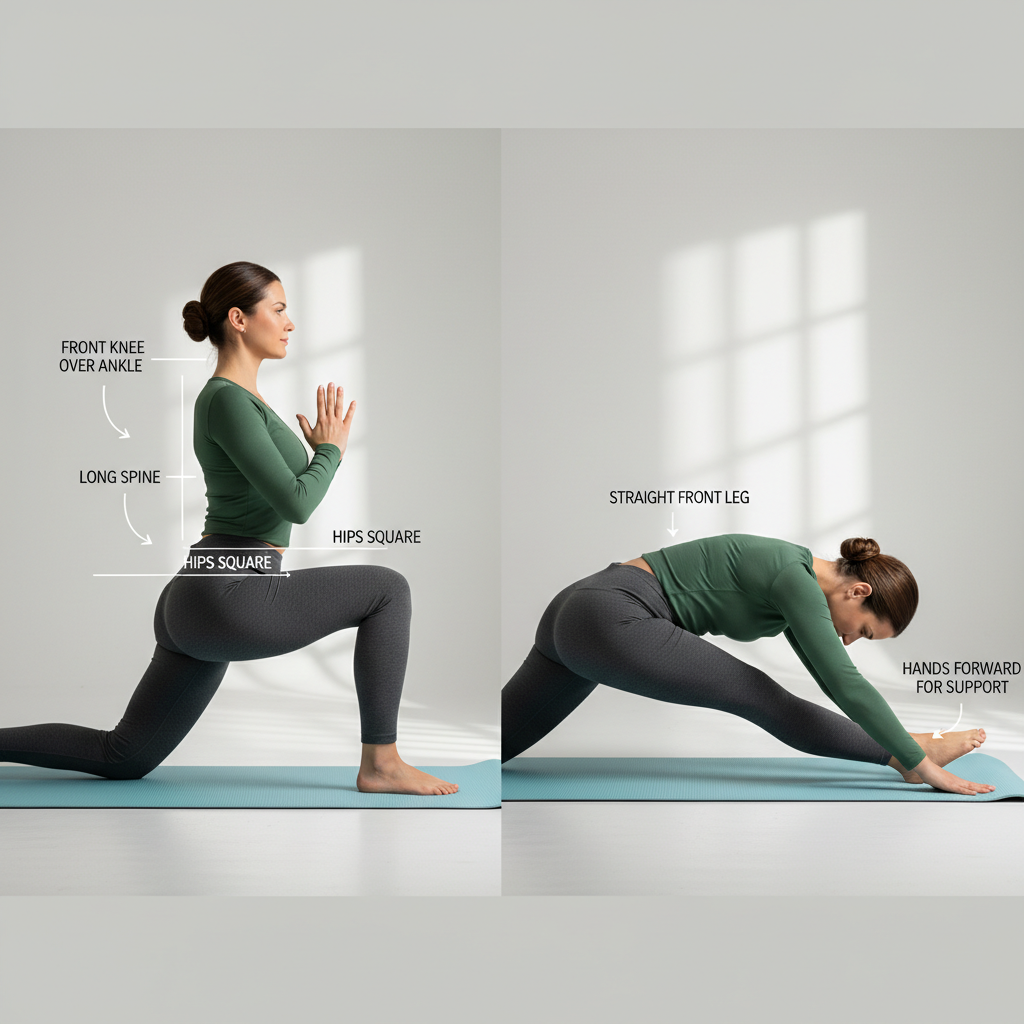
2) Low Lunge (hip flexors, quads)
This is the pose many runners and desk workers need, but it’s easy to “steal” the stretch from your low back.
- Cue: tuck pelvis gently (think tailbone heavy), then shift forward until you feel the front of the back hip.
- Modify: pad the back knee, keep hands on blocks if balance wobbles.
3) Half Splits (hamstrings, calves)
Half splits hits hamstrings with more control than yanking in a standing forward fold.
- Cue: hips stay stacked over the back knee, flex front foot, fold from hips.
- Modify: micro-bend the front knee if you feel tugging behind the knee.
4) Pigeon Pose (glutes, deep hip rotators)
Pigeon can feel amazing, or feel like a hard stop. If you feel pinching at the front of the hip, try a different angle.
- Cue: keep hips level, use props under the front hip so you’re not hanging in the joint.
- Modify: do Figure-Four on your back if pigeon feels too intense.
5) Seated Forward Fold (hamstrings, back line)
This pose often turns into a rounding contest. Make it a hinge practice, not a spine sacrifice.
- Cue: sit on a folded blanket, bend knees slightly, lead with your chest.
- Modify: strap around feet so shoulders stay relaxed.
6) Reclined Twist (spine, glutes)
Twists are more about a relaxed exhale than leverage. If your shoulder pops up, reduce the range.
- Cue: knees together, breathe out and soften ribs, keep neck comfortable.
7) Bridge Pose (front-body opening plus end-range strength)
Bridge isn’t “a stretch-only” pose, which is why it helps flexibility stick. Strength at end range often reduces the feeling of tightness.
- Cue: feet hip-width, press evenly, lift hips, keep knees tracking forward.
- Modify: place a block under sacrum for a supported version.
A simple hold-time table (so you don’t guess)
If you want flexibility changes, you need enough time in the shape without turning it into a grimace. These ranges work well for many people, adjust based on comfort and experience.
| Pose type | Hold time | Breathing focus | What you should feel |
|---|---|---|---|
| Gentle static stretch (half splits, seated fold) | 30–60 seconds | Slow nasal breathing | Broad, manageable tension |
| Deeper hip opener (pigeon/figure-four) | 45–90 seconds | Long exhales | Stretch in glutes, not joint pinching |
| Reset/restorative (twist, supported bridge) | 60–120 seconds | Relax jaw/shoulders | Downshift, less gripping |
How to practice: two routines (10 minutes and 25 minutes)
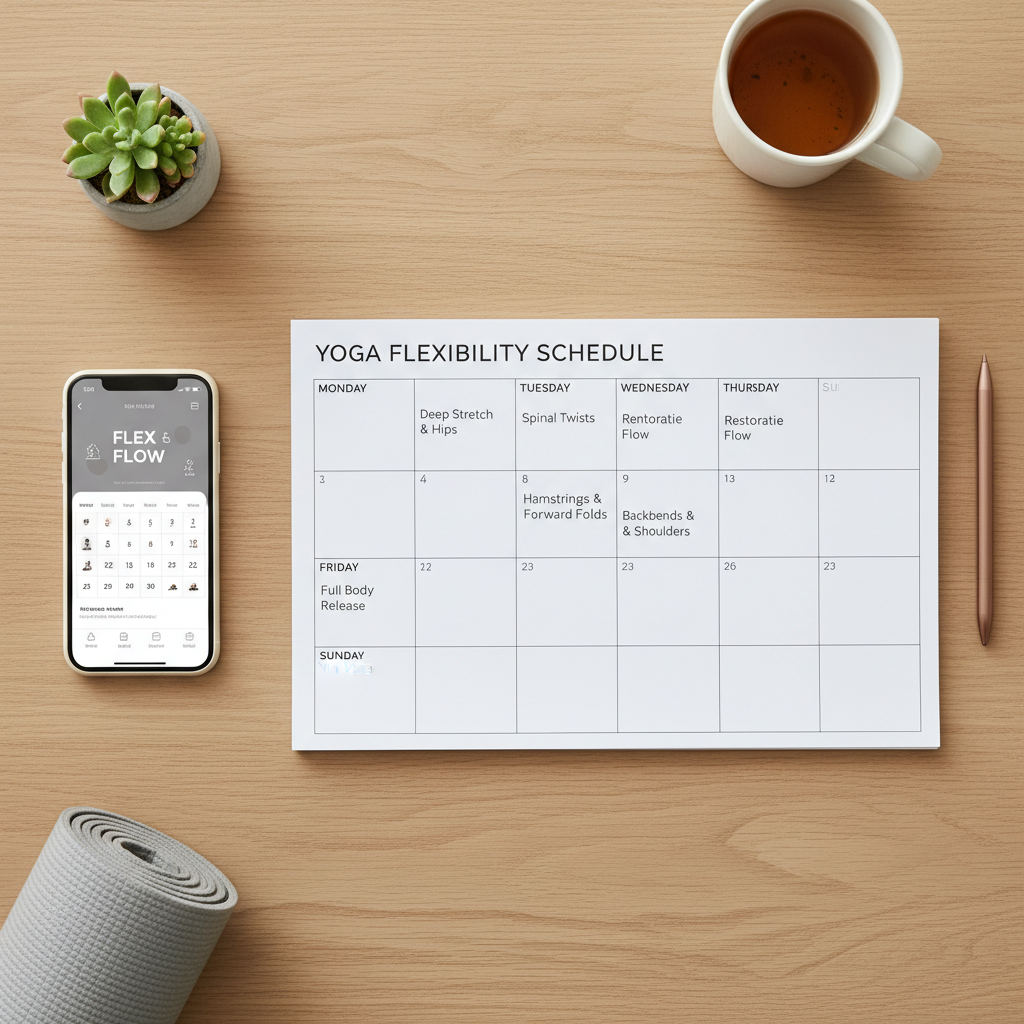
The best routine is the one you repeat. If you do yoga for flexibility three to five days per week, even short sessions can add up.
10-minute “daily tightness reset”
- Downward-Facing Dog: 45 seconds
- Low Lunge: 45 seconds each side
- Half Splits: 45 seconds each side
- Figure-Four on back: 60 seconds each side
- Reclined Twist: 60 seconds each side
25-minute “make it stick” session (2–3x/week)
- Warm-up: Cat-Cow 6–8 slow rounds, then easy Down Dog
- Low Lunge to Half Splits flow: 3 rounds each side, finish with a longer hold
- Pigeon or Figure-Four: 60–90 seconds each side
- Seated Forward Fold (supported): 60 seconds
- Bridge Pose: 2–3 sets of 5 slow reps or one supported hold
- Reclined Twist: 60–90 seconds each side
Common mistakes that slow flexibility (and what to do instead)
- Forcing range with your spine: if the back rounds to “reach,” use props, bend knees, and hinge from hips.
- Chasing sensation in joints: pinching in the front hip, pain behind the knee, or wrist pain in down dog means modify.
- Holding your breath: if breathing gets choppy, intensity is too high for flexibility gains.
- Only stretching after hard workouts: adding one short session on rest days often helps more than one big weekend stretch.
- Skipping strength: a little bridge work, controlled lunges, or Pilates-style core can help your new range feel stable.
According to the National Center for Complementary and Integrative Health (NCCIH), yoga can support flexibility and general well-being for many people, but it’s still physical activity, alignment and sensible progression matter, especially with prior injuries.
When to get professional help (and how to stay safe)
If you have ongoing pain, joint instability, recent surgery, or neurologic symptoms like numbness or tingling, it’s smart to check with a licensed healthcare professional before pushing stretches. Also consider working with a qualified yoga teacher if you keep feeling the stretch in the “wrong place,” like low back during hamstring work or wrists during upper-body poses.
- Stop and reassess if sharp pain shows up, even if it feels “deep.”
- Use props without guilt: blocks, straps, blankets often improve results because form stays clean.
- Progress gradually: add time, not intensity, then add intensity only if control stays strong.
Conclusion: make flexibility boring, and it works
Yoga for flexibility pays off when your practice feels repeatable: a few poses you understand, held long enough, done often enough, with breathing that stays steady. Pick one short routine for most days, then a longer session a couple times per week, and give it a month before you judge the results.
Action steps: choose 3–5 poses from the list, set a timer for realistic holds, and write down one “win” after each session, less stiffness, better squat depth, easier overhead reach. That feedback loop keeps you consistent.
FAQ
How often should I do yoga for flexibility to see changes?
Many people do well with 3–5 short sessions per week. If you’re tight from sitting or training, daily 10-minute sessions often feel better than one long session you dread.
Is it normal to feel sore after a flexibility-focused yoga session?
Mild muscle soreness can happen, especially if you held longer than usual. Sharp pain, joint pain, or symptoms that worsen each session is a sign to scale back and consider professional guidance.
Should I stretch before or after lifting and running?
Before workouts, many folks prefer dynamic movement and light ranges. Deeper holds often fit better after training or on recovery days, when you can relax and breathe without rushing.
What if pigeon pose hurts my knee or front hip?
Skip forcing it. Try a reclined figure-four, use a prop under the hip, and keep the shin angle comfortable. Hip anatomy varies, and discomfort in joints usually means the setup needs changing.
Can beginners do these poses without a class?
Usually yes, if you move slowly, use props, and avoid pain signals. If you feel lost on alignment, even one or two sessions with a qualified instructor can prevent weeks of unhelpful habits.
Does yoga improve flexibility permanently?
It tends to “stick” when you maintain a little weekly practice. If you stop completely, most bodies gradually return toward their baseline range, especially if you sit a lot.
How do I know if I’m stretching too hard?
If breathing tightens, face tenses, or you feel tingling, numbness, pinching, or sharp pain, that’s too much. Back out until sensation feels strong but workable, and keep the exhale smooth.
If you’re trying to build a consistent flexibility habit, it may help to follow a guided routine with clear cues and modifications, especially when tight hips or hamstrings keep you guessing, a simple plan you can repeat often beats a perfect sequence you never return to.