
Wrist Weights can make arm and shoulder training feel more “real” fast, but that same convenience also makes them easy to misuse. If you have ever added them to a walk or a quick home workout and ended up with cranky wrists or a tight shoulder the next day, you are not alone.
The value is simple, wrist loads let you add resistance without holding a dumbbell, which can be useful for light conditioning, rehab-style work, or adding a little challenge to low-impact sessions. The catch is that the weight sits far from the shoulder joint, so small loads can create a surprisingly big torque demand up the chain.
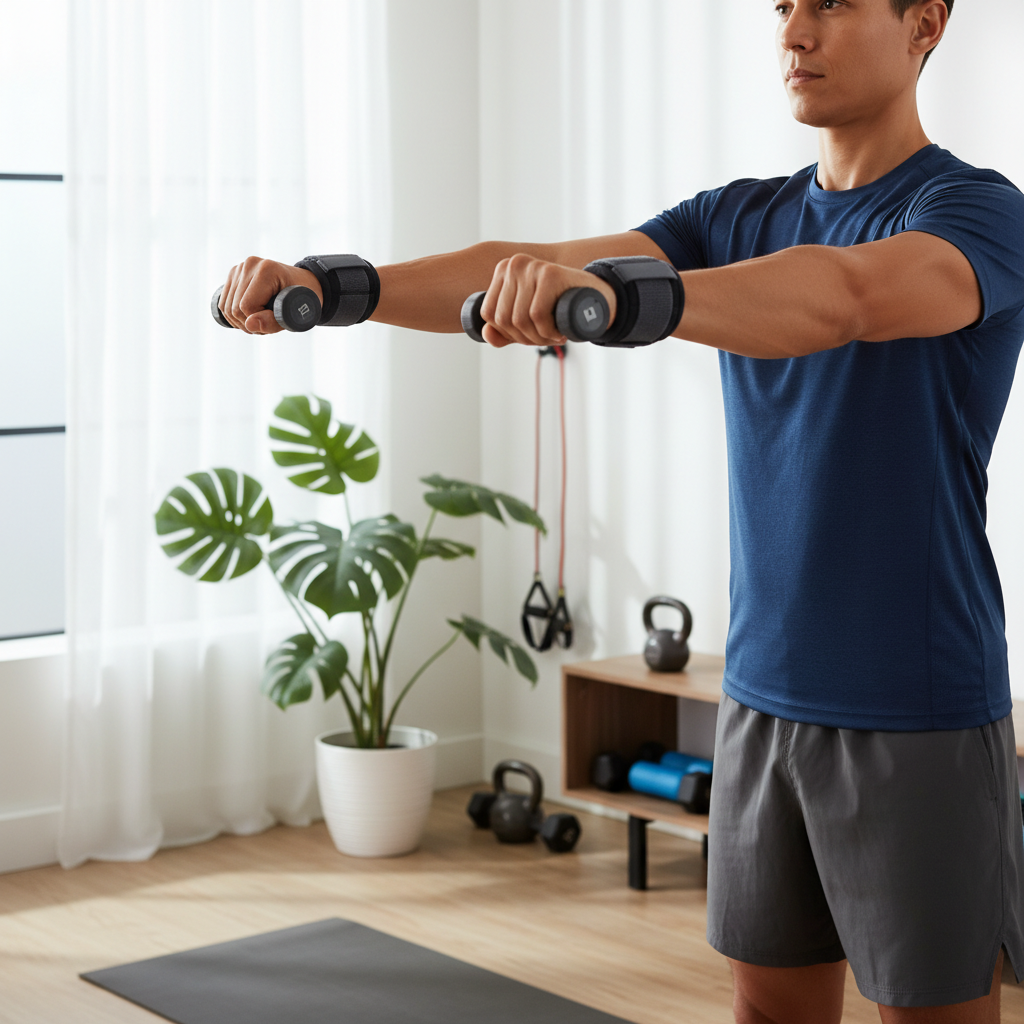
This guide breaks down when wrist weights help, when they tend to backfire, and how to use them for arm and shoulder training without turning a simple add-on into an overuse problem. You will also get a quick self-check, programming ideas, and a practical table for choosing weight and exercises.
What wrist weights actually change in arm and shoulder training
Wrist weights shift resistance to the end of your lever. That matters because your shoulder and elbow do not just “lift weight,” they manage leverage. A one- or two-pound cuff can feel light in your hand, yet still increase strain during repeated reps, especially at or above shoulder height.
They also change how your stabilizers behave. Your rotator cuff, scapular muscles, and forearm stabilizers often work harder to keep your arm tracking smoothly. That can be a plus for controlled, low-load work, but it can be a negative if you already struggle with shoulder mechanics.
- Best fit: low-to-moderate intensity, higher control, more time under tension
- Risk zone: fast reps, high volume, lots of overhead motion, or swinging arms
- Common surprise: wrists stay neutral less often than people think, which can irritate tendons
According to the American Council on Exercise (ACE), progressive overload and proper technique drive results, and adding load should be gradual and appropriate for the movement. Wrist cuffs follow the same rule, just with less margin for sloppy form.
Reasons people use wrist weights (and when those reasons make sense)
Most people buy wrist cuffs for one of three reasons, convenience, “toning,” or cardio add-on resistance. All can be valid, depending on how you apply them.
1) You want lightweight resistance without gripping
If gripping a dumbbell bothers your hand, thumb, or elbow, wrist weights can be a workaround. This is common in early return-to-training phases or in general fitness for people who dislike holding weights for long sets.
2) You want shoulder endurance more than max strength
High-rep lateral raise patterns or controlled arm circles can build endurance in the delts and upper back. Wrist weights are often enough load to make that work feel challenging without turning it into a heavy lifting session.
3) You want to “upgrade” walking workouts
This is where many people get into trouble. Adding load to the wrists during a long walk encourages repetitive motion with limited control. It may be fine for short bouts with strict arm swing control, but many cases end with irritated shoulders or elbows.

According to the Centers for Disease Control and Prevention (CDC), adults benefit from both aerobic activity and muscle-strengthening activity each week. Wrist cuffs can support the strengthening piece, but they usually should not turn a simple aerobic session into an uncontrolled repetitive loading session.
Quick self-check: are wrist weights a good idea for you right now?
Use this short checklist before you build a routine. It is not a diagnosis tool, but it catches the most common “this will annoy my joints” patterns.
- You can raise your arm to shoulder height with no pinching and no sharp pain.
- Your wrists can stay neutral during curls, raises, and presses without bending back.
- You can do 10 slow reps of a lateral raise with zero swinging.
- You are not currently dealing with a flare-up of tendinitis, carpal tunnel symptoms, or shoulder impingement signs.
- You can stop a set the moment form slips, even if the set feels “too easy.”
If two or more items feel questionable, start lighter than you want, or skip cuffs and use a band or light dumbbells until your control improves.
How to choose the right wrist weight (a practical table)
People often jump to heavier cuffs because they look small. In practice, many shoulders respond better to very light loads and slower reps. If you want more challenge, increase control demands before you increase pounds.
| Goal | Suggested cuff range | Good exercise choices | What to avoid early |
|---|---|---|---|
| Shoulder endurance, posture work | 0.5–2 lb each | slow lateral raises, scapular plane raises, rear-delt fly (light) | fast arm circles, high-volume overhead reps |
| Light arm training at home | 1–3 lb each | biceps curls (neutral wrist), triceps kickbacks, isometric holds | cheat curls, swinging kickbacks |
| Rehab-style controlled loading | 0.5–1 lb each | pain-free ROM drills, very slow raises, assisted movements | training through pain, long duration walks with cuffs |
| Strength focus | Usually not ideal | use dumbbells, cables, or bands instead | trying to “replace” pressing or rows with cuffs |
Rule of thumb: if you cannot keep your shoulder down and back without shrugging, the load is too heavy for that movement, even if it feels manageable.
Best exercises for wrist weights (arm and shoulder focus)
Wrist weights shine in controlled, joint-friendly patterns. Think smooth reps, predictable ranges, and no momentum. Here are options that tend to work well for many people.
Shoulders
- Scaption raise (raise arms 30–45 degrees forward from your sides), 8–15 slow reps
- Side lateral raise to just below shoulder height, pause 1 second at top
- Rear-delt raise with a hip hinge, tiny range, strict control
- Isometric “T” hold at low angle, 10–30 seconds, stop before shrugging
Arms
- Neutral-grip curl pattern with wrists straight, elbows close to ribs
- Triceps kickback with a pause at full extension, light load only
- Slow shadow boxing with tight form and short rounds, only if shoulders feel great
According to the National Academy of Sports Medicine (NASM), movement quality and stability are foundational before adding intensity. With cuffs, that usually means you earn heavier weights by owning slow reps first.
Simple programming you can actually stick with
If your goal is better arm and shoulder tone and endurance, a little consistency beats heroic sessions. Keep sessions short, keep reps clean, and treat any joint irritation as useful feedback.
Option A: 10-minute shoulder finisher (2–3x/week)
- Scaption raises: 2 sets of 10–15 slow reps
- Lateral raises: 2 sets of 8–12 reps, 1-second pause
- Rear-delt raises: 2 sets of 12–20 reps, very light
Rest just enough to keep form crisp. If you feel neck tension taking over, shorten range and slow down.
Option B: Low-impact arm circuit (1–2x/week)
- Neutral curl: 2–3 sets of 10–15 reps
- Triceps kickback: 2–3 sets of 10–15 reps
- Isometric T hold: 2 sets of 15–25 seconds
Progress by adding a rep or extending the hold by 5 seconds, not by jumping straight to heavier cuffs.
Safety notes and common mistakes (where most people go wrong)
Wrist weights feel harmless, so people get casual. That casual approach is the mistake. If you want your shoulders to tolerate them, treat them like real training load.
- Do not swing your arms to “get through” reps, momentum shifts stress to tendons.
- Avoid long walks with cuffs if you have any shoulder history, repetition adds up.
- Watch wrist angle, bending the wrist back often triggers forearm irritation.
- Keep overhead volume low early on, many shoulders dislike repeated overhead cuff work.
- Do not chase burn if it comes with pinching, numbness, or tingling.
According to the U.S. Food and Drug Administration (FDA), if a wearable product causes pain, skin irritation, or other adverse effects, you should stop using it and consider seeking medical advice. With cuffs, that also includes strap pressure that irritates nerves or circulation.
When to get professional help (and what to ask for)
If pain shows up and stays, do not try to out-discipline it. Wrist and shoulder issues often respond better to small corrections early than big rest-and-restart cycles later.
- Pain that lasts more than a few days, or worsens each session
- Night pain, weakness, or loss of range of motion
- Tingling, numbness, or hand symptoms that suggest nerve irritation
- History of rotator cuff injury, dislocation, or recent surgery
A physical therapist or qualified trainer can check scapular control, rotator cuff tolerance, and whether a different tool, like a resistance band or cable, fits your goal better. If you have a medical condition, it is reasonable to consult a clinician before adding load.
Conclusion: use wrist weights like a “precision tool,” not a shortcut
Wrist Weights work best when you treat them as light resistance for controlled arm and shoulder training, not a way to sneak heavy work into random daily movement. Pick a load that lets you stay smooth, prioritize clean reps, and progress slowly, your shoulders usually reward patience.
If you want one next step, choose one shoulder move and one arm move from the lists above, train them twice this week for 10 minutes, and keep notes on how your joints feel the next day.
Key takeaways
- Light load + slow reps tends to beat heavier cuffs for most shoulders.
- Great uses include controlled raises, isometrics, and light arm work.
- Be cautious with long walks, fast arm circles, and high-volume overhead reps.
- Stop if you feel pinching, tingling, numbness, or sharp pain, consider professional input.
FAQ
Are wrist weights good for building shoulder muscle?
They can help build endurance and add a small hypertrophy stimulus, especially for delts, if you keep reps slow and controlled. For bigger strength gains, most people progress faster with dumbbells, cables, or machines that allow heavier loading with less joint irritation.
How heavy should wrist weights be for arm workouts?
Many people do well starting around 0.5–2 lb per wrist for shoulder work, then adjusting based on form quality and next-day soreness. If you feel yourself shrugging or swinging, the load is already too high for that exercise.
Can I wear wrist weights while walking?
You can, but it is a common source of overuse irritation because the motion repeats for a long time. If you try it, keep the weight very light, keep walks shorter, and stop if shoulders or elbows feel “hot” or achy.
Do wrist weights help with “toning” arms?
They can increase training stimulus for the arms and shoulders, which supports muscle definition if your overall training and nutrition align with that goal. The “tone” effect usually comes from consistency and progressive challenge, not from a specific product.
What exercises should I avoid with wrist weights?
Fast arm circles, high-rep overhead punching, and anything you cannot control without momentum are common culprits. If you have a history of shoulder impingement or wrist tendinitis, you may also want to avoid overhead work with cuffs unless a professional clears it.
Are wrist weights safe for seniors?
Often yes at very light loads, especially for balance-friendly, controlled strength work, but it depends on shoulder health, grip issues, and fall risk. A clinician or physical therapist can help select movements that match mobility and medical history.
Why do my wrists hurt when I use wrist weights?
Common reasons include straps that are too tight, the wrist bending back during reps, or too much volume too soon. Reducing load, improving alignment, and limiting total reps often helps, but persistent pain deserves a professional look.
If you are experimenting with wrist weights and want a more “set it and follow it” approach, a short plan built around your shoulder tolerance, available equipment, and schedule can save time and reduce trial-and-error, especially if you have a history of joint irritation.