
The best indoor cycling mat for floor is the one that matches your bike’s stability needs, your floor type, and how much sweat and noise you’re dealing with, not just the thickest rubber you can find.
If you’ve ever finished a ride and noticed tiny scuffs under the bike, a damp halo around the legs, or downstairs neighbors suddenly “aware” of your training plan, the mat is usually the missing piece. A good one protects surfaces, reduces vibration, and makes your setup feel intentional instead of temporary.
One quick heads-up before we get picky about materials, many people buy the wrong mat because they shop by brand name, then discover it slides on hardwood or traps sweat underneath. Below, I’ll break down what matters, how to check your situation, and what to buy for different floors and riding styles.
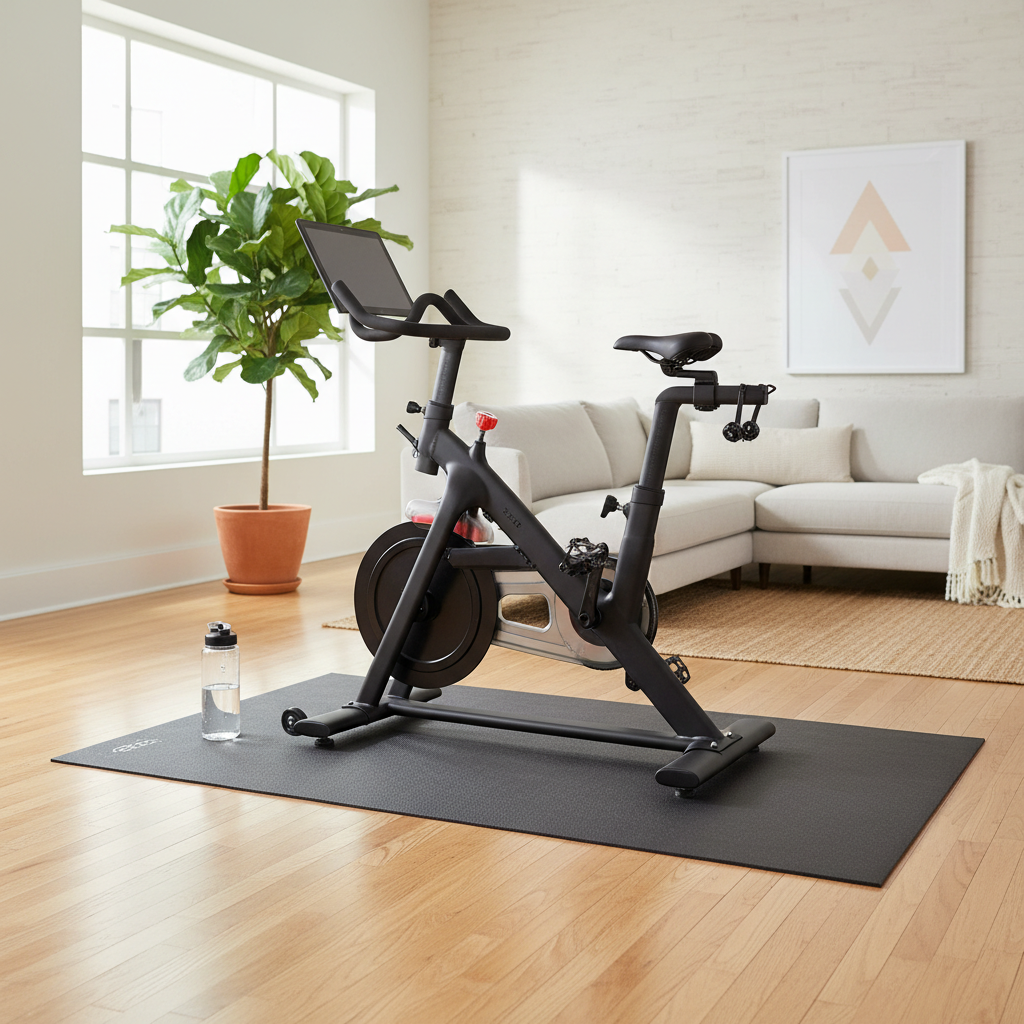
What a cycling floor mat actually solves (and what it doesn’t)
A mat does three jobs well, and one job only “kind of” well. Knowing this keeps expectations realistic and helps you spend smarter.
- Floor protection: blocks sweat, prevents abrasion from bike feet, and reduces pressure marks on vinyl and softer woods.
- Vibration and noise reduction: dampens high-frequency vibration and small rattles, which can be noticeable in apartments.
- Stability help: adds friction so the bike is less likely to creep during out-of-saddle work.
- What it won’t fully fix: loud drivetrain noise, unbalanced leveling feet, or a bike that’s rocking due to setup issues.
According to Centers for Disease Control and Prevention (CDC) guidance on indoor air quality and moisture, controlling moisture and cleaning impacted areas matters because damp surfaces can contribute to unwanted growth and odors. In plain terms, if sweat regularly hits the floor, you want a barrier and a cleaning routine.
How to choose the best indoor cycling mat for floor: the non-negotiables
When people ask for the best indoor cycling mat for floor, they usually mean “quiet, grippy, and not gross after a month.” Focus on these specs first.
Material: PVC, rubber, TPE, foam blends
- Rubber (often recycled rubber): great grip, good damping, can smell at first, heavier to move.
- PVC: common, wipes clean easily, usually less odor than recycled rubber, grip varies by brand.
- TPE: often lower odor, decent grip, can be pricier, durability varies.
- EVA foam: light and cheap, but can compress, dent, or tear under heavy bikes.
If odor sensitivity matters, “low-VOC” or “phthalate-free” claims can be worth prioritizing, though wording differs by manufacturer and isn’t always apples-to-apples.
Thickness: more isn’t always better
- 3–5 mm: solid for sweat and basic protection, usually stable on flat floors.
- 6–8 mm: a sweet spot for many homes, better vibration control without feeling squishy.
- 10 mm+: can help in apartments, but can feel slightly “soft” under some bikes, especially if the bike has narrow feet.
If your bike already feels stable, chasing maximum thickness can backfire because extra give can amplify tiny side-to-side movements.
Size and shape: fit the footprint you actually use
Measure the bike’s length and width, then add margin for movement, towels, and getting on/off. If you do out-of-saddle intervals, that extra width helps keep everything centered.
- Typical indoor bike mats: 24–36 in wide, 48–72 in long
- For taller riders or longer frames: consider 72 in length
Quick self-check: which mat type fits your setup?
Use this to narrow down options fast. It’s not perfect, but it prevents the most common mismatch: a slick mat on slick flooring.
- You’re on hardwood and the bike creeps: prioritize high-grip backing, moderate thickness, and a slightly larger footprint.
- You’re on carpet and the bike wobbles: consider a firmer mat (not foam), or add a hard board under the mat for stability.
- You sweat a lot: choose a mat with sealed surfaces and raised texture, and plan quick wipe-downs.
- You live above someone: look for thicker, denser mats and keep drivetrain maintenance tight.
- Your space is tight: a narrower mat can work, but don’t sacrifice stability if you ride standing.

Comparison table: picking a mat by floor type and priority
If you want the simplest “buying map,” this is it. Use the row that matches your floor, then choose based on the priority that annoys you most.
| Floor / Situation | Best mat traits | Thickness range | Watch-outs |
|---|---|---|---|
| Hardwood / laminate | High-grip backing, sweat-sealed surface | 5–8 mm | Some rubbers can stain or leave marks if moisture sits underneath |
| Luxury vinyl plank (LVP) | Non-slip, non-abrasive underside, easy cleaning | 4–8 mm | Small grit under mat can scratch, vacuum before placing |
| Tile / concrete | Comfort + vibration damping | 6–10 mm | Too-thin mats can still feel harsh and noisy |
| Carpet | Dense, firm mat; optional rigid base | 6–10 mm | Soft foam compresses and increases wobble |
| Apartment / shared walls | Dense material, larger footprint, good edge lay-flat | 8–12 mm | Mat helps vibration, but drivetrain noise still travels |
Practical setup steps (so the mat actually works)
Even the best indoor cycling mat for floor can feel disappointing if setup is sloppy. This is the boring part that saves your floors and your patience.
1) Prep the floor before you place the mat
- Vacuum or wipe the area, especially on hardwood and LVP where tiny grit scratches.
- Make sure the floor is dry, trapped moisture is how you get odor and residue.
2) Let the mat relax and off-gas if needed
- Unroll it flat for 24–48 hours if it arrives tightly rolled.
- If there’s a strong rubber smell, air it out in a ventilated area first.
3) Level the bike on the mat, not next to it
- Adjust leveling feet with the bike in its real riding position.
- Test out-of-saddle rocking; if it shifts, check foot contact points and mat grip.
4) Sweat management is half the “mat strategy”
- Use a sweat guard or towel over the bars and top tube area if your bike design allows.
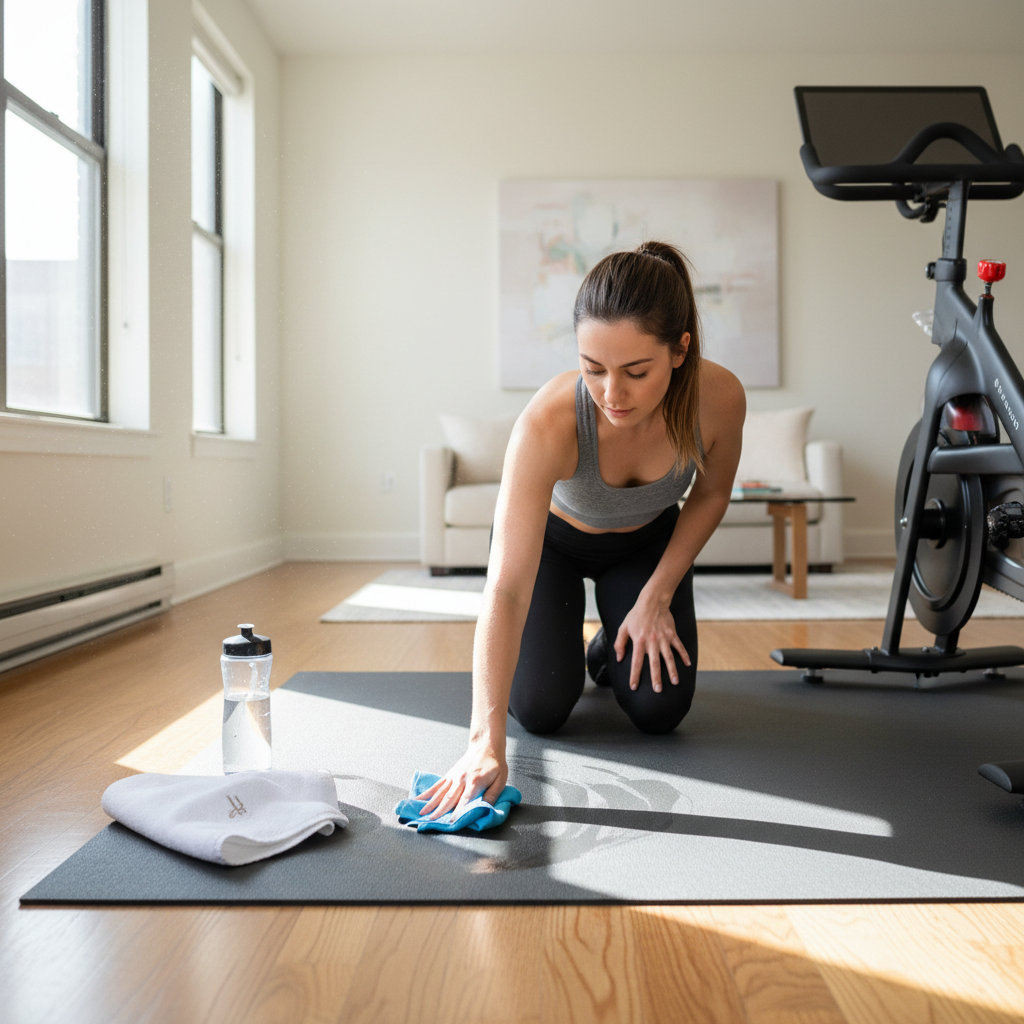
- Wipe mat surface after rides, then lift an edge occasionally to let the underside dry.
Common mistakes that waste money (and how to avoid them)
These show up again and again, even with expensive mats.
- Buying yoga/exercise mats for cycling: they’re often too soft, your bike sinks and wobbles.
- Ignoring edge curl: curled edges become a trip hazard and collect dust, pick mats that lay flat or have reinforced edges.
- Assuming “thicker = quieter”: density and fit matter as much as thickness.
- Never cleaning underneath: sweat and humidity can get under the mat, especially if you mop around it.
- Using harsh chemicals: some finishes break down with solvents, mild soap and water usually works better.
According to American Cleaning Institute guidance for cleaning surfaces, following product label directions and using appropriate cleaners helps protect both surfaces and materials. For mats, that usually means mild solutions and avoiding anything that can degrade rubber or PVC over time.
When you might need extra help (or a different approach)
If noise or vibration is the real complaint, a mat may only get you partway. This is where it’s worth being honest, because “quiet” means different things in different buildings.
- Persistent thumping or rattling: check crank tightness, seatpost, pedals, and bike stability. If you’re unsure, a bike tech can diagnose safely.
- Very sensitive floors (older hardwood, historic finishes): consider a protective layer under the mat, and ask a flooring professional what materials are safe.
- Health/safety concerns: if you’re changing your training setup due to pain, numbness, or dizziness, it’s smart to consult a qualified professional. A mat won’t fix fit issues.
Conclusion: what to buy if you want one solid answer
If you want a practical rule that works in most U.S. homes, look for a dense, easy-to-clean mat in the 5–8 mm range, sized generously enough that your bike stays fully on it even during hard efforts. That combo tends to hit the sweet spot for protection, grip, and reasonable noise control.
Two action steps that usually pay off right away, measure your bike footprint tonight and decide whether sweat or noise is your main enemy, then shop based on those constraints instead of whatever is “top rated.” You’ll end up with a best indoor cycling mat for floor choice that fits your space, not someone else’s.
FAQ
What thickness is best for an indoor cycling mat on hardwood?
For many setups, 5–8 mm is a comfortable range, thick enough to damp vibration without feeling soft. If your bike has narrow feet or your floor is very flat, extremely thick mats can feel a bit squishy.
Does a cycling mat really reduce noise for downstairs neighbors?
It can reduce vibration and some impact noise, which is often what travels through floors. If the main noise is drivetrain whir or a loose component, a mat helps less, and maintenance matters more.
Can I use a treadmill mat as the best indoor cycling mat for floor?
Sometimes, yes, treadmill mats are often dense and durable. Just confirm the size fits your bike footprint and the underside grips your specific floor, since some are designed to sit on carpet.
Will a rubber mat damage vinyl plank or leave marks?
Many people use rubber successfully, but reactions can vary by flooring finish and trapped moisture. Keeping the underside clean and dry, and occasionally lifting the mat to air out, lowers risk.
What size mat do I need for a stationary bike?
Measure the bike length and width, then add a few inches of margin. If you ride out of the saddle a lot, wider mats feel calmer because the bike stays centered.
How do I clean an indoor cycling mat after sweaty rides?
Wipe it with a damp microfiber cloth and mild soap, then let it dry. If you notice moisture underneath, lift an edge after rides to help ventilation.
My bike still rocks on the mat, what should I check?
Start with leveling feet and floor flatness, then check whether the mat is too soft. On carpet, adding a rigid base under a firm mat often stabilizes the setup.
If you’re trying to pick a mat quickly, it helps to share your floor type, bike model, and what bothers you more, sweat damage or noise. If you need a more hassle-free route, a short checklist-based recommendation can narrow options without overbuying.