
Upper body workout routines work best for strength when they focus on a few big patterns, progressive overload, and enough rest to actually adapt. If your sessions feel like a grab bag of machines and push-ups, you can train hard and still plateau.
This guide gives you a practical, gym-friendly approach: what to train, how to structure sets and reps, and how to progress week to week without beating up your shoulders. You’ll also get a couple of ready-to-run templates you can plug into your schedule.
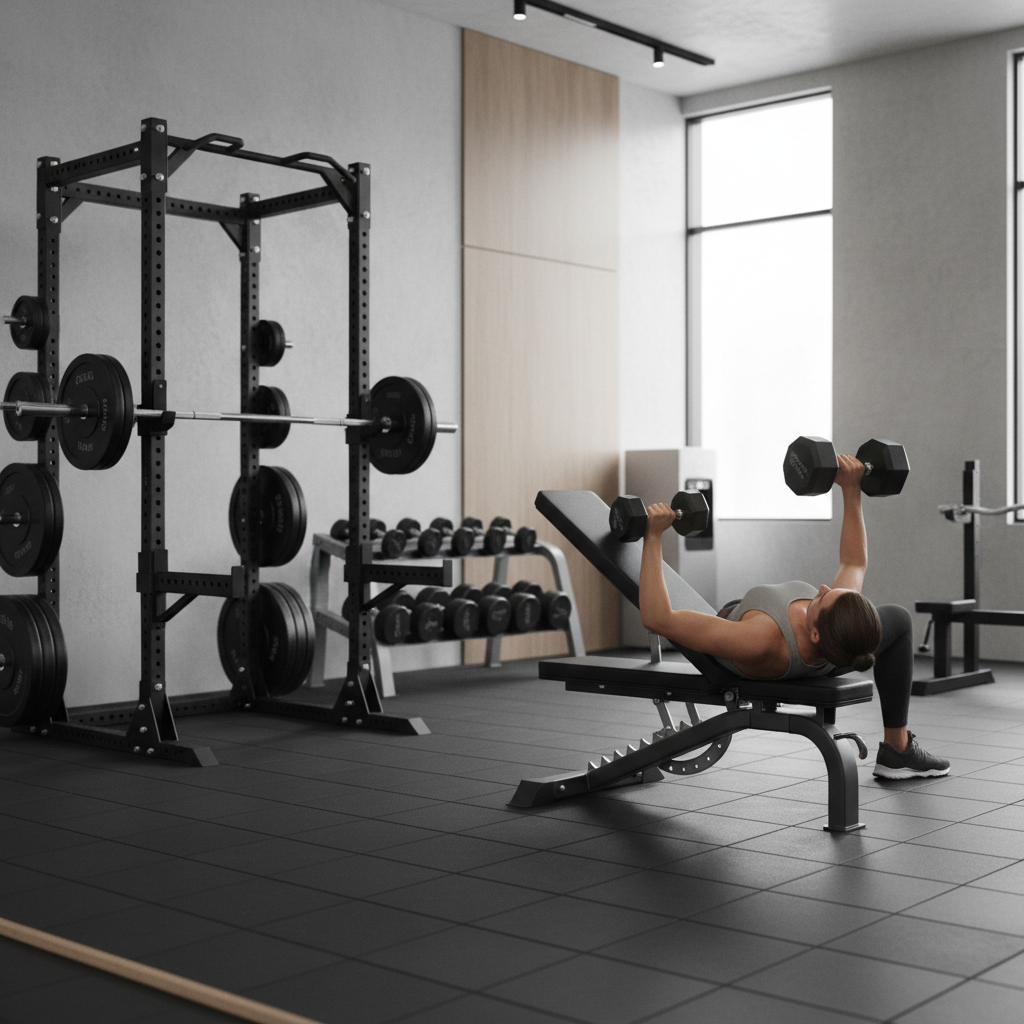
One quick note before we get into details: strength training can be very safe, but form and load choices matter. If you have shoulder pain, nerve symptoms, or a prior injury, it’s smart to scale back and consider working with a qualified coach or medical professional.
What “strength” means for an upper body workout (and why most plans miss it)
Strength is mostly about improving your ability to produce force in key movement patterns: press, pull, and stabilize. In real life that shows up as a heavier bench press, cleaner pull-ups, stronger rows, and more stable shoulders under load.
Where many upper-body plans drift off course is too much variety, too little progression, and not enough pulling volume. You get sore, you “feel it,” but your main lifts do not move.
- Progressive overload: add small amounts of weight, reps, or sets over time.
- Specificity: keep the main lifts consistent long enough to improve them.
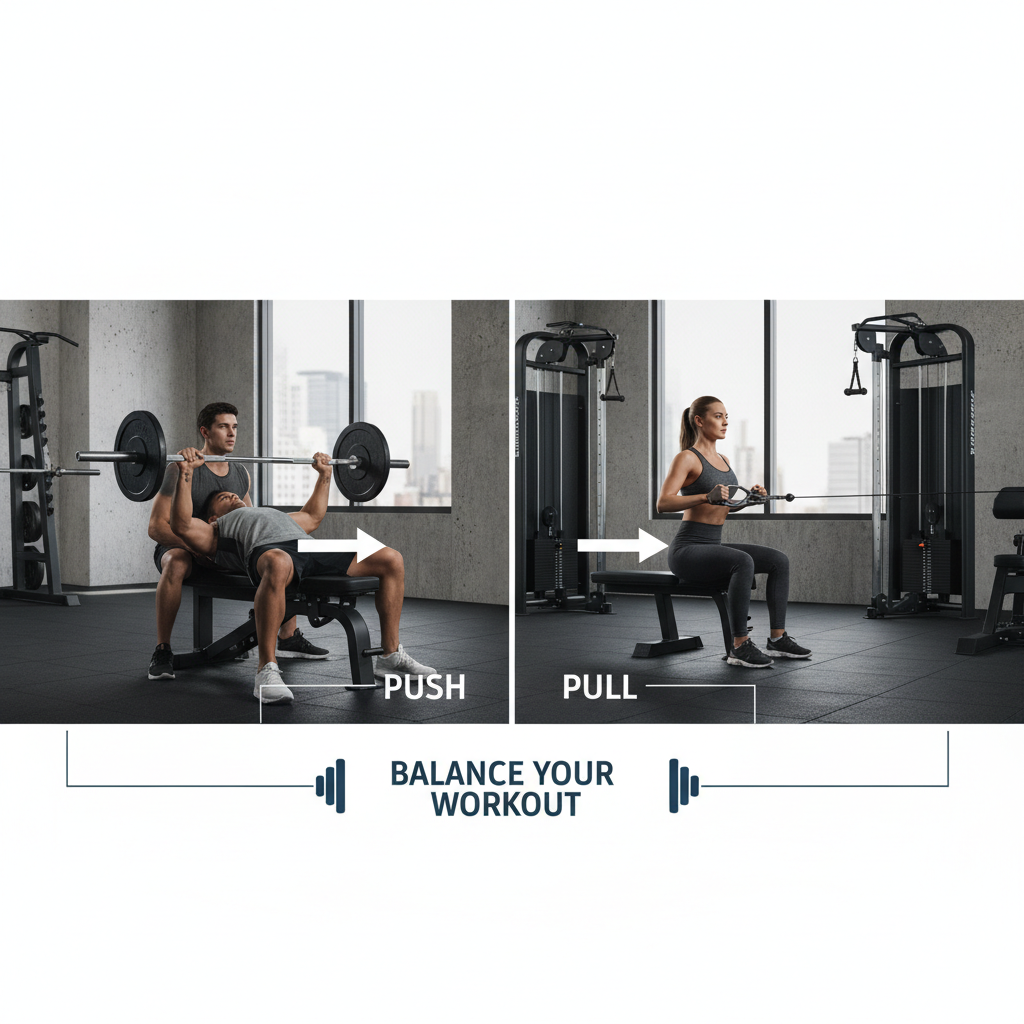
- Balance: most people need at least as much pulling as pressing for shoulder comfort.
According to the American College of Sports Medicine (ACSM)... resistance training programs typically use heavier loads and longer rest periods when the primary goal is strength.
Why your upper body workout might stall: the usual suspects
If you feel “busy” in the gym but your numbers stay flat, it’s often one of these:
- Too light, too many sets: endless 12–15 reps with short rest can build endurance, but strength often needs heavier work.
- Rest times that are too short: if you are breathing hard between sets, you may be training conditioning more than strength.
- Ignoring back work: pressing improves when your upper back is strong and stable.
- No plan to progress: “I’ll just go hard” is not a progression model.
- Pain you push through: shoulder irritation changes mechanics, then progress slows.
Also, sleep and food matter more than most people want to admit. If recovery lags, your performance will usually reflect that within a week or two.
Quick self-check: which track should you follow?
Use this to choose how aggressive your plan should be. Be honest, it saves time.
- Beginner track: you can’t yet do 5 strict pull-ups, or your technique changes a lot rep to rep.
- Intermediate track: you train 2–4 days/week consistently, your form is stable, progress feels “slow but possible.”
- Conservative track: you have cranky shoulders/elbows, long work stress, or inconsistent sleep.
If you’re on the conservative track, it does not mean you cannot build strength, it just means you’ll push progression with smaller steps and fewer grinders.
The strength-building framework (sets, reps, rest, exercise order)
Here’s the simplest structure that works for many people:
- Main lift (strength focus): 3–5 sets of 3–6 reps, rest 2–4 minutes.
- Secondary lift (strength-hypertrophy bridge): 3–4 sets of 6–10 reps, rest 90–150 seconds.
- Accessory work: 2–4 sets of 10–15 reps, shorter rest, done with control.
Exercise order matters more than people think. Put your highest-skill, heaviest compound move first, then rows and overhead work, then arms and smaller shoulder work last.
Core movement patterns to cover each week
- Horizontal press: bench press, dumbbell bench, push-up variations
- Vertical press: overhead press, landmine press
- Horizontal pull: barbell row, chest-supported row, cable row
- Vertical pull: pull-ups, lat pulldown
- Scapular stability: face pulls, rear delt fly, serratus work
Two plug-and-play upper body workout plans (2 days or 3 days)
These templates assume you also train lower body on other days, but they can stand alone if you’re short on time. Choose loads that leave 1–2 reps in reserve on most sets.
Option A: 2-Day Upper Body Strength (repeat weekly)
| Day | Main Focus | Exercises (sets x reps) |
|---|---|---|
| Upper A | Bench + Row | Bench Press 5x3–5; Chest-Supported Row 4x6–8; Overhead Press 3x6–8; Lat Pulldown 3x8–10; Face Pull 3x12–15; Triceps Pressdown 2–3x10–15 |
| Upper B | Pull-Up + Press | Pull-Up (or Pulldown) 5x3–6; Incline Dumbbell Press 4x6–10; 1-Arm Dumbbell Row 3x8–10/side; Landmine Press 3x8–10; Rear Delt Fly 3x12–15; Biceps Curl 2–3x10–15 |
Option B: 3-Day Upper Body Strength (more practice, less fatigue per day)
| Day | Main Lift | Support Work |
|---|---|---|
| Day 1 | Bench Press 5x3–5 | Row 4x6–8; Triceps 3x10–15; Face Pull 3x12–15 |
| Day 2 | Pull-Up or Lat Pulldown 5x3–6 | Incline Press 4x6–10; Rear Delts 3x12–15; Curls 3x10–15 |
| Day 3 | Overhead Press 5x3–5 | Chest-Supported Row 4x6–8; Lateral Raise 3x12–15; Optional push-ups 2 sets near technical failure |
If you’re picking between them, the 2-day plan fits most busy schedules, the 3-day plan tends to feel easier on joints because each day is shorter and more focused.
How to progress without guessing (simple rules that work)
Progression is the difference between “working out” and training. Keep it boring enough to measure.
- Double progression: keep the weight, add reps until you hit the top of the rep range, then increase load next time.
- Microloading: for presses, even 2.5 lb jumps can be plenty, especially overhead.
- Stop grinding: if your last rep turns into a slow, wobbly fight, you’re probably accumulating fatigue faster than strength.
A practical example: if your bench press target is 5x5, and you hit 5,5,5,4,4, keep the same weight next week and aim to add one rep to the last sets. When you can do all 25 reps cleanly, add a small amount of weight.

According to the National Strength and Conditioning Association (NSCA)... longer rest intervals are commonly used for strength-focused training because they help maintain performance across heavy sets.
Form cues that protect shoulders (and often boost strength)
Most “upper body” setbacks are really shoulder setbacks. These cues are not magic, but they help a lot in typical gym situations.
Bench and dumbbell pressing
- Set your shoulder blades: think “back pockets,” not shrugging.
- Elbow angle: many lifters do better with elbows slightly tucked, not flared straight out.
- Touch point: bar path often lands mid-chest or slightly lower, depending on body shape.
Rows and pull-downs
- Pull with the back: start the movement by driving elbows back, not yanking with hands.
- Control the return: the lowering phase builds strength and keeps joints happier.
If a motion pinches in the front of the shoulder, don’t “push through.” Swap to a neutral-grip dumbbell press, a landmine press, or adjust range of motion while you sort out mechanics.
Common mistakes (the stuff that wastes weeks)
- Maxing out too often: testing strength every week usually slows progress for non-advanced lifters.
- Too many failure sets: occasional hard sets are fine, constant failure tends to wreck recovery.
- Skipping warm-ups: you don’t need 20 minutes, but you do need ramp-up sets.
- Arm work replacing pulling: curls are fine, but they don’t replace rows and pull-ups.
Warm-up tip that feels almost too simple: do 2–4 lighter ramp sets for your main lift before the first heavy set, and keep them crisp. Your joints and your performance usually respond immediately.
When to get coaching or medical input
An upper body workout should challenge you, not create weird symptoms. Consider professional help if any of these show up:
- Sharp pain, numbness, tingling, or radiating pain down the arm
- Shoulder pain that worsens week to week even after deloading
- Major strength drop that doesn’t match sleep, stress, or nutrition changes
- History of dislocation, surgery, or rotator cuff injury and uncertainty about exercise selection
A good coach can also be worth it for one session just to clean up setup and bar path. Many people only need a couple small tweaks to unlock safer training.
Key takeaways + a simple next step
If you want strength, keep your plan measurable: pick a few compound lifts, train them with heavier sets, rest long enough to repeat quality reps, and pull as much as you press. The rest is consistency and small increases.
Action step: choose the 2-day or 3-day template, run it for 6 weeks, and track your top sets for bench, a row, and a vertical pull. If those move up steadily, your program works.
FAQ
How many days per week should I do an upper body workout for strength?
For many people, 2 days per week is enough to build strength if you train hard and recover well. If you enjoy lifting and can manage fatigue, 3 days can improve practice and consistency.
Is it okay to combine upper body strength training with cardio?
Usually yes, but intensity matters. Easy cardio often supports recovery, while hard intervals right before heavy pressing may reduce performance. If strength is the priority, keep intense cardio on separate days or after lifting.
What if I can’t do pull-ups yet?
Use lat pulldowns, assisted pull-ups, and slow negatives, and track them like you would a main lift. Many lifters build their first strict pull-up faster when they also strengthen rows and improve body control.
Should I train to failure on my main lifts?
Most lifters progress better leaving 1–2 reps in reserve on heavy compound movements. Failure sets can fit better on smaller accessories where technique breakdown is less risky.
What’s a good push-to-pull ratio for shoulder health?
A lot of people feel best with equal pulling and pressing volume, and many do even better with slightly more pulling. If your shoulders get cranky, increasing rows, rear delts, and face pulls is often a useful first adjustment.
Do I need overhead pressing for a complete program?
Not always, but it’s a solid tool for building shoulders and upper back stability. If overhead work bothers your shoulders, landmine presses and incline dumbbell pressing can be good alternatives.
How long until I see strength gains?
Technique and consistency can improve performance within a few weeks, while bigger strength changes often take longer. If loads or reps trend upward across 4–6 weeks, you’re on track.
If you’re currently piecing together workouts and not sure what to change, a simple plan plus a basic tracking method usually fixes the problem faster than adding more exercises. If you want, share your current split and available equipment, and I can help you map it to one of the templates without overcomplicating it.