
Pilates core exercises work best when you treat “core” as more than abs, it’s your deep stabilizers, breath control, and how you manage your spine under load.
A lot of people come to Pilates because sit-ups irritate their neck, planks feel endless, or lower-back tightness shows up during workouts. The good news is that Pilates gives you a cleaner way to train the trunk, with less grinding and more control.
This guide focuses on practical picks you can actually feel, plus quick tests to choose the right level, a plan you can repeat, and common form mistakes that quietly steal results.
What “strong core” really means in Pilates
In Pilates, core strength usually means you can keep your ribs stacked over your pelvis, breathe without losing control, and move your arms or legs without your lower back doing the work.
That’s why many sessions start with “easy” moves that feel weirdly hard, you’re training coordination. According to ACE (American Council on Exercise), core training supports stability and helps transfer force between the upper and lower body, which is a big reason Pilates carries over to daily life and sports.
- Deep stabilizers: Transverse abdominis and pelvic floor help create tension around the trunk.
- Spine support: Multifidus and obliques help control rotation and extension.
- Hip and glute support: A “core” that ignores hips often leads to low-back takeover.
- Breath: Ribcage mobility + controlled exhale often makes the work click.
Why pilates core exercises feel different (and why that’s a good thing)
If you’re used to chasing burn, Pilates can feel almost too calm. But calm is the point, you’re building a stable base before you layer intensity.
Many people get stuck because they only train the “front” of the core. Pilates spends more time on alignment and spinal control, which can reduce the chance you compensate with your hip flexors or neck.
- More control, less momentum: smaller range often reveals weak links.
- Neutral-first approach: you learn where your spine “wants” to live.
- Anti-movement strength: resisting rotation/extension is a real-world skill.
Quick self-check: pick the right starting level
Before you stack on harder variations, it helps to know whether you should stay in basics for a bit. These checks are quick, and they tell you more than your “ab strength” ever will.
Check 1: Can you breathe without popping your ribs?
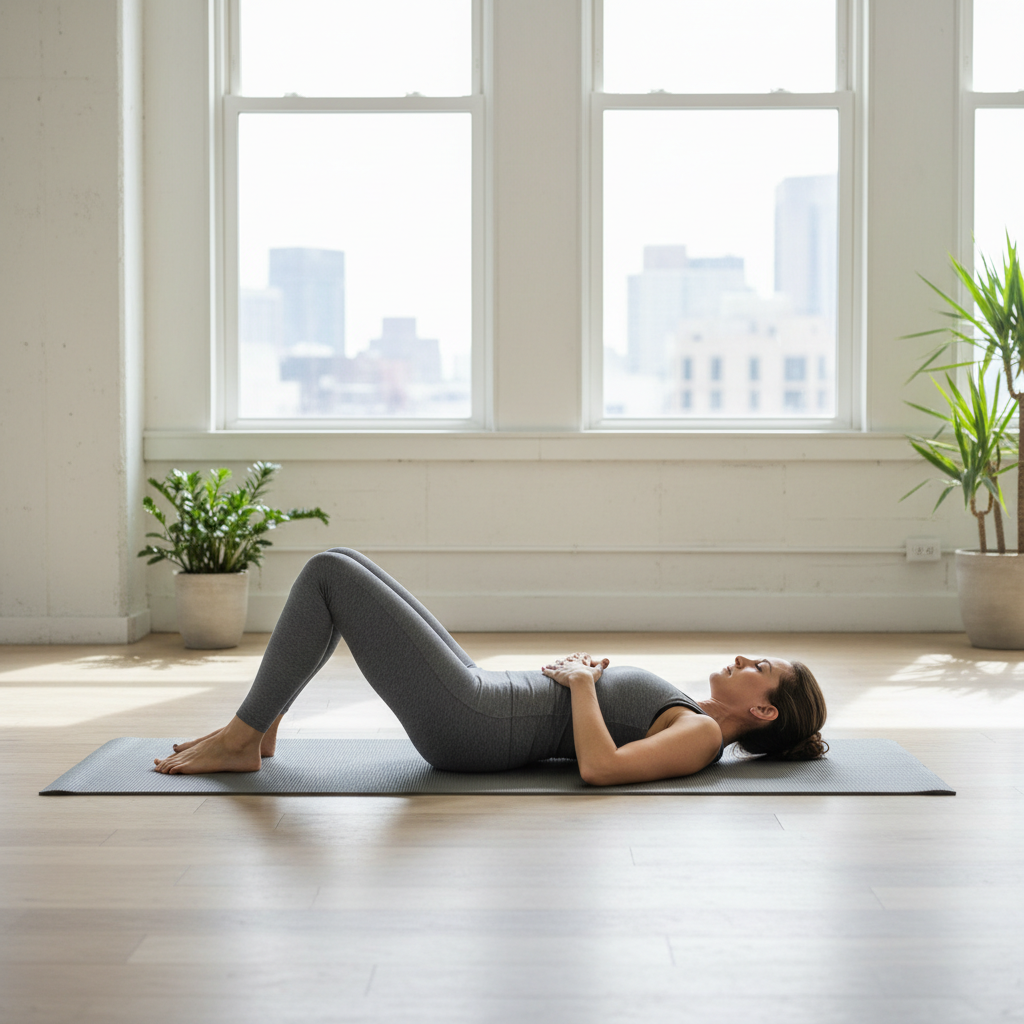
Lie on your back, knees bent, feet on the floor. Inhale wide into the ribs, exhale and gently knit ribs down. If your ribs flare up every inhale, start with breath + imprint/neutral practice.
Check 2: Can you lift one foot without pelvic wobble?
From the same position, float one foot to tabletop. If your pelvis tips or your lower back arches, go slower and reduce range.
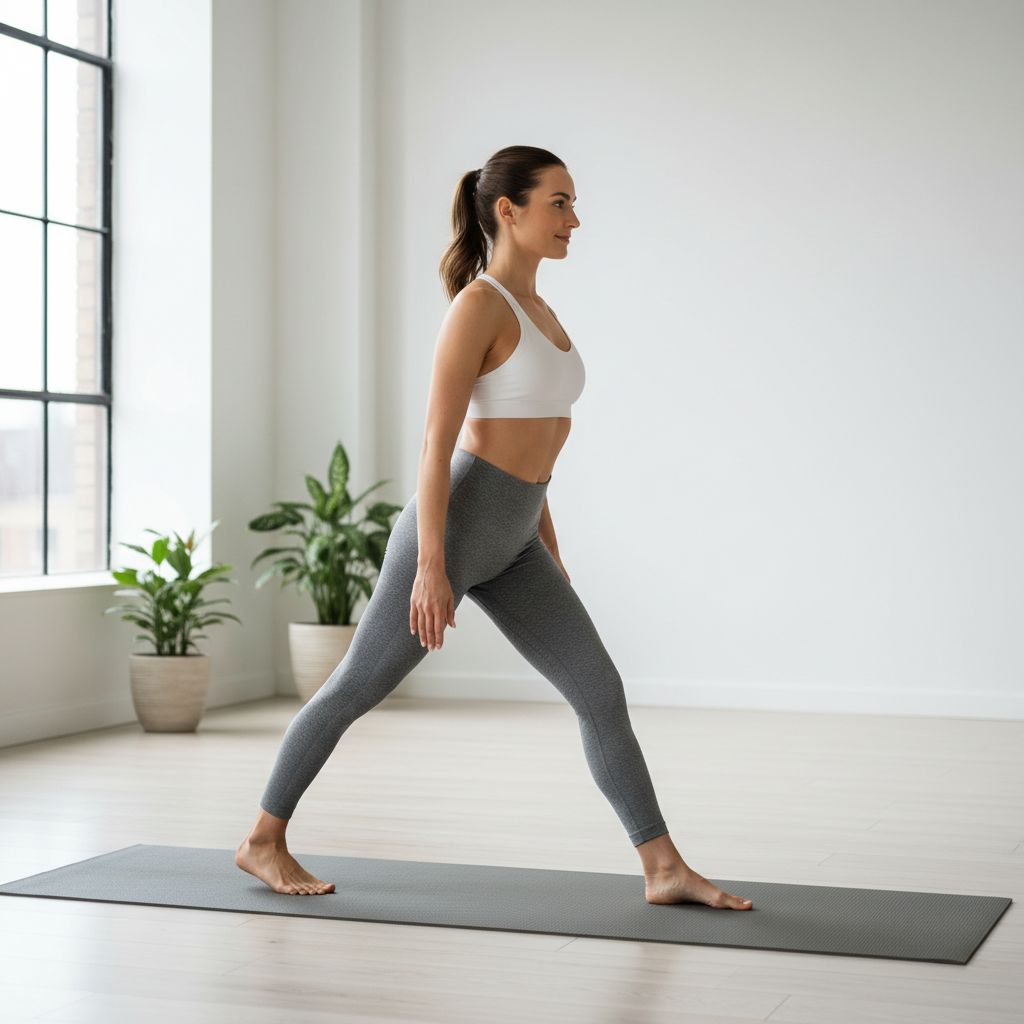
Check 3: Do you feel neck/hip flexors more than trunk?
If your neck grips during curl-ups, or your hip flexors dominate during leg lowers, your setup needs tweaking, or you need a regression. That’s normal, not failure.
The essential pilates core exercises (with cues and modifications)
Below are core-friendly staples. Pick 5–7 per session rather than doing everything at once, quality drops fast when fatigue hits.
1) Pelvic tilt to neutral (imprint/neutral practice)
- Do: On your back, gently tip pelvis to flatten low back, then return to neutral.
- Cue: “Ribs heavy, tailbone long.”
- Why it helps: teaches spinal position control before harder work.
2) Tabletop marching
- Do: Lift one foot to tabletop, lower, switch.
- Make it easier: keep toes on the floor and just unweight the foot.
- Common miss: rushing the switch and letting the pelvis rock.
3) Toe taps (from tabletop)
- Do: From tabletop, tap one toe to the floor, return, alternate.
- Cue: exhale on the tap, keep your waistband level.
- Make it harder: both legs alternate taps with longer lever (heel farther away).
4) Dead bug reach (Pilates-style)
- Do: From tabletop, reach opposite arm overhead as one leg lengthens.
- Make it easier: move only arms, or only legs.
- Goal sensation: front ribs and low abs stay engaged without breath-holding.
5) The Hundred (modified)
- Do: Head down option is fine. Pump arms, inhale 5 counts, exhale 5 counts.
- Make it easier: knees bent, feet down.
- Form cue: keep shoulders heavy, neck long.
6) Single-leg stretch (slow tempo)
- Do: One knee in, other leg long, switch with control.
- Make it easier: keep head down, or keep extended leg higher.
- Watch for: low-back arch when the leg reaches out.
7) Plank (Pilates plank)
- Do: hold 15–30 seconds with ribs stacked and glutes lightly on.
- Make it easier: incline plank on a bench or countertop.
- Make it harder: shoulder taps without torso twist.
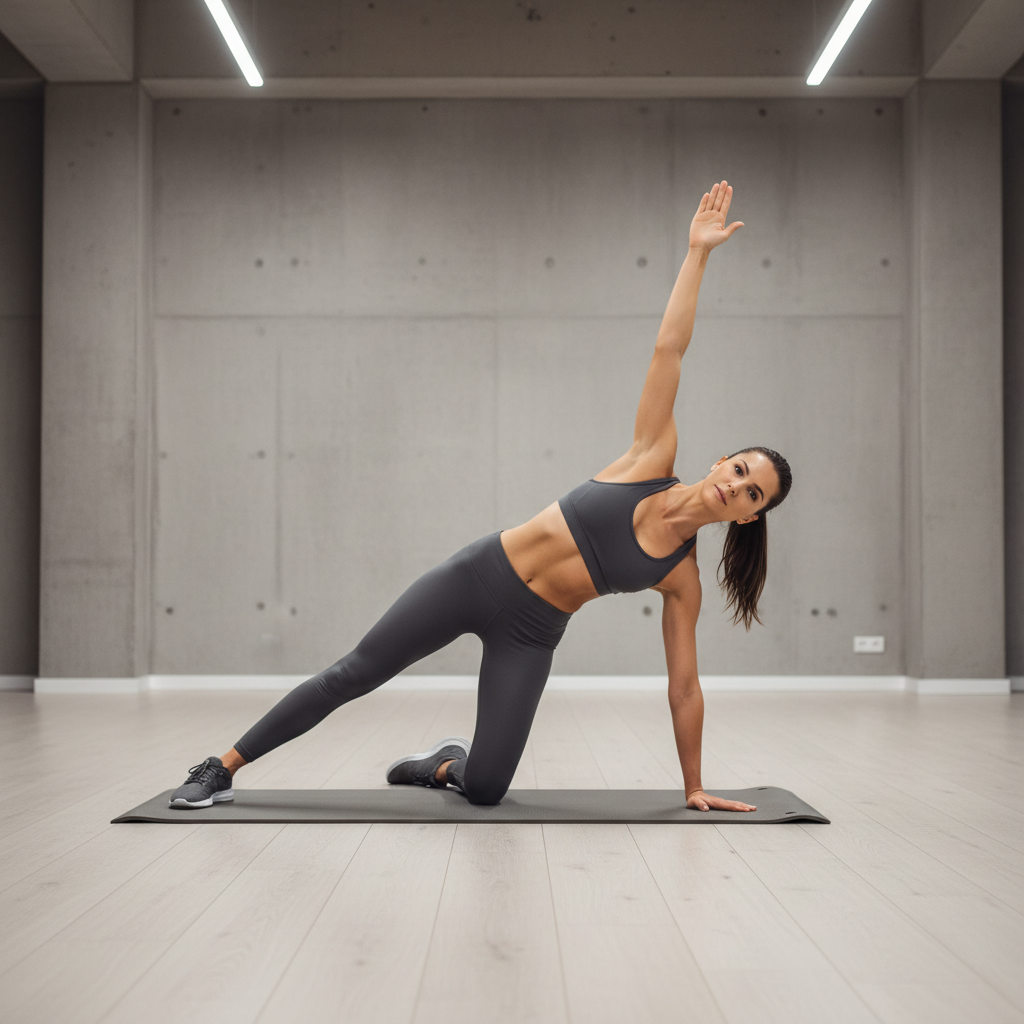
8) Side plank (bent-knee start)
- Do: bottom knee down, lift hips, hold while breathing.
- Why it matters: trains obliques and lateral hip support together.
9) Swimming (back-body core)
- Do: prone, lift opposite arm/leg in small ranges, alternate.
- Make it easier: keep forehead on hands and only lift legs.
- Key: lengthen first, lift second.
A simple 3-level plan (2–4 days/week)
If you want consistency, use a template you can repeat and progress. Many people improve faster with 15–25 minutes done regularly than a long session done once.
| Level | Best for | Pick 5–7 moves | Progress when… |
|---|---|---|---|
| Foundation | Back sensitivity, rib flare, shaky tabletop | Pelvic tilt/neutral, marching, toe taps, modified Hundred, bent-knee side plank | You stay steady and can nasal inhale + long exhale |
| Build | Basics feel controlled, want more challenge | Toe taps, dead bug reach, single-leg stretch, plank, swimming | No neck grabbing, low back stays quiet |
| Advance | Good control under fatigue | Hundred with legs extended, longer lever dead bug, full side plank, plank shoulder taps | You can keep form for time, not just reps |
Suggested dosage: 1–3 sets per move, 6–10 slow reps or 15–40 second holds, rest long enough to keep clean form.
Form cues that fix 80% of issues
Most “I don’t feel my core” complaints come down to setup. When you get these right, pilates core exercises stop feeling random and start feeling targeted.
- Exhale to move: a longer exhale often helps ribs come down and abs engage.
- Pelvis stays heavy: if you can’t keep it still, shorten the lever or reduce range.
- Neck relaxed: tongue soft, jaw unclenched, eyes up rather than chin jammed.
- Hips included: light glute support prevents low-back overwork in planks and swimming.
Common mistakes (and what to do instead)
- Forcing a flat back all the time: neutral spine often works better for strength; use imprint when you need extra control.
- Chasing low-leg positions too soon: keep legs higher until you can prevent arching.
- Holding your breath: if breathing stops, the difficulty is too high right now.
- Doing “more reps” when form slips: stop earlier, rest, then do a cleaner set.
- Only training flexion: balance curl-up work with planks, side support, and back-body work.
According to NIH (National Institutes of Health), regular physical activity supports overall health, but the right intensity and form matter, especially if you have pain or past injuries. If something creates sharp pain, numbness, or symptoms that linger, it makes sense to pause and get individualized guidance.
When to get help from a pro
If you’re working around injury history, postpartum recovery, pelvic floor symptoms, or persistent back pain, a qualified Pilates instructor or physical therapist can help you choose safer progressions. This is especially relevant if you notice doming along the midline of the abs, leaking with exertion, or pain that increases over time.
Many studios offer a single private session to dial in breathing and alignment, which can save you weeks of guessing.
Key takeaways and what to do next
If you want a stronger core, keep your plan boring in the best way: repeat a small set of pilates core exercises, track control, and progress the lever only when your spine stays steady.
- Start with control, not the hardest variation.
- Breathe on purpose, long exhales often unlock stability.
- Progress slowly, better form beats more reps.
Pick a level from the table, schedule 2–4 short sessions this week, and re-test your “pelvic wobble” check after two weeks. That feedback loop is where results come from.
FAQ
How often should I do pilates core exercises?
For most people, 2–4 days per week works well, especially if sessions stay in the 15–25 minute range. If you train hard elsewhere, treat Pilates as skill work and keep intensity moderate.
Are these Pilates moves safe if I have lower back pain?
Many are back-friendly, but it depends on why your back hurts. If pain is sharp, radiating, or worsening, it’s smart to consult a medical professional, and start with a Pilates instructor who can regress range and leverage breathing.
Why do I feel Pilates more in my hip flexors than my abs?
Usually the leg lever is too long or you’re losing pelvic control. Raise the legs higher, bend the knees, and prioritize exhaling as the leg moves.
Do I need equipment for a stronger core with Pilates?
No. A mat and enough space already cover most effective options. Later, a mini ball or resistance band can add variety, but it’s not required.
Is the Hundred necessary for core strength?
It’s helpful, not mandatory. If it irritates your neck or you can’t breathe smoothly, use a modified version with head down, or swap in toe taps and dead bug reaches.
How do I know when to progress to harder variations?
When you can keep ribs stacked, pelvis steady, and breathing continuous through the full set. If you only “survive” by tensing your neck or arching your back, stay where you are a bit longer.
Can Pilates help with posture?
It can, mainly because you practice ribcage-pelvis alignment and back-body endurance. Posture changes still depend on your day-to-day habits, not just workouts.
If you’re trying to build a strong core without aggravating your back or neck, a short, repeatable routine usually beats random workouts. If you’d rather not troubleshoot form alone, consider booking a session with a certified Pilates instructor who can tailor the same pilates core exercises to your body and goals.