
Rest Day Tips matter because muscle doesn’t grow during the hardest set, it grows when your body recovers afterward, and many people accidentally sabotage that window.
If your workouts look solid but progress feels stuck, rest days are often the missing piece, too much couch time, not enough sleep, protein that drifts low, or “active recovery” that turns into a secret second workout.
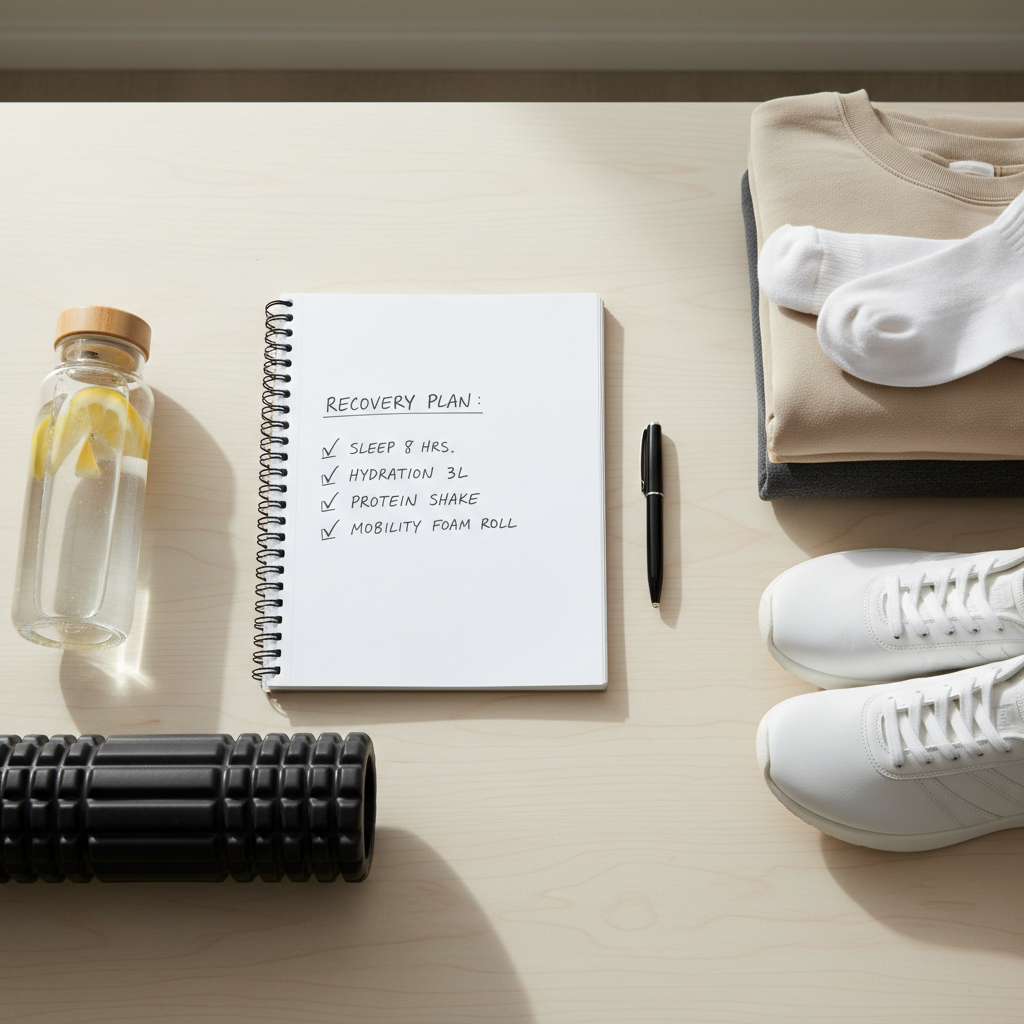
This guide breaks down what to do on rest days for muscle growth, how to tell whether you need full rest or active recovery, and a few practical routines you can reuse without overthinking it.
Why rest days drive muscle growth (and why they sometimes don’t)
Your training creates a stimulus, your rest day determines how well you adapt to it. That adaptation is mostly about repairing muscle tissue, replenishing fuel, and getting your nervous system ready to perform again.
According to the American College of Sports Medicine (ACSM), most adults benefit from allowing at least 48 hours of recovery between intense sessions for the same muscle group, especially when training hard.
- Muscle repair: micro-damage from training needs building blocks (protein) and downtime.
- Glycogen refill: carbs help refill stored fuel, which often affects performance more than people expect.
- Connective tissue recovery: tendons and joints usually recover slower than muscles, a common reason “I feel fine” still turns into aches.
- Central fatigue: stress, poor sleep, and high training intensity can blunt performance even if muscles aren’t sore.
Rest days “don’t work” when recovery inputs stay weak, short sleep, low calories, too much extra cardio, or daily life stress stays high. In real life, it’s rarely one thing.
Quick self-check: do you need full rest or active recovery?
Not every off-day should look the same. A clean way to decide is to check performance, soreness, and motivation, then match the day to what your body can actually handle.
Signs a full rest day is the better call
- Your warm-ups feel unusually heavy or slow.
- Joint soreness or “sharp” discomfort shows up, not just muscle soreness.
- Sleep has been short for multiple nights.
- Your resting heart rate seems elevated for you, or you feel run-down.
Signs active recovery may help
- Soreness feels mild to moderate and mostly “tight.”
- You feel stiff from sitting, not beat up from training.
- You want to move, but don’t want to lift heavy.
One of the most useful Rest Day Tips is giving yourself permission to pick the easier option when the signals look mixed. Consistency beats heroic recovery hacks.
Rest Day Tips for muscle growth: the big rocks (sleep, protein, stress)
If you only fix three things, start here. Most people don’t need fancy tools, they need the basics done more reliably.
1) Sleep like it’s part of training
According to the Centers for Disease Control and Prevention (CDC), adults generally need 7 or more hours of sleep per night. For lifters, consistently undershooting that tends to show up as stalled strength, higher soreness, and weaker workouts.
- Keep wake time steady, even on weekends, when possible.
- Cut caffeine earlier than you think you need, many people do better stopping 8 hours before bed.
- Use a short wind-down routine: dim lights, shower, 10 minutes of reading.
2) Hit protein without “making up for it later”
You don’t need perfection, but you do need consistency. A practical target many coaches use is spreading protein across 3–5 meals, rather than cramming it at dinner.
- Anchor meals around a protein source (chicken, Greek yogurt, eggs, tofu, lean beef, beans plus rice).
- If appetite drops on rest days, use simpler options: a smoothie, yogurt bowl, or a sandwich.
3) Manage stress so recovery can actually happen
This sounds soft, but it isn’t. High stress can disrupt sleep and appetite, and your body treats that as “not safe to recover aggressively.” A 10–20 minute walk, light stretching, or a short breathing routine often does more than another gadget.

What to do on a rest day: a simple menu (pick 2–3)
Rest day planning gets easier when you treat it like a menu. Pick a few items, keep intensity low, and stop before it feels like a workout.
- Easy walk: 20–40 minutes, conversational pace.
- Mobility: 10–15 minutes focusing hips, ankles, thoracic spine, shoulders.
- Light cardio: easy bike or incline treadmill, short and relaxed.
- Soft tissue work: foam rolling 5–10 minutes, not a pain tolerance contest.
- Meal prep: boring but effective, helps you stay in a slight surplus if bulking.
- Sunlight + hydration: especially if you train indoors and sit all day.
A sneaky way people blow rest days is turning “recovery” into a sweaty conditioning session. If you’re breathing hard and chasing fatigue, that’s training, not recovery.
Nutrition and hydration on rest days (including a quick table)
Calories and macros on a rest day depend on your goal. For muscle gain, many people do better keeping calories fairly steady across the week, because it’s easier to stay in a consistent surplus and keep protein high.
| Goal | Rest day calories | Protein | Carbs & fats |
|---|---|---|---|
| Muscle gain | Often similar to training day | High and steady | Carbs moderate, fats moderate |
| Fat loss while lifting | Often slightly lower | High and steady | Carbs adjusted down first, fats not too low |
| Maintenance | Similar across days | Moderate to high | Balanced based on preference |
Hydration is simple but not trivial. According to the National Academies of Sciences, Engineering, and Medicine, adequate daily water intake varies by person and environment, so treat thirst, urine color, and training conditions as your real-world feedback.
- Include fluids with meals, not just around workouts.
- Add electrolytes if you sweat a lot, especially in hot climates, or if cramps show up.
Common rest day mistakes that stall progress
These are the patterns I see most often when people swear they “rest,” but their numbers stop moving.
- Too many hard days in a row: the plan says 5–6 days, but recovery capacity says 3–4.
- Active recovery that’s too intense: long runs, hard HIIT, competitive sports, then wondering why legs stay flat.
- Eating like rest days don’t count: skipping meals, under-proteining, or “saving calories,” then training suffers.
- Weekend sleep debt: trying to repay sleep with one long morning rarely fixes a bad week.
- Chasing soreness: soreness isn’t the scoreboard, performance and consistency matter more.
If you want a single rule, use this: a rest day should make the next training day feel better, not worse. That’s one of the most reliable Rest Day Tips you can apply without tracking everything.

When to get help or adjust your plan
If recovery stays poor for weeks, it may be less about willpower and more about mismatched training volume, not enough calories, or an underlying issue worth checking.
- Persistent joint pain or pain that changes your movement pattern, consider a physical therapist or sports medicine clinician.
- Frequent injuries, it’s often a load management issue, a coach can help.
- Sleep problems that don’t improve with habits, consider talking with a healthcare professional.
- Signs of relative energy deficiency (low energy, poor recovery, missed periods in women, frequent illness), a registered dietitian can be a strong next step.
It’s also fair to adjust programming. Many lifters grow better on fewer hard sets done well, with more deliberate recovery, than on maximum weekly volume that they can’t actually absorb.
Practical rest-day plan you can start this week
Here’s a simple template that fits most schedules. Adjust based on how your body responds.
If you train 3–4 days/week
- 1–2 full rest days: prioritize sleep, meals, and short walks.
- 1 active recovery day: 30-minute easy walk + 10 minutes mobility.
If you train 5–6 days/week
- 1 full rest day: no structured exercise, just light movement.
- 1 low-stress recovery day: mobility + very easy cardio, keep it short.
- Reduce intensity on at least one lifting day, so recovery has room.
Key takeaways: Keep protein steady, protect sleep, keep recovery work easy, and use your next workout performance as the truth test. If you apply these Rest Day Tips consistently for 2–3 weeks, you usually get clearer feedback on what actually helps.
Conclusion: rest days are part of the program, not a break from it
Muscle growth rewards people who train hard and recover on purpose. Pick one change you can keep, maybe an earlier bedtime, a higher-protein breakfast, or swapping “active recovery” for an easy walk, then watch how the next week of training feels.
If you want an immediate action step, plan your next rest day like you plan your workouts, choose two recovery items, block 30 minutes, and treat it as non-negotiable.
FAQ
- Do rest days help build muscle, or do they just prevent burnout?
They support growth because training is the stimulus and recovery is the adaptation phase. Without enough recovery, performance drops and progressive overload gets harder to sustain. - Should I eat less on rest days when bulking?
Many people do better keeping calories similar, because it keeps protein and overall intake consistent. If you drop calories, do it mildly and watch training performance. - Is walking on a rest day okay for muscle growth?
Usually yes, easy walking can improve circulation and reduce stiffness without adding much fatigue. Keep it truly easy. - How sore is “too sore” to train?
Mild soreness is common, but if range of motion is limited, warm-ups feel awful, or pain feels sharp, a lighter day or rest often makes more sense. - Can stretching replace a rest day?
Stretching can be part of recovery, but it doesn’t replace sleep, nutrition, and load management. Think of it as a small tool, not the foundation. - What are the best Rest Day Tips if I only have one day off?
Protect sleep, eat enough protein, take an easy walk, and avoid turning the day into hard cardio. Your goal is to show up stronger next session. - Do I need supplements on rest days?
Often not. If your diet is inconsistent, basics like protein powder or creatine may help, but it’s smart to check with a healthcare professional if you have medical conditions or take medications.
If you’re trying to gain muscle but rest days feel confusing, you might get better results by tracking a few simple signals for two weeks, sleep hours, daily protein, and how your first working set feels, then adjusting volume. If you prefer a more hands-off approach, a qualified coach or registered dietitian can help you match training and recovery to your schedule without guessing.