
Best cycling sunscreen for face usually means one thing in real life: it needs to stay put through sweat, wind, reapplication, and helmet straps without running into your eyes or turning your skin into an oily mess.
Most “good” sunscreens fail on a bike for predictable reasons, they’re made for beach lounging, not a two-hour ride with salt sweat dripping and constant airflow drying everything out. The result is stinging eyes, patchy protection around the nose and cheeks, and that weird sunscreen taste on your lips.
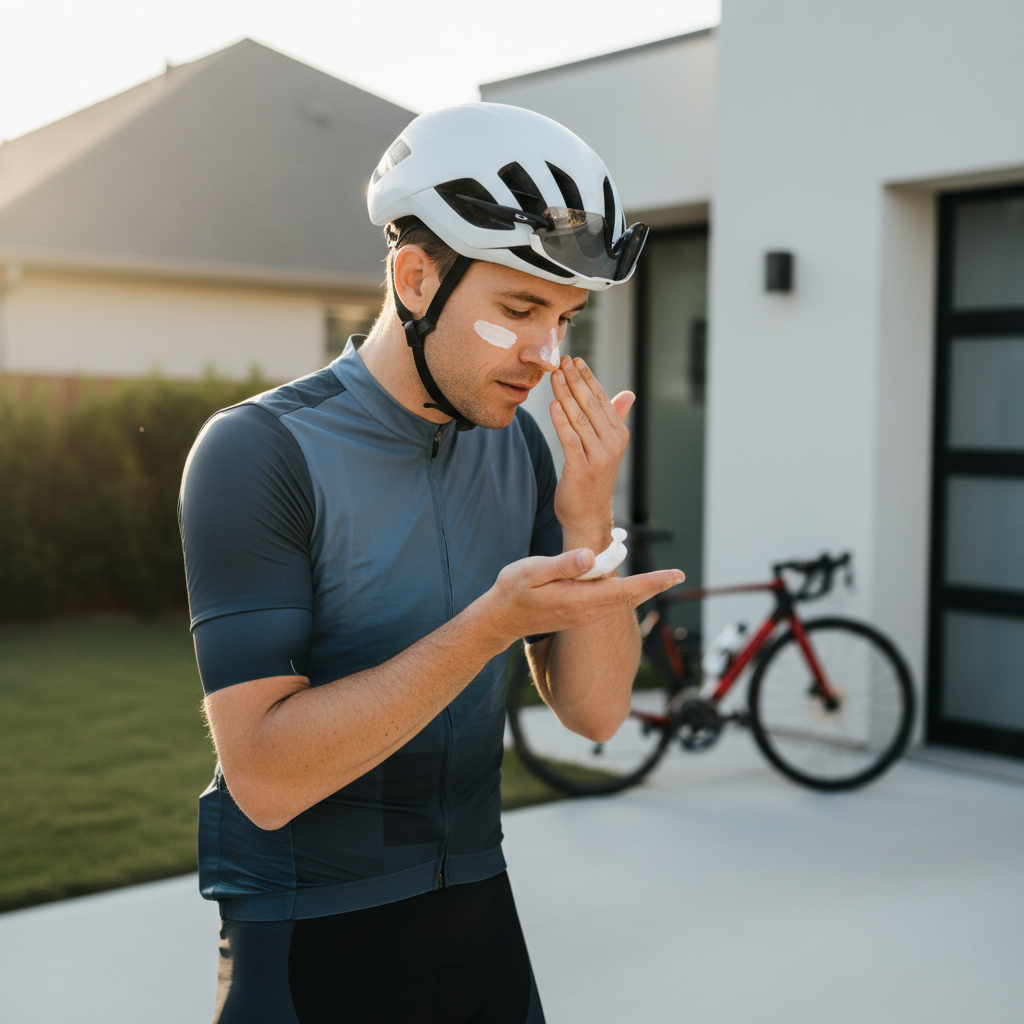
This guide focuses on what actually matters for riders: filters that hold up under sweat, textures that don’t clog or pill under sunglasses, and a simple reapply routine you can do at a stoplight. You’ll also see a quick comparison table, a self-check list, and a few “don’t bother” traps to skip.
What makes face sunscreen “cycling-friendly”
Face sunscreen for cycling succeeds or fails on details, not just the SPF number. SPF tells you mainly about UVB, but your riding comfort depends on how the formula behaves on moving, sweating skin.
- Water and sweat resistance: Look for 40 or 80 minutes water resistance. It’s not a guarantee for a three-hour ride, it’s just a better starting point.
- Eye-sting risk: Many chemical filters can migrate with sweat. If you often get burning eyes, consider mineral-only options or tighter-film sport formulas.
- UVA coverage: For everyday aging and deeper skin impact, UVA matters. In the U.S., “broad spectrum” is the label to look for. According to the U.S. Food & Drug Administration (FDA), only products labeled “broad spectrum” have been shown to protect from UVA and UVB.
- Finish under gear: Matte or “dry-touch” helps with sunglass slip, but overly matte can emphasize dryness in wind. Tinted mineral can double as light coverage and reduce white cast.
- Pilling and friction: Helmet straps and nose pads create rub points that can lift product. A thin, even layer that sets well usually performs better than a thick one.
Quick comparison table: pick by your riding style
There isn’t one best cycling sunscreen for face for everyone, because your sweat rate, skin type, and ride length change the “best” choice. Use this as a practical starting point.
| Riding scenario | What to prioritize | Usually a good fit | Watch out for |
|---|---|---|---|
| Short commute (15–45 min) | Comfort, non-greasy feel | Light lotion, gel-cream, daily broad spectrum SPF 30+ | Skipping ears, neck, and lip area |
| Weekend road ride (1–3 hrs) | Sweat resistance, reapply-friendly | Sport face lotion SPF 50, 40–80 min water resistance | Eye sting from sweat migration |
| All-day endurance / century | Layering + reliable reapplication | Sport lotion + sunscreen stick for touch-ups | Relying on one morning application |
| Hot, humid, heavy sweater | Stay-put film, minimal slip | Sport “dry touch” or mineral sport formulas | Greasy formulas causing sunglass slide |
| Sensitive skin / rosacea-prone | Low irritation risk | Fragrance-free mineral (zinc oxide) | White cast, dryness without moisturizer |
How to tell what you need (fast self-check)
If you’re unsure what to buy, don’t start with hype, start with your failure mode. Most riders can pinpoint it in 30 seconds.
- Your eyes burn mid-ride → prioritize sweat-resistant sport formulas, consider mineral-only on forehead and around eyes.
- White streaks in photos → look at tinted mineral or transparent-leaning formulas, and apply in thinner layers.
- Face feels greasy, sunglasses slide → try matte/dry-touch, gel-cream textures, or set key areas (nose/temples) and avoid heavy moisturizers underneath.
- Breakouts after long rides → simpler ingredient lists, non-comedogenic claims can help, and cleanse promptly after riding.
- Red nose/cheeks even with SPF → likely missed reapplication, missed spots, or insufficient amount, also consider reflective UV at altitude.
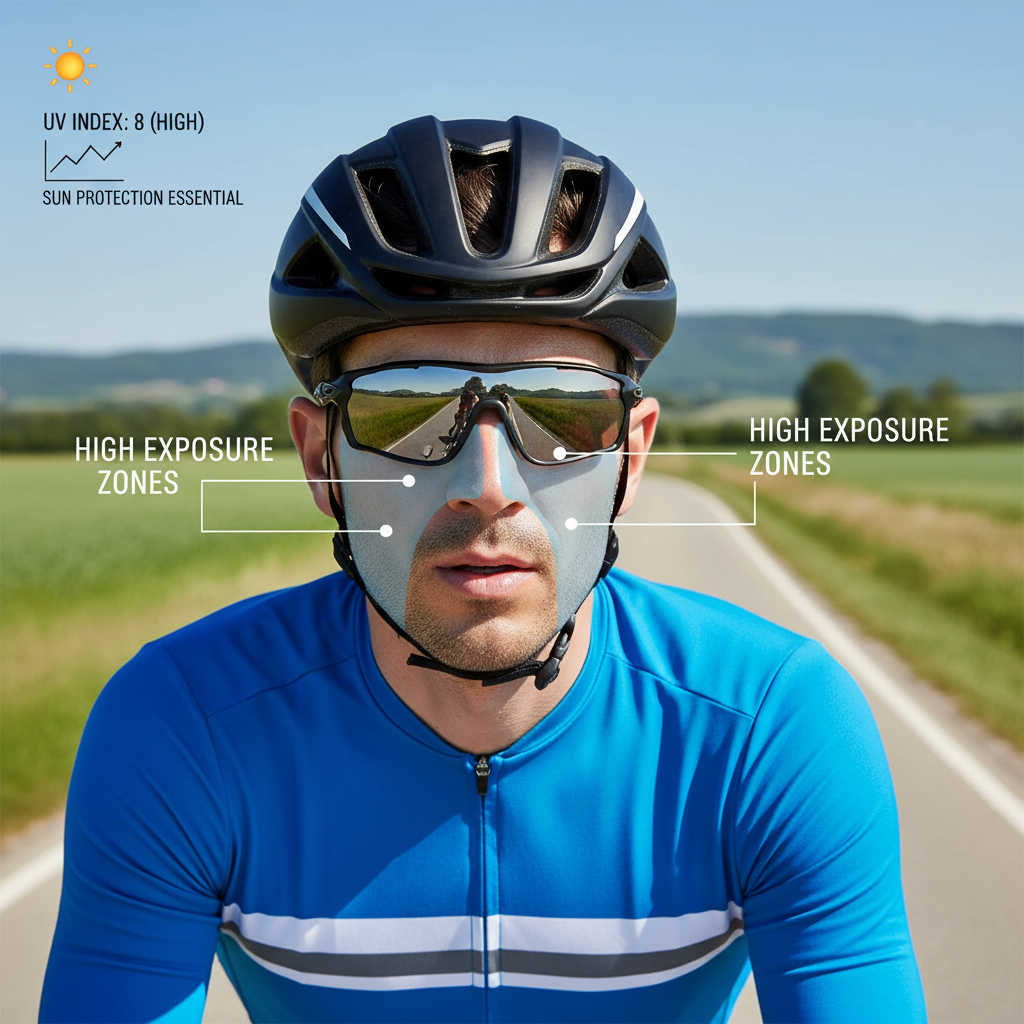
One more quick check that people skip: if you ride in the morning and end up outside at lunch, you’re dealing with cumulative exposure. The “best cycling sunscreen for face” in that case is the one you’re willing to reapply, not the one with the fanciest label.
Ingredients and formats that tend to work on the bike
In the U.S., you’ll mostly choose between mineral filters (zinc oxide, titanium dioxide) and chemical filters. Both can work, but they behave differently when sweat and wind enter the chat.
Mineral (zinc oxide-based)
- Why riders like it: often less eye sting, good for sensitive skin, tends to sit on top and resist migration.
- Tradeoffs: can feel thicker, may leave a white cast, some formulas get dry or “draggy” under helmet straps.
Chemical and hybrid formulas
- Why riders like it: usually more transparent, lighter feel, easier to apply enough product.
- Tradeoffs: higher chance of eye irritation for some people, especially if you sweat heavily.
Format: lotion vs stick vs spray (for face)
- Lotion/cream: best for full coverage and even film. For most riders, this is the base layer.
- Stick: great for targeted top-ups on nose, cheekbones, and temples, especially mid-ride.
- Spray: convenient but easy to under-apply and risky near eyes. If you use a spray on face, spraying into hands and then applying is usually safer.
According to the American Academy of Dermatology, adults often need about one ounce of sunscreen to cover the body, and reapplication is recommended about every two hours, or after swimming or sweating. For cycling, that “every two hours” becomes a good default, but your sweat rate can shorten it.
How to apply it so it lasts (and doesn’t ruin your ride)
The best cycling sunscreen for face can still fail if the application routine is sloppy. This is the part that feels boring until you stop finishing rides with a red nose.
Pre-ride routine that holds up
- Apply early: aim for 15 minutes before rolling out so it can set.
- Use enough: most people under-apply on face. A practical approach is two thin layers instead of one thick layer.
- Don’t forget “cycling misses”: ears, back of neck, hairline, and under the jaw if you ride in an aero position.
- Protect the eye zone strategically: if you get sting, use a mineral stick around the orbital area and a sport lotion elsewhere.
Mid-ride reapplication you’ll actually do
- At a stop: wipe sweat, then reapply. Putting sunscreen on top of active sweat usually leads to uneven coverage.
- Use a stick for speed: nose bridge, cheeks, temples, and tops of ears, then blend edges.
- Mind your hands: sticky hands + bar tape is a bad combo, keep a small wipe or rinse option if possible.
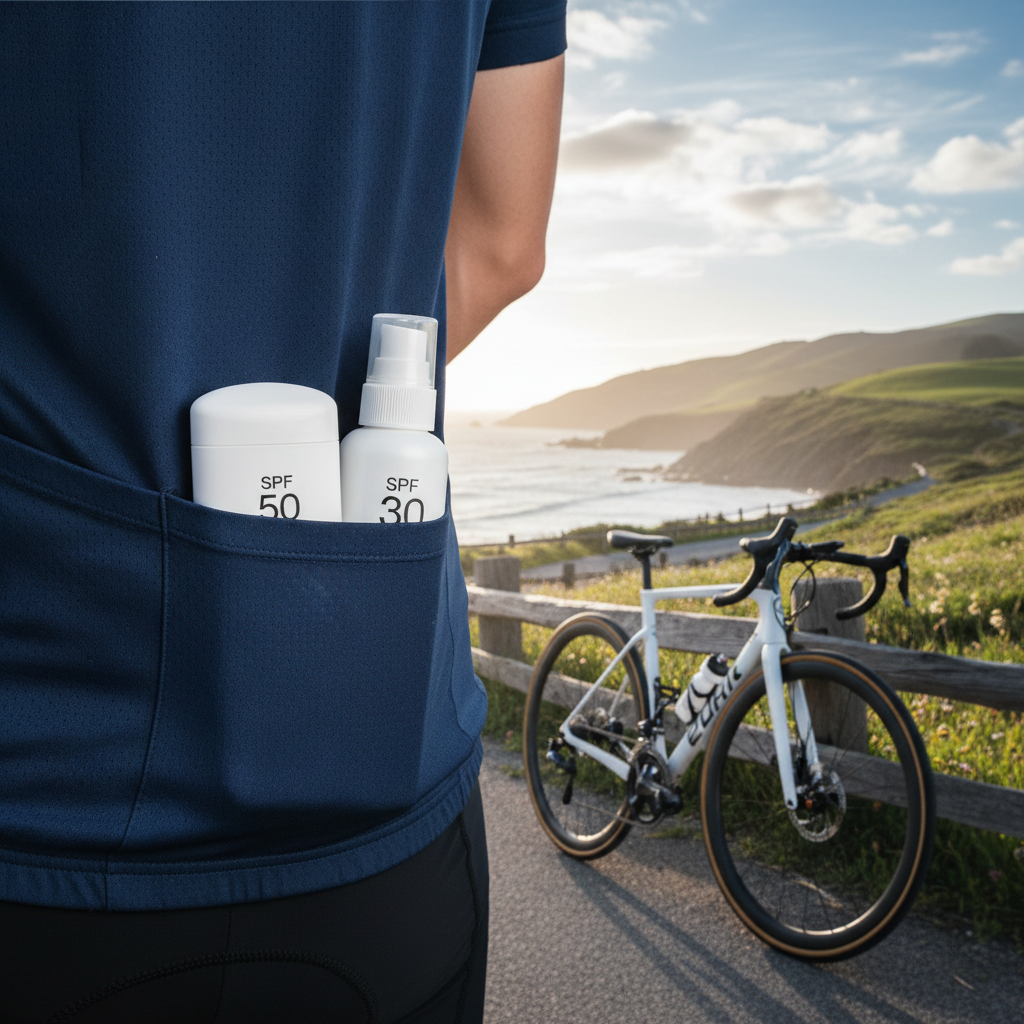
Key point: if you can only reapply once, do it when you feel the sun “winning,” usually the last third of the ride when sweat and friction have already chipped away coverage.
Mistakes that make cyclists think sunscreen “doesn’t work”
Some failures come from the product, but many come from how it’s used. A few patterns show up constantly.
- Using a face mist or spray as the main protection: it’s easy to miss coverage, and wind makes it worse.
- Only applying to the center of the face: ears and hairline burn quietly, then peel for a week.
- Assuming clouds mean low UV: bright overcast can still deliver UV exposure. According to the U.S. Environmental Protection Agency (EPA), UV radiation can reach the ground even on cloudy days.
- Mixing sunscreen into moisturizer: dilution makes coverage unpredictable. Layer instead.
- Skipping lip protection: lips burn too, a lip balm with SPF can help.
Also, “water resistant” isn’t the same as “sweat-proof forever.” If you ride hard, accept that reapplication is part of the sport, like refilling bottles.
When to consider professional advice
If you keep burning despite using broad spectrum SPF 30+ and reapplying, it may be worth checking in with a dermatologist, especially if you have a history of sun sensitivity, photosensitive medications, or persistent irritation around eyes.
And if a sunscreen repeatedly causes rash, swelling, or intense stinging, stop using it and consider professional guidance. Skin reactions can vary a lot, and it’s not something you need to “power through” just to finish a ride.
Conclusion: a practical way to choose your next face sunscreen
The best cycling sunscreen for face is the one that matches your sweat level and doesn’t sabotage your ride comfort, because that’s what keeps you consistent with coverage. Start with broad spectrum SPF 30 or higher, prioritize water resistance, and build a routine that includes a quick mid-ride touch-up.
If you want one simple action this week, do this: test your sunscreen on a short, sweaty ride, note eye sting and sunglass slip, then adjust format (lotion + stick usually fixes most issues) before your next long day in the sun.
FAQ
- What SPF is best for cycling on the face?
Many riders do well with broad spectrum SPF 30 for shorter rides, but SPF 50 is common for longer exposure. More important than chasing high SPF is applying enough and reapplying. - Why does sunscreen run into my eyes when I ride?
Sweat can dissolve and move sunscreen, then gravity and airflow push it toward the eyes. Sport water-resistant formulas help, and using a mineral stick around the eye area often reduces stinging. - Is mineral sunscreen better for cycling?
It can be, especially if you’re sensitive or deal with eye sting. Some mineral formulas feel heavier or leave a cast, so tinted options or thinner mineral fluids tend to be easier for daily rides. - How often should I reapply sunscreen during a bike ride?
A common rule is about every two hours, sooner if you’re sweating heavily. If you only reapply once, do it mid-ride and focus on nose, cheeks, and temples. - Can I use sunscreen spray on my face with sunglasses?
You can, but it’s easy to miss spots and irritate eyes. Spraying into your hands first, then applying like a lotion, usually gives more even coverage. - What’s the easiest way to reapply without getting greasy?
Blot sweat first, then use a sunscreen stick on high points of the face, and blend lightly. Matte sport lotions also help if grease is your main issue. - Do I still need sunscreen if my helmet has a visor and I wear sunglasses?
Usually yes. Visors and glasses reduce direct exposure but don’t fully block reflected UV hitting cheeks, nose, and the sides of the face.
If you’re still stuck choosing, or you want a more “set-and-forget” routine for long rides, a simple approach is to keep a sweat-resistant face lotion at home and a compact stick in your jersey pocket, it’s not fancy, but it tends to be the setup people actually stick with.