
Kids Fitness works best when it feels like play, not a lecture, and that can be tricky when screens, busy schedules, and picky moods show up at the same time. If you want ideas that don’t require special equipment or a perfect sunny day, you’re in the right place.
The real win is consistency, a few minutes here and there that add up, so kids build confidence in what their bodies can do. Many families get stuck because they think “fitness” has to mean organized sports or long workouts, when most kids respond better to short, varied bursts.
This guide breaks down why movement matters, how to tell what your child actually needs, and a menu of fun activities you can mix and match, plus simple safety notes. You’ll also get a flexible weekly plan you can copy and adjust.
Why movement matters (without making it scary)
Most parents aren’t chasing six-pack abs for their kids, they’re trying to support energy, mood, sleep, and basic physical skills. Regular movement can help with all of that, and it often makes daily life easier too, like climbing stairs, carrying a backpack, or sitting through class.
According to the Centers for Disease Control and Prevention (CDC), children and adolescents need regular physical activity, including aerobic activity plus muscle- and bone-strengthening activities across the week. The takeaway is simple: variety beats perfection, and different types of play “count.”
One more reality check: if a child has asthma, joint pain, a heart condition, or is returning after an injury, it’s smart to check with a pediatrician or qualified professional about what’s appropriate, especially before pushing intensity.
Quick self-check: what kind of Kids Fitness does your child need?
Before you pick activities, it helps to notice patterns. Kids usually don’t need “more exercise” in the abstract, they need the right kind of movement at the right friction level.
- Low stamina: gets winded quickly, avoids tag, complains about “tired legs.”
- Low strength: struggles with playground bars, carrying groceries, getting up from the floor.
- Low coordination: trips often, has trouble catching or hopping, avoids ball games.
- Low motivation: will move only if an adult leads, quits fast, needs novelty.
- Too much intensity too fast: starts hard, then melts down, sore for days.
Key point: match activities to the easiest “yes.” If motivation is the barrier, choose games with quick wins. If stamina is the barrier, use short intervals and frequent breaks so success stays in reach.
Fun fitness activities that don’t feel like exercise
Below is a mix you can rotate. You don’t need all of them, you need two or three that your child will actually repeat.
1) The “mission” walk (great for reluctant movers)
Instead of “go for a walk,” give it a purpose. Try: find five different leaves, spot three red cars, deliver a note to a neighbor, or do a photo scavenger hunt. It’s still movement, just with a story.
- Keep it short, 10–20 minutes often lands better than an hour.
- Let your child choose the route once in a while.
2) Living-room circuit (rainy-day lifesaver)
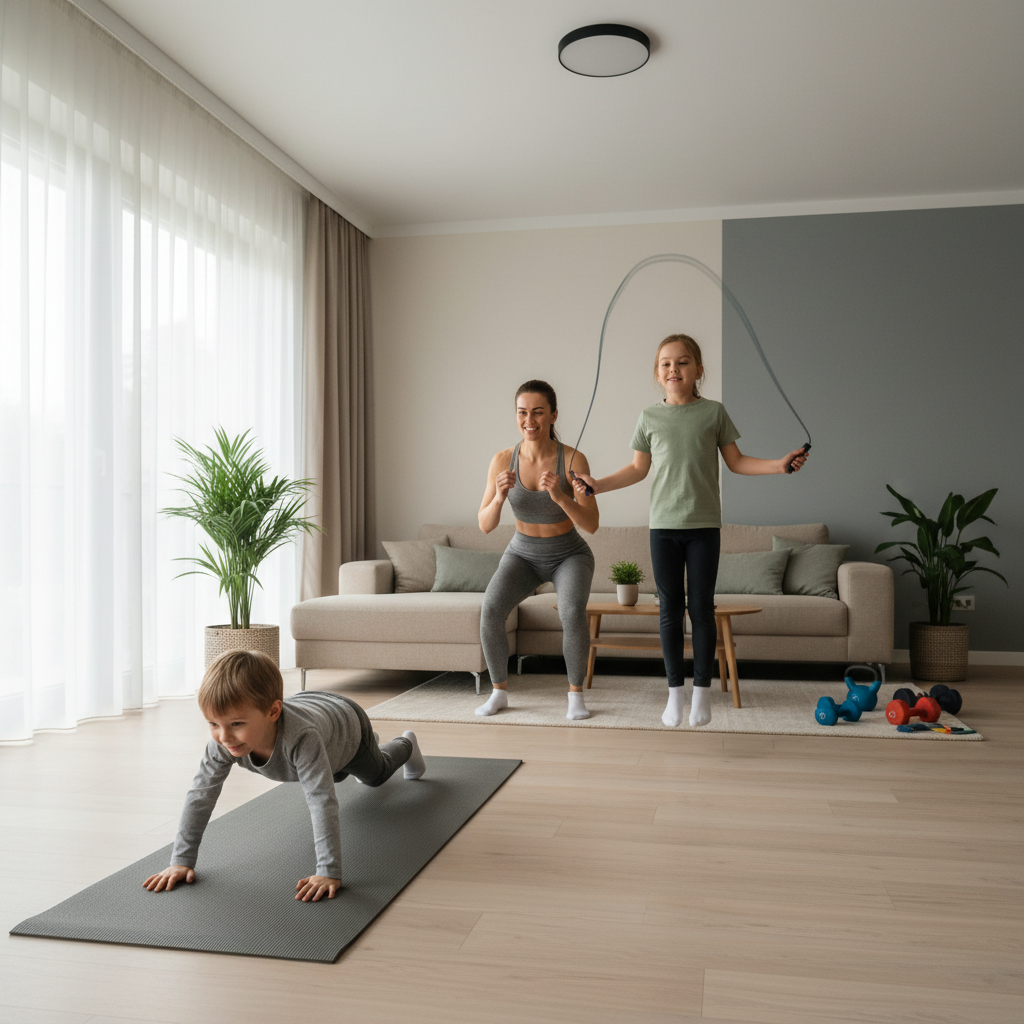
Set a timer for 30 seconds per move, rest 30 seconds, repeat 2–4 rounds. Pick 4–6 moves from this list:
- Animal walks: bear crawl, crab walk, frog hops
- Chair sit-to-stands (like mini squats)
- Wall push-ups or countertop push-ups
- Jump rope or “invisible rope”
- Pillow line hops side-to-side
- Plank “high-fives” with a parent
If your child is younger, keep form cues light. If they’re older, you can nudge technique, but avoid turning it into critique.
3) Obstacle course (the easiest way to add strength + coordination)
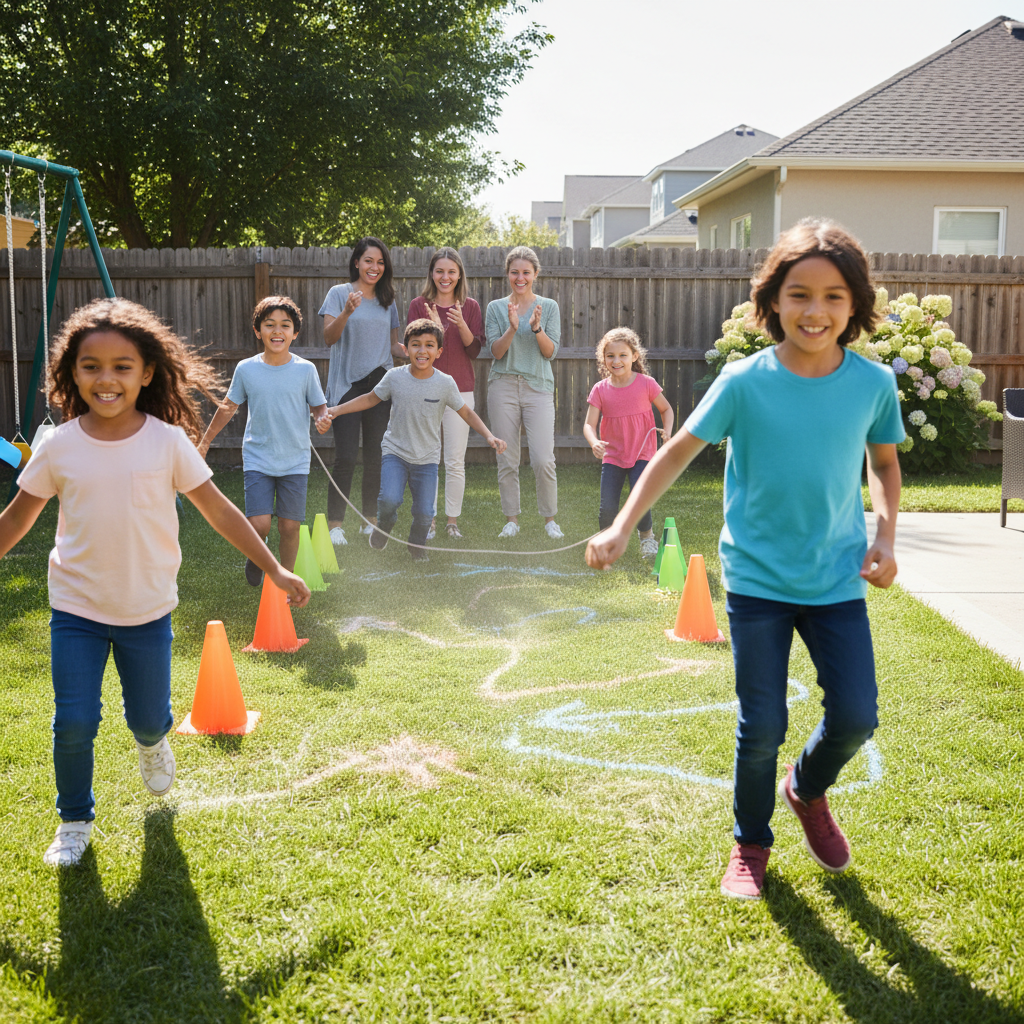
Use cones, sidewalk chalk, painter’s tape, couch cushions, or park features. Build 6–10 stations and time “friendly runs,” then let your child redesign the course, that’s where buy-in often happens.
- Balance: walk a tape line, heel-to-toe steps
- Jump: hop over a rope, jump to targets
- Throw: toss socks into a laundry basket
- Crawl: under a chair “tunnel”
- Carry: light backpack or small ball from point A to B
4) Dance breaks (high payoff, low resistance)
Put on three songs and make it a ritual. Kids who “hate exercise” often like dancing because there’s no scoreboard and no single right way to do it.
- Try freeze dance for built-in intervals.
- Let kids teach you one move, then you teach one.
5) Playground strength session (without calling it that)
At the park, you can quietly stack muscle- and bone-building work into normal play: climbing, swinging, hanging, jumping, and short sprints. According to the American Academy of Pediatrics (AAP), active play is a meaningful way for kids to move and build skills, and it tends to be more sustainable than forced routines.
A simple weekly plan you can copy (and not hate)
This is a template, not a rulebook. If you hit 3–5 days, you’re doing fine. If you have a kid who loves daily structure, use the full week.
| Day | Theme | What to do (20–45 min) |
|---|---|---|
| Mon | Stamina | Mission walk + 3 short “race to the mailbox” sprints |
| Tue | Strength | Living-room circuit (2–4 rounds), finish with stretching |
| Wed | Skills | Obstacle course + ball toss practice |
| Thu | Fun cardio | Dance break session (3–6 songs) + freeze dance |
| Fri | Family move | Bike/scooter time or a park meetup |
| Sat | Choice day | Let your child pick from the activity menu, you say yes to one |
| Sun | Recovery | Easy walk, light play, gentle mobility, early bedtime if possible |
Quick setup tip: keep a small “movement bin” (jump rope, soft ball, chalk, cones) where kids can grab and start, friction drops fast.
Make it stick: practical rules that work in real homes
A lot of Kids Fitness plans fail for a boring reason, they ask for more willpower than a family can spare on a Tuesday night. These are the tweaks that usually help.
- Use short timers: 8–12 minutes can be enough to change the day’s mood.
- Attach it to an existing routine: after school snack, before dinner, or right after homework.
- Let kids “own” one part: picking the music, building the obstacle course, choosing the last game.
- Praise effort, not talent: “You kept trying” sticks better than “You’re so athletic.”
- Track in a simple way: sticker chart, check marks, or a family calendar, nothing fancy.

Safety notes and common mistakes (the stuff people learn the hard way)
Most movement is safe for most kids, but a few patterns cause avoidable issues. If your child has pain (not just normal “working hard” effort), dizziness, or symptoms that worry you, it’s wise to pause and consult a pediatrician.
- Mistake: going from zero to intense workouts. Better: start easy, increase time before intensity.
- Mistake: treating soreness as proof it “worked.” Better: aim for feeling good enough to play again tomorrow.
- Mistake: comparing siblings or friends. Better: compare your child to their own baseline.
- Mistake: ignoring sleep and snacks. Better: a simple pre-play snack and water often prevents meltdowns.
- Mistake: pushing through joint pain. Better: swap to lower-impact options and ask a professional if it persists.
When to get extra help (and who to ask)
Some situations benefit from a second set of eyes, not because something is “wrong,” but because guidance saves time and stress.
- Frequent pain, limping, or repeated injuries
- Breathing issues during play that seem beyond typical exertion
- Big motor delays or coordination struggles that impact confidence
- Strong anxiety around sports, body image, or performance
Depending on the situation, talking with a pediatrician, a pediatric physical therapist, or a qualified youth coach can help tailor activities and keep Kids Fitness enjoyable rather than tense.
Conclusion: keep it playful, keep it repeatable
If there’s one thread that runs through every successful Kids Fitness routine, it’s that kids repeat what feels good and doable. Start with two go-to activities, schedule them at predictable times, and let your child help steer the playlist or the rules so it feels like theirs.
Your next step can be small: pick one indoor option and one outdoor option, set a 10-minute timer, and run it three times this week. If that goes smoothly, add time or variety, not pressure.
FAQ
What are the best Kids Fitness activities for a child who hates sports?
Non-competitive options usually land better, like dance breaks, scavenger-hunt walks, or obstacle courses. The goal is repeated movement, not learning a sport overnight.
How long should a kids workout be?
Many kids do well with 10–30 minutes of active play, especially if it’s broken into short bursts. If your child stays engaged longer, great, but shorter sessions often improve consistency.
Can Kids Fitness be done indoors without equipment?
Yes. Animal walks, pillow hops, wall push-ups, and freeze dance can cover cardio and strength with almost no setup. A timer and a little floor space are usually enough.
How do I motivate my child to be more active after school?
Try a predictable “transition ritual” like snack, then 10 minutes of movement before screens. Kids often resist less when they know it’s short and always followed by downtime.
Is strength training safe for kids?
Bodyweight strength and supervised, age-appropriate resistance work is commonly used in youth programs, but technique and load choices matter. If you’re unsure, a qualified coach or pediatric professional can help you set safe boundaries.
What if my child gets out of breath quickly?
Use intervals, like 20–30 seconds of effort with plenty of recovery, and build gradually. If shortness of breath seems unusual or comes with wheezing or chest symptoms, check with a pediatrician.
How do I reduce injuries during active play?
Warm up with easy movement, keep surfaces clear, and avoid big jumps in intensity week to week. Shoes that fit well and hydration also help more than people expect.
If you’re trying to make Kids Fitness feel natural in your home, a simple routine and a small activity menu often beat complicated plans, and if you’d rather not invent games from scratch each week, using a printable schedule or age-based activity list can save time and reduce negotiation.