
How to haul cargo with a bike trailer comes down to three things you can actually control: picking a trailer that matches your load, packing so the weight behaves, and riding like you’re towing something (because you are).
If you’ve ever felt the trailer sway on a turn, watched a bungee cord slip, or wondered whether your bike can handle “just one more” grocery run, you’re in the right place. Most problems aren’t about strength, they’re about setup and balance.
Below you’ll get a practical way to choose capacity, set up the hitch, load and strap cargo, and adjust your riding so it stays stable on real U.S. streets, sidewalks, and multi-use paths.
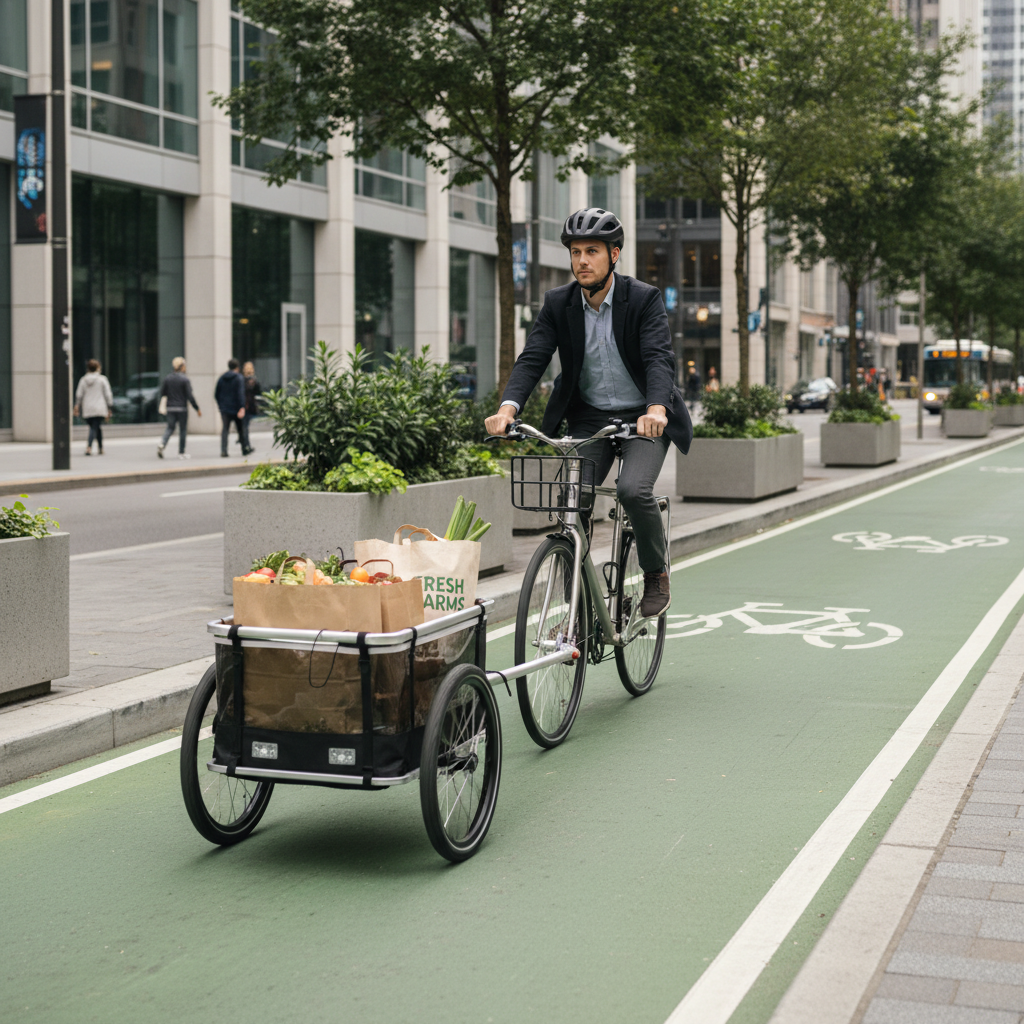
Pick the right trailer for what you actually haul
Before you learn how to haul cargo with a bike trailer smoothly, make sure the trailer type matches the job. A “works for everything” trailer exists mostly in marketing copy, not in daily use.
- Two-wheel trailers: usually steadier at low speeds and when stopped, great for groceries and bulky loads, a bit wider in traffic.
- Single-wheel trailers: track closer behind the bike and can feel better on narrow paths, but can be fussier about load balance.
- Flatbed vs. tub-style: flatbeds handle odd shapes well, tubs contain loose items better and help keep rain splash off cargo.
Capacity isn’t just “max pounds.” Pay attention to the trailer’s wheel size, tire type, and hitch design, since those affect stability and how much road shock reaches your cargo.
Key point: treat weight limits as a comfort and control limit, not a dare. If you’re near the top of the rating, you’ll often need slower speeds and better strapping to keep things calm.
Set up your bike and hitch so the trailer tracks straight
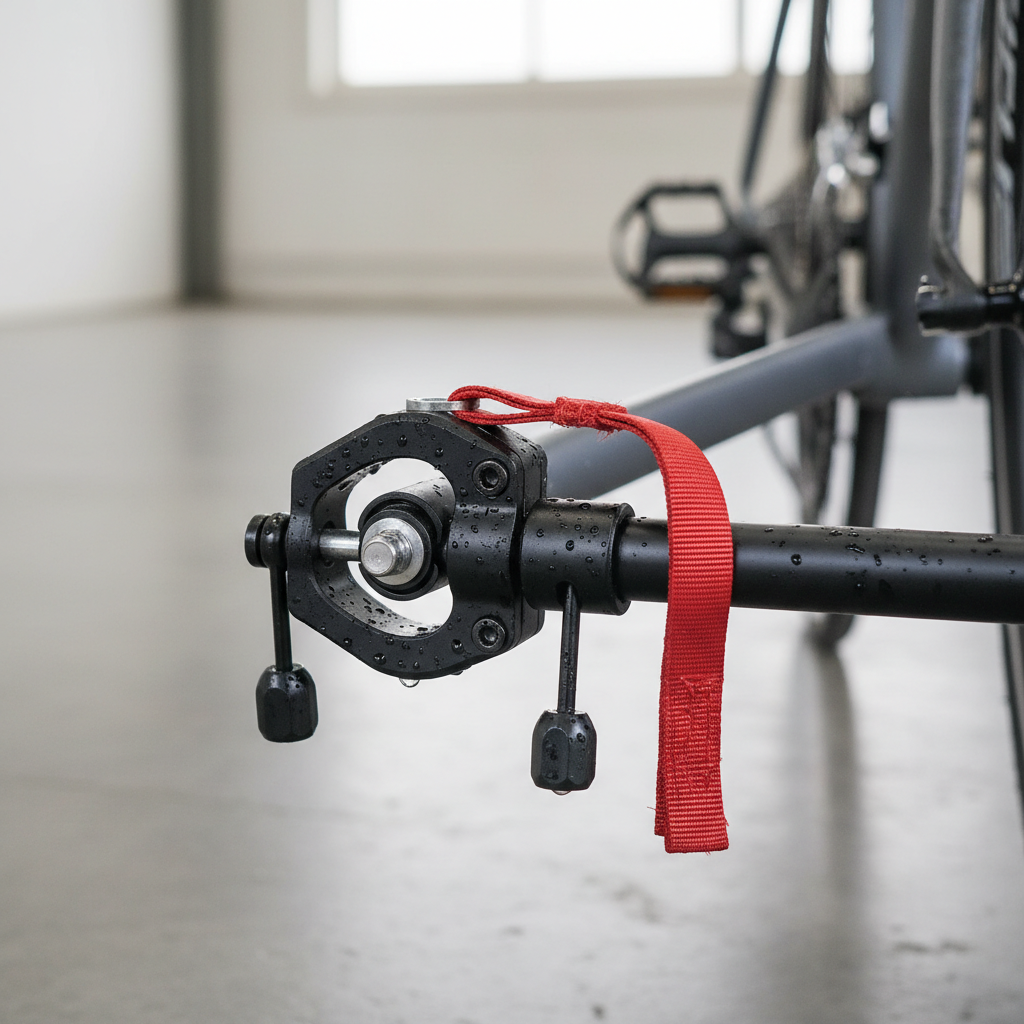
Most “my trailer feels sketchy” complaints start at the connection point. You want the hitch secure, aligned, and compatible with your bike’s axle and frame style.
Quick setup checks (2 minutes)
- Hitch tightness: bolts and pins fully seated, safety strap connected if your model includes one.
- Axle compatibility: quick release vs. thru-axle requires the correct adapter; don’t force a mismatch.
- Clearance: trailer arm doesn’t hit the derailleur, disc caliper, or rack hardware through the full steering range.
- Tire pressure: bike and trailer tires inflated appropriately; low pressure can increase sway and pinch flats.
According to NHTSA, visibility and predictable road behavior reduce crash risk for road users; for towing, that usually means you want a rig that tracks predictably and doesn’t wander under braking or bumps.
If you’re changing parts (like a different axle or hitch adapter), a local bike shop can sanity-check compatibility fast. It’s cheaper than replacing a bent derailleur hanger.
Load placement: stop sway before it starts
How to haul cargo with a bike trailer safely is mostly about where the weight sits. Bad placement creates “pendulum” behavior, and no amount of careful riding fully cancels that.
Simple loading rules that work in real life
- Heavy items low: keep dense weight close to the trailer floor to reduce tipping forces.
- Center the mass: aim for equal left/right balance; even a few pounds off to one side can feel dramatic.
- Keep weight forward of the trailer axle (for many two-wheel designs): too far back can make it fishtail, too far forward can add tongue weight and affect bike handling. Check your trailer manual because designs vary.
- Prevent shifting: moving loads create surprise steering inputs, especially over cracks and curb cuts.
For fragile cargo (eggs, electronics, glass), pad the bottom and sides, then lock the item so it can’t bounce. Road vibration is often the silent destroyer, not the big bump you see coming.
Straps, nets, and knots: make the load one solid unit
If your cargo can move, it will. And when it moves, it changes the trailer’s center of gravity mid-turn, which is when people feel that sudden wobble.
What usually works best
- Cam buckle straps: fast, strong, adjustable, less fiddly than knots for most people.
- Ratchet straps: very secure but easy to overtighten and crush boxes or bend light racks.
- Cargo net: great as a secondary layer to keep small items from escaping.
- Bungee cords: fine as a backup, not ideal as the only restraint for heavy or rigid loads.
A practical method: strap the heaviest item first, then add lighter items around it, then net the whole pile. Give the load a hard shake; if it shifts, redo it now rather than “hoping it settles.”
Speed, braking, and turning: ride like you’re towing
You can learn how to haul cargo with a bike trailer quickly, but it takes a couple rides to stop riding like the trailer isn’t there. The physics changes most during braking and cornering.
- Corner wider: the trailer cuts inside your line. Watch curb edges, bollards, and parked cars.
- Brake earlier: added mass increases stopping distance; wet conditions stretch it even more.
- Keep cadence smooth: hard surges can tug the hitch and start oscillation on rough pavement.
- Descend conservatively: if you feel pushing from behind, reduce speed; if your bike has disc brakes, heat buildup is still possible on long hills, so give yourself margin.
According to the CDC, helmet use reduces head injury risk for cyclists; towing doesn’t automatically increase risk, but it can raise consequence if you lose control, so protective gear and a calmer pace make sense.
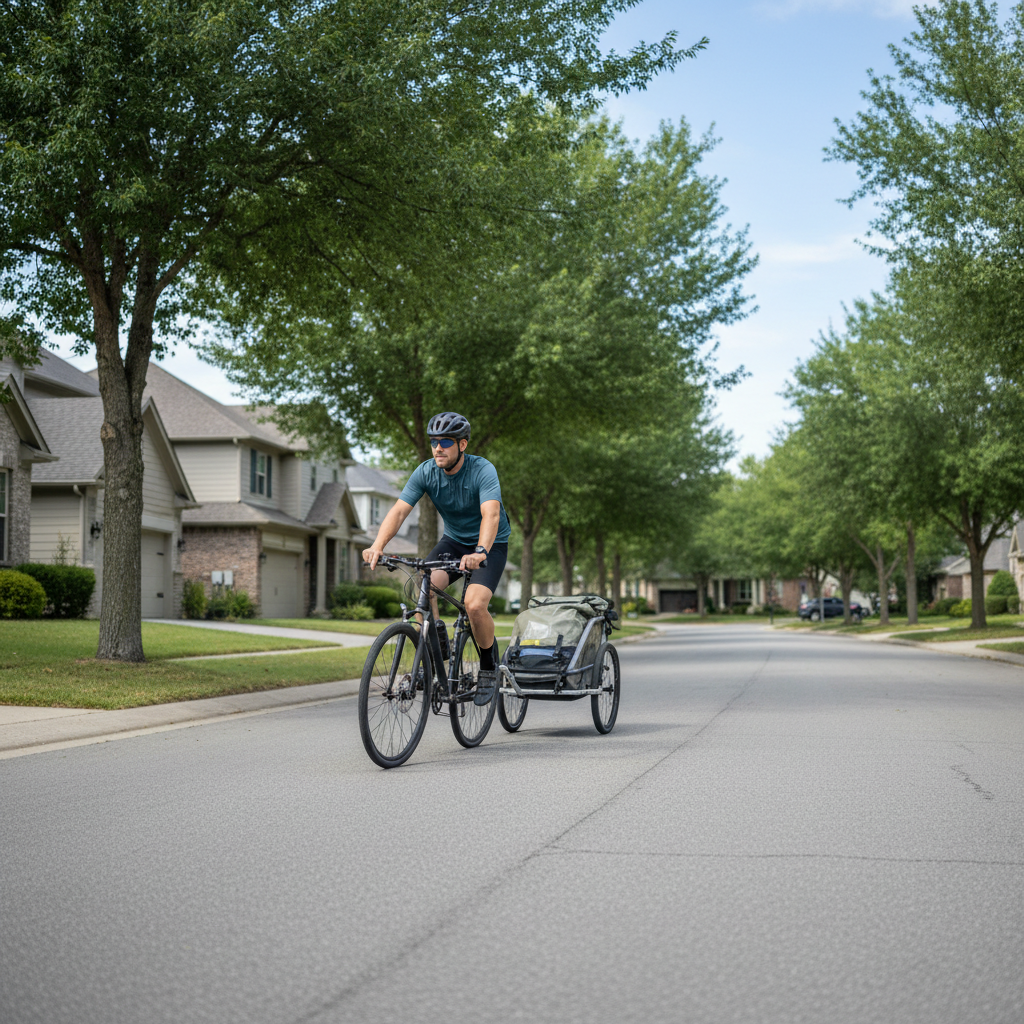
Use this quick self-check before every loaded ride
When you’re in a rush, you’ll skip steps. A short checklist keeps you from making the classic mistakes that turn an easy haul into a tense one.
- Hitch: locked, pinned, strap attached, no weird play when you wiggle the trailer.
- Load: heavy low, centered, cannot slide; straps tight, tails secured.
- Tires: bike and trailer inflated; quick spin to confirm no brake rub after hookup.
- Visibility: rear light not blocked by cargo; add a flag/reflector if your trailer sits low.
- Route: you know where the rough curbs, stairs, and narrow gates are.
If something feels off in the first minute, stop and adjust. People tend to “ride through” a problem, but towing punishes that habit.
Common cargo scenarios (and what to do differently)
Different loads behave differently. The best setup for groceries isn’t the best setup for a cooler or a boxy shipment.
| Scenario | What tends to go wrong | What to do |
|---|---|---|
| Groceries | Bags tip, items spill | Use bins/crates, strap bins down, put liquids low and centered |
| Large cardboard box | Catches wind, shifts on bumps | Flatbed + two straps in an X pattern, add a net over corners |
| Tools or hardware | High density, can overload quickly | Weigh roughly, keep weight low, avoid bungees as primary restraint |
| Cooler / picnic gear | Slosh, top-heavy packing | Drain meltwater when possible, place cooler lengthwise, strap tight |
| Laundry / soft items | Looks stable, then compresses and loosens straps | Re-tighten after 5 minutes, use a net to keep shape |
Mistakes that waste time (and how to avoid them)
A few habits show up again and again, especially with new trailer owners. Fixing them makes hauling feel boring, in a good way.
- Overloading “because it rolls”: rolling isn’t the same as controllable; if braking and turning feel tense, scale back the load.
- One strap, one direction: loads rotate; use two directions of restraint or add a net.
- Ignoring tire choice: slick tires can slip on wet paint lines and gravel; a bit more tread often helps on mixed surfaces.
- Skipping a short practice loop: do a low-traffic block first, especially after changing the hitch or carrying a new type of load.
And yes, wind matters. A tall load acts like a sail; on gusty days, keeping the profile low can do more than obsessing over straps.
When it’s worth getting professional help or upgrades
If you consistently haul heavy cargo, ride steep hills, or feel unstable even with good loading, it may be time for a bike shop check. This is especially true if you’re using carbon components, a lightweight road frame, or a non-standard axle.
- Brake check: worn pads or contaminated rotors can show up as “weak brakes” only once you add trailer weight.
- Axle/hitch fit: shops can recommend the right thru-axle adapter and torque specs.
- Wheel and tire advice: if you get frequent flats under load, you may need tougher tires or different pressure.
For medical or safety concerns (balance issues, recovery from injury), it’s reasonable to ride unloaded first and consider asking a clinician or qualified professional what activity level makes sense for you.
Practical wrap-up: make hauling feel predictable
Once you internalize how to haul cargo with a bike trailer, the goal shifts from “can I do it” to “can I do it without thinking.” A stable hitch, centered weight, and real strapping do most of the work; calmer speeds and wider turns handle the rest.
If you want one action to take today, do a 10-minute setup: check hitch tightness, set tire pressures, and practice with a medium load on a quiet loop, then adjust strap placement until the trailer stops feeling like it has opinions.
Key takeaways: keep weight low and centered, stop cargo movement, and give yourself extra braking distance every ride.